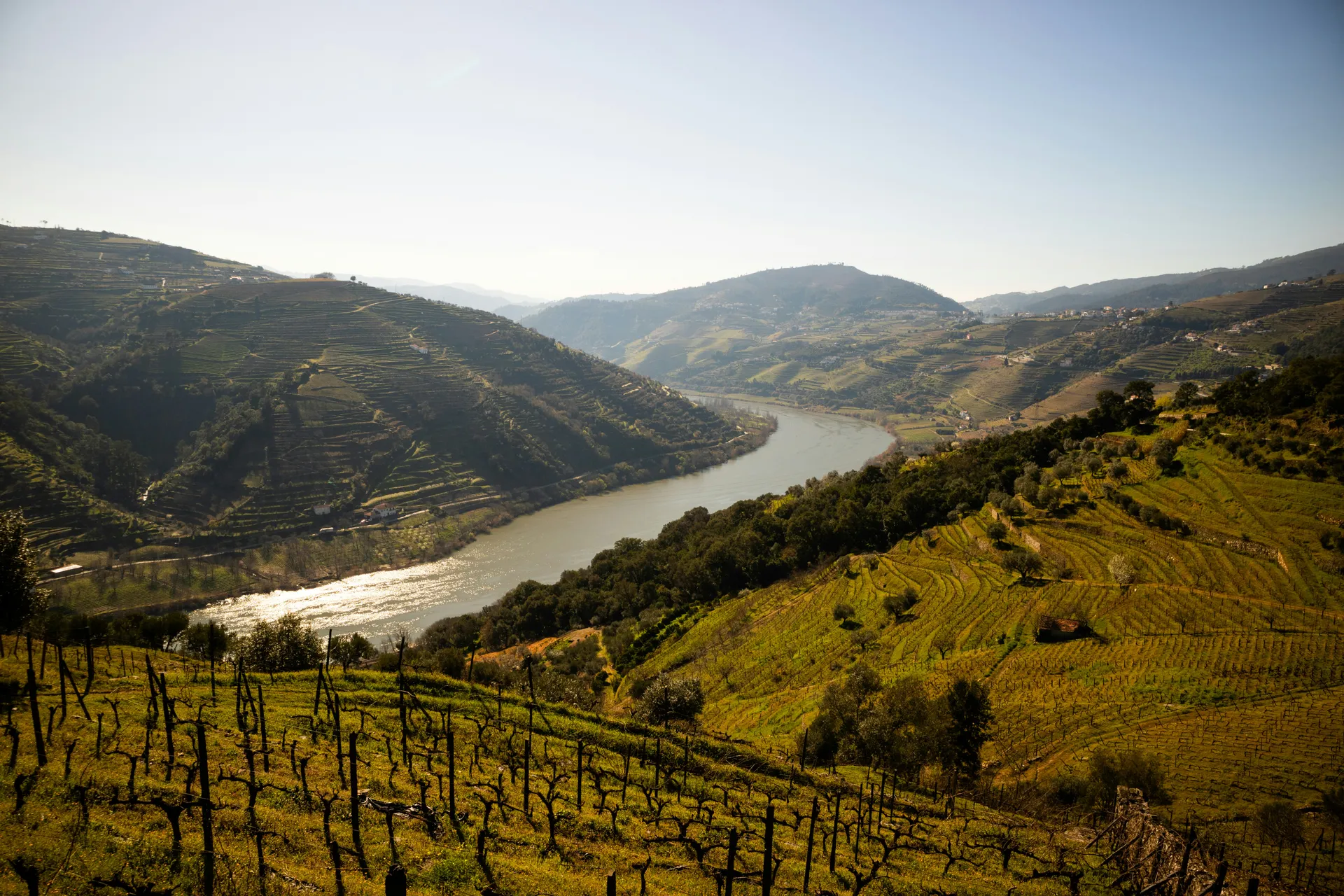
Nestled deep in the upper Douro Valley, Pocinho marks the easternmost navigable point of Portugal's most storied river — the very stretch where, for over two centuries, flat-bottomed rabelo boats carried casks of port wine downstream toward the lodges of Vila Nova de Gaia. The Pocinho Dam, completed in 1983, tamed the rapids that once made this passage treacherous, but the valley's terraced vineyards, carved into near-vertical schist slopes since the eighteenth century, remain a UNESCO World Heritage landscape of breathtaking, almost impossible beauty.
The village itself is small and unhurried, a place where time keeps a gentler cadence. Stone houses with terracotta roofs cluster around a modest riverside quay, and the surrounding hillsides blaze with the colors of the season: green canopies in summer, gold and crimson in autumn, the bare skeletal beauty of pruned vines in winter. What makes Pocinho remarkable is its position as a gateway to the Alto Douro wine country — the world's oldest demarcated wine region, established by the Marquis of Pombal in 1756. The landscape here is more rugged and remote than the lower Douro, with fewer tourists and a palpable sense of timelessness.
Cuisine in the upper Douro is rustic and deeply satisfying. Octopus roasted in olive oil with roasted potatoes — polvo à lagareiro — appears on nearly every menu, alongside bacalhau assado, salt cod baked with a crust of cornbread crumbs. Local quintas produce their own azeite (olive oil) and almonds, which find their way into delicate pastries like amêndoas cobertas. The wines, naturally, are the main event: vintage tawny ports and unfortified Douro reds made from indigenous grape varieties — Touriga Nacional, Tinta Roriz, and Touriga Franca — that are among Portugal's finest.
From Pocinho, the prehistoric rock art of the Côa Valley — a UNESCO World Heritage Site — lies just a short drive upstream. The open-air engravings, some dating back over 25,000 years to the Upper Paleolithic, depict horses, aurochs, and ibex scratched into riverside schist panels. The Côa Museum, designed by architects Camilo Rebelo and Tiago Pimentel, is itself a work of art — a concrete monolith embedded in the hillside. Wine estates such as Quinta do Crasto and Quinta de la Rosa offer tastings with terrace views that stretch to the Spanish border, roughly forty minutes east.
Pocinho is served exclusively by river cruise lines navigating the Douro. Avalon Waterways, Emerald Cruises, Scenic River Cruises, Tauck, Uniworld River Cruises, and VIVA Cruises each operate vessels along this route, typically as part of week-long itineraries between Porto and the Spanish border. Nearby ports of call include Régua, Pinhão, and Barca d'Alva. The ideal season runs from April through October, when the valley basks in warm sunshine and the vineyards are at their most photogenic — particularly during the September grape harvest, when the terraced slopes come alive with pickers and the air is thick with the scent of crushed fruit.

