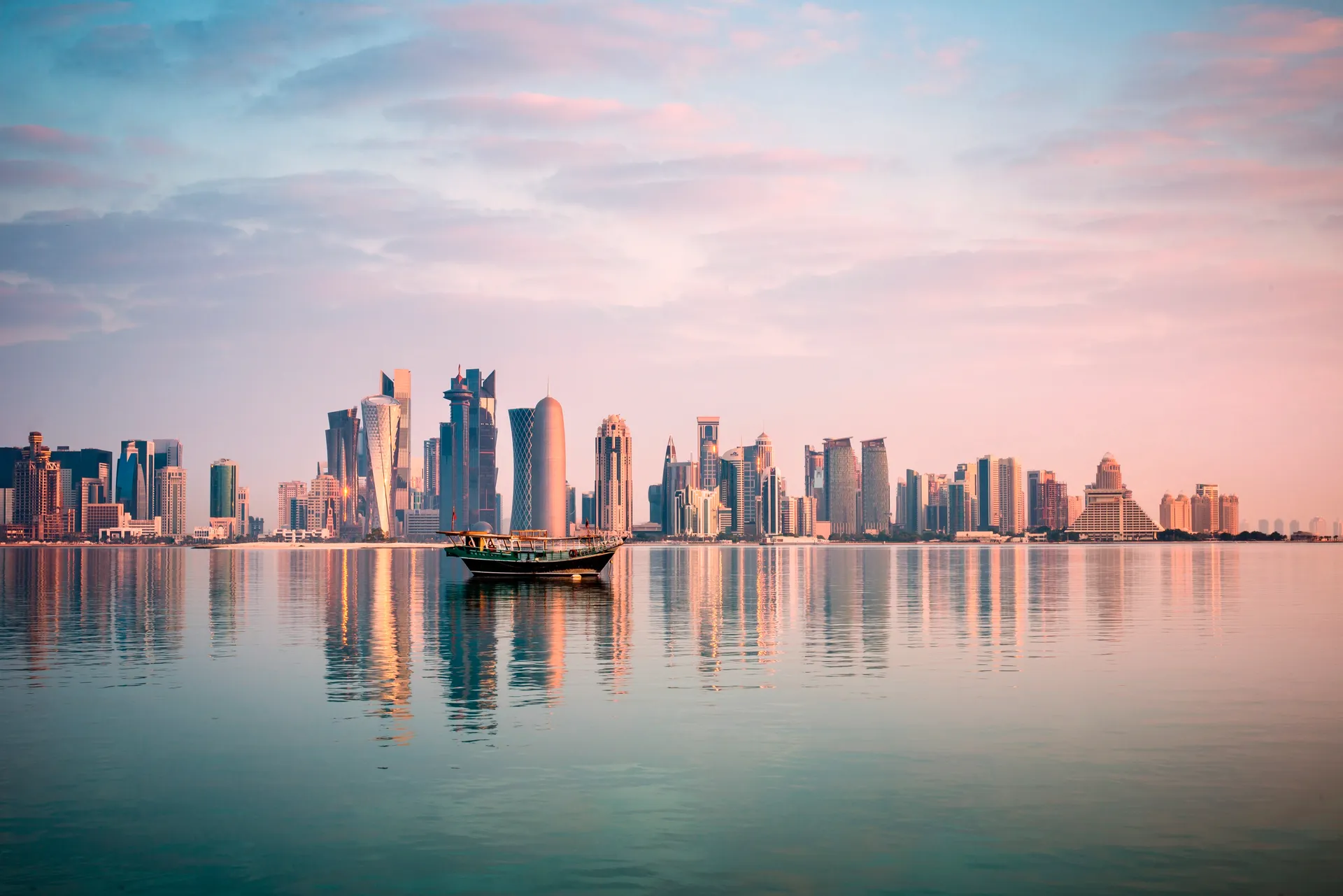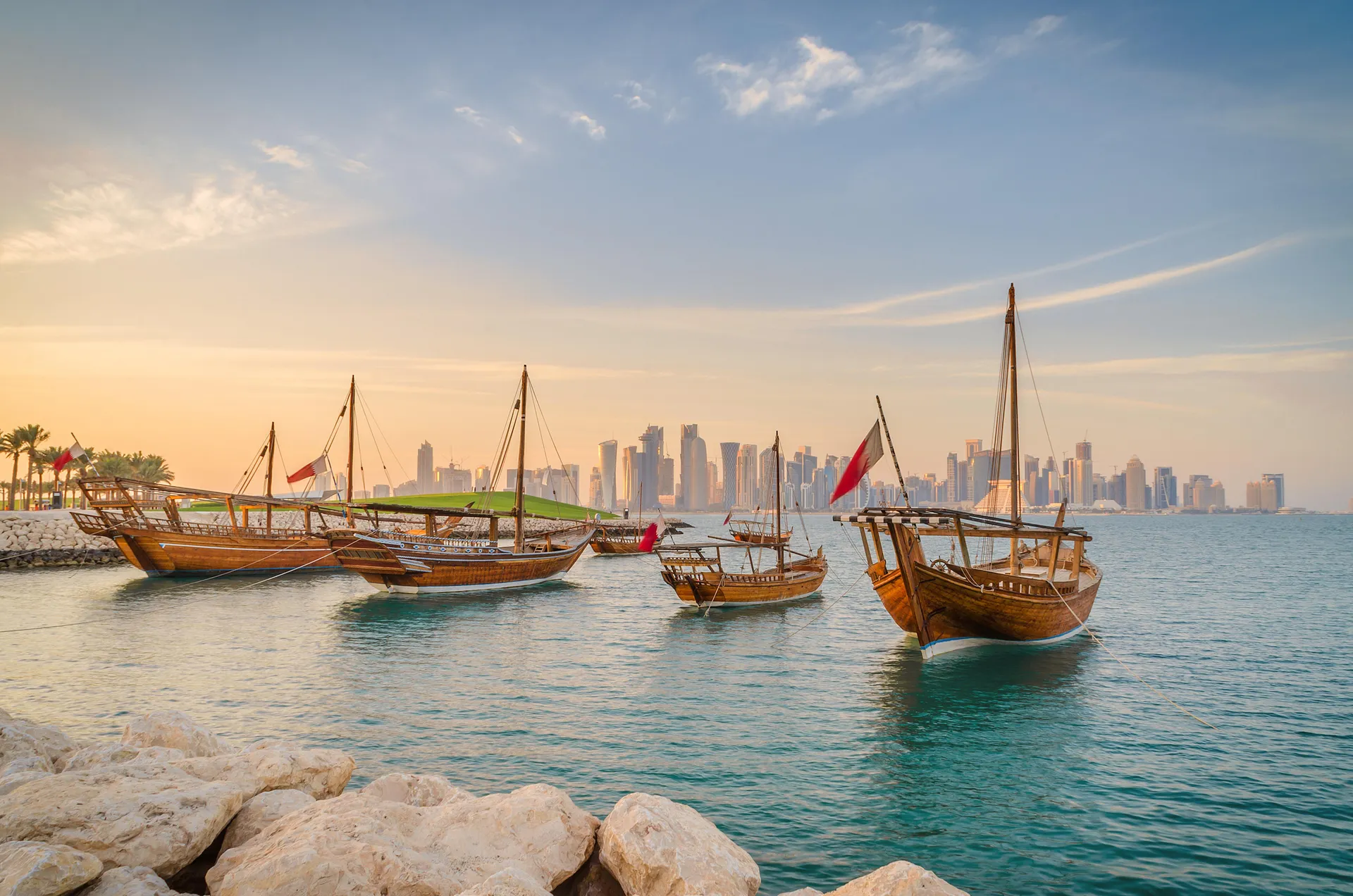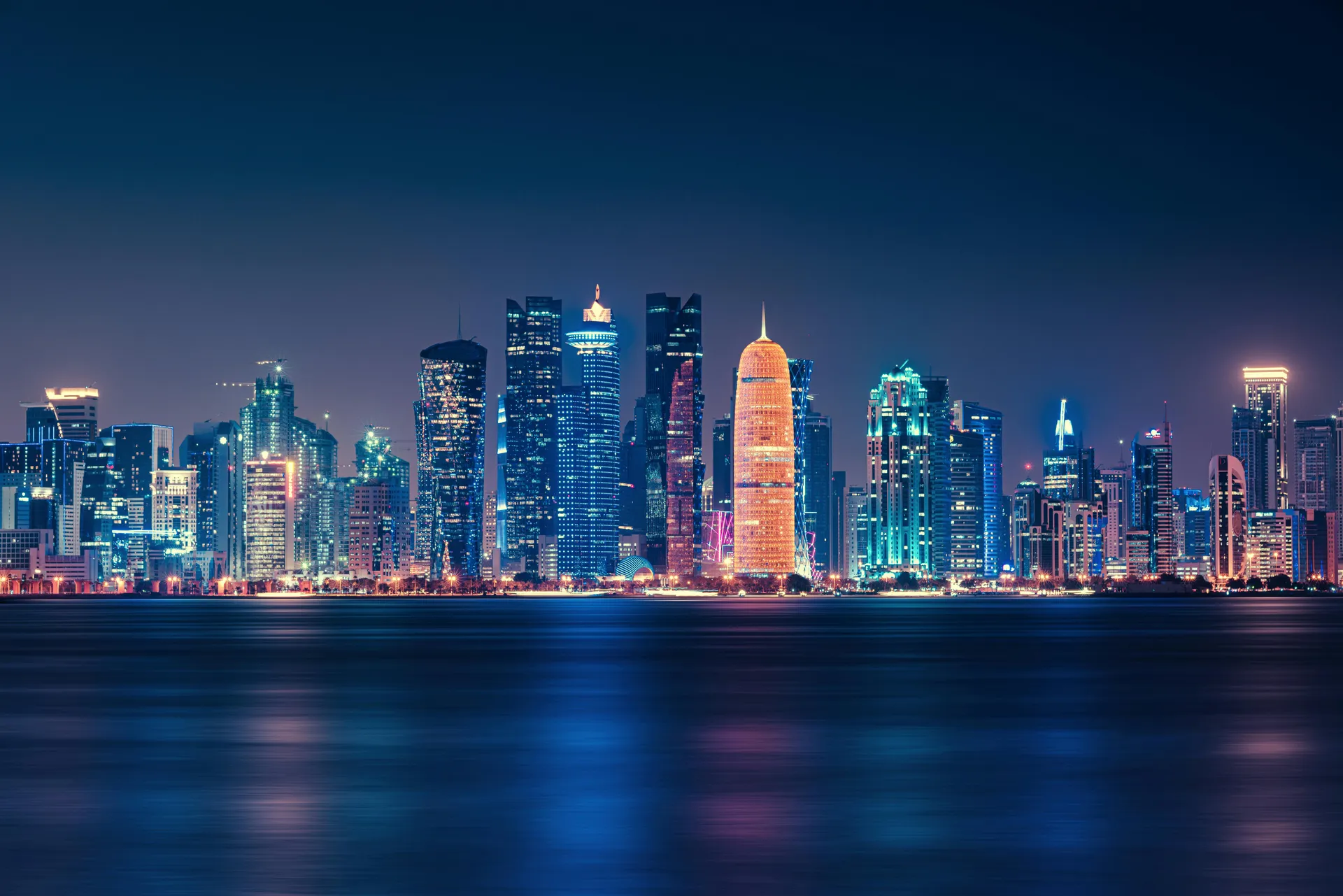
For centuries, Doha was little more than a fishing hamlet on Qatar's eastern coast, its fortunes tied to the pearl beds of the shallow Arabian Gulf. The town's name derives from the Arabic "ad-dawha," meaning the big tree — a reference to a prominent tree that once marked the shoreline. The discovery of oil in 1940 and, more consequentially, the vast North Field natural gas reserve in the 1970s, propelled this modest settlement into one of the world's wealthiest capitals, a place where tradition and spectacle intersect at every turn.
Modern Doha is a city of audacious contrasts. The Museum of Islamic Art, I. M. Pei's final masterpiece completed in 2008, rises from its own artificial island in Doha Bay — a geometric jewel box housing fourteen centuries of Islamic artistry from three continents. Across the water, the National Museum of Qatar, designed by Jean Nouvel as a series of interlocking discs inspired by the desert rose crystal, tells the peninsula's story from geological formation to modern statehood. The Msheireb Downtown Doha district has reimagined traditional Qatari architecture in sustainable contemporary form, while the Katara Cultural Village hosts galleries, amphitheaters, and an opera house along a purpose-built Mediterranean-style waterfront.
Qatari cuisine is a celebration of Gulf hospitality. Machboos, the national dish — fragrant rice layered with lamb, chicken, or fish and spiced with bezar (a blend of cardamom, cinnamon, cloves, and black lime) — appears in every home and restaurant worth its salt. At Souq Waqif, the restored labyrinthine market that feels like a living museum, vendors serve karak chai (spiced tea with condensed milk), while nearby restaurants offer harees (slow-cooked wheat and meat porridge) and madrouba (rice beaten to a creamy consistency with chicken). The souq itself is an intoxicating maze of falcon sellers, spice mountains, and perfumeries blending oud and rose.
The desert beyond Doha holds its own fascinations. The Inland Sea (Khor Al Adaid), a UNESCO-recognized natural reserve where the desert meets the sea at the Saudi border, is a ninety-minute drive south through towering sand dunes — an experience best had by four-wheel-drive safari. The ancient rock carvings at Al Jassasiya, a short drive north, feature over 900 petroglyphs depicting boats, fish, and mysterious cup marks. Zekreet, on the western coast, offers striking limestone formations and the surreal Film City — an abandoned movie set in the desert.
Doha's modern cruise terminal at Hamad Port welcomes vessels from AIDA, Celestyal Cruises, Costa Cruises, Explora Journeys, Hapag-Lloyd Cruises, MSC Cruises, Norwegian Cruise Line, Oceania Cruises, Regent Seven Seas Cruises, Seabourn, Silversea, TUI Cruises Mein Schiff, and Windstar Cruises. The Gulf cruise season runs from November through April, when daytime temperatures settle into a pleasant range of twenty to twenty-eight degrees Celsius, making it ideal for exploring this dazzling peninsula where Bedouin traditions meet twenty-first-century ambition.