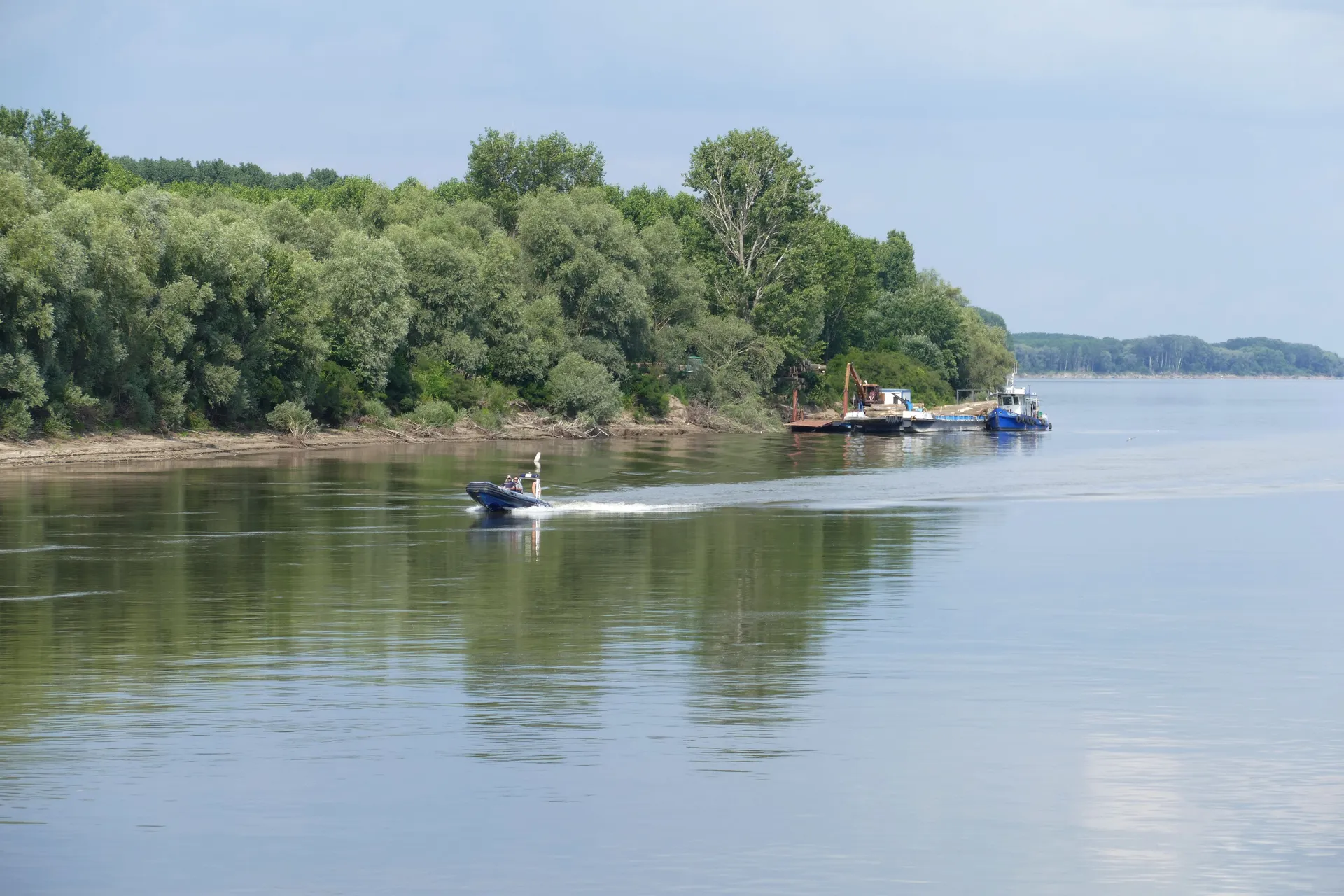
Where the Danube sweeps in a great eastward arc through the Wallachian Plain, Fetesti sits on the river's left bank at a point where the landscape opens into a vast, level expanse of farmland, wetland, and sky that seems to stretch to the very curvature of the earth. This small Romanian town of roughly thirty thousand inhabitants would be unremarkable were it not for two extraordinary facts: it guards the western approach to the Cernavoda Bridge — one of the engineering marvels of nineteenth-century Europe — and it serves as the gateway to the Danube Delta, that magnificent labyrinth of waterways, reed beds, and wildlife that constitutes one of the continent's last great wilderness areas.
The Cernavoda Bridge, completed in 1895 by the Romanian engineer Anghel Saligny, was at the time of its construction the longest bridge in continental Europe, spanning the Danube-Borcea arm with a graceful series of steel trusses that have been carrying trains between Bucharest and the Black Sea port of Constanta for more than a century. Though a newer road bridge now handles most vehicular traffic, the original structure remains in use for rail, its silhouette against the flat Wallachian horizon one of those quietly iconic images that travelers remember long after more celebrated landmarks have blurred in memory.
Fetesti itself is a town of modest architectural ambition but genuine warmth. The central market, bustling on weekend mornings, offers a window into rural Romanian life that has changed less than one might expect in the decades since the revolution: pyramids of peppers and tomatoes in season, rounds of brânză de burduf (sheep's cheese aged in pine bark), and jars of zacuscă — the roasted eggplant and pepper spread that is as essential to Romanian tables as bread itself. The town's churches, mostly dating from the nineteenth and early twentieth centuries, display the characteristic Romanian Orthodox blend of Byzantine forms and local folk decoration.
The Danube in this stretch is a working river — broad, brown, and purposeful, carrying barge traffic between the Black Sea and central Europe. But the surrounding landscape harbors surprising ecological richness. The Borcea arm, which separates the main channel from the Balta Ialomitei — a vast floodplain island — supports populations of pelicans, herons, cormorants, and eagles that give a foretaste of the Delta's legendary biodiversity. Birdwatching excursions by small boat into the backwaters reveal a Danube that the main channel's commercial traffic entirely obscures: silent oxbow lakes, floating islands of water lilies, and the flicker of kingfishers darting between overhanging willows.
River cruise vessels dock at Fetesti's straightforward riverside berth, which offers easy access to the town center and serves as a staging point for excursions. The most popular day trips head east to the Danube Delta — a UNESCO World Heritage Site and Biosphere Reserve — where boat tours navigate channels teeming with over three hundred species of birds and sixty species of fish. Others venture south to Constanta and the Black Sea coast, or to the ancient Greek colony of Histria, one of the oldest urban settlements in Romania. The best season for visiting is May through September, with June and July offering peak birdlife and the longest, warmest days on the lower Danube.

