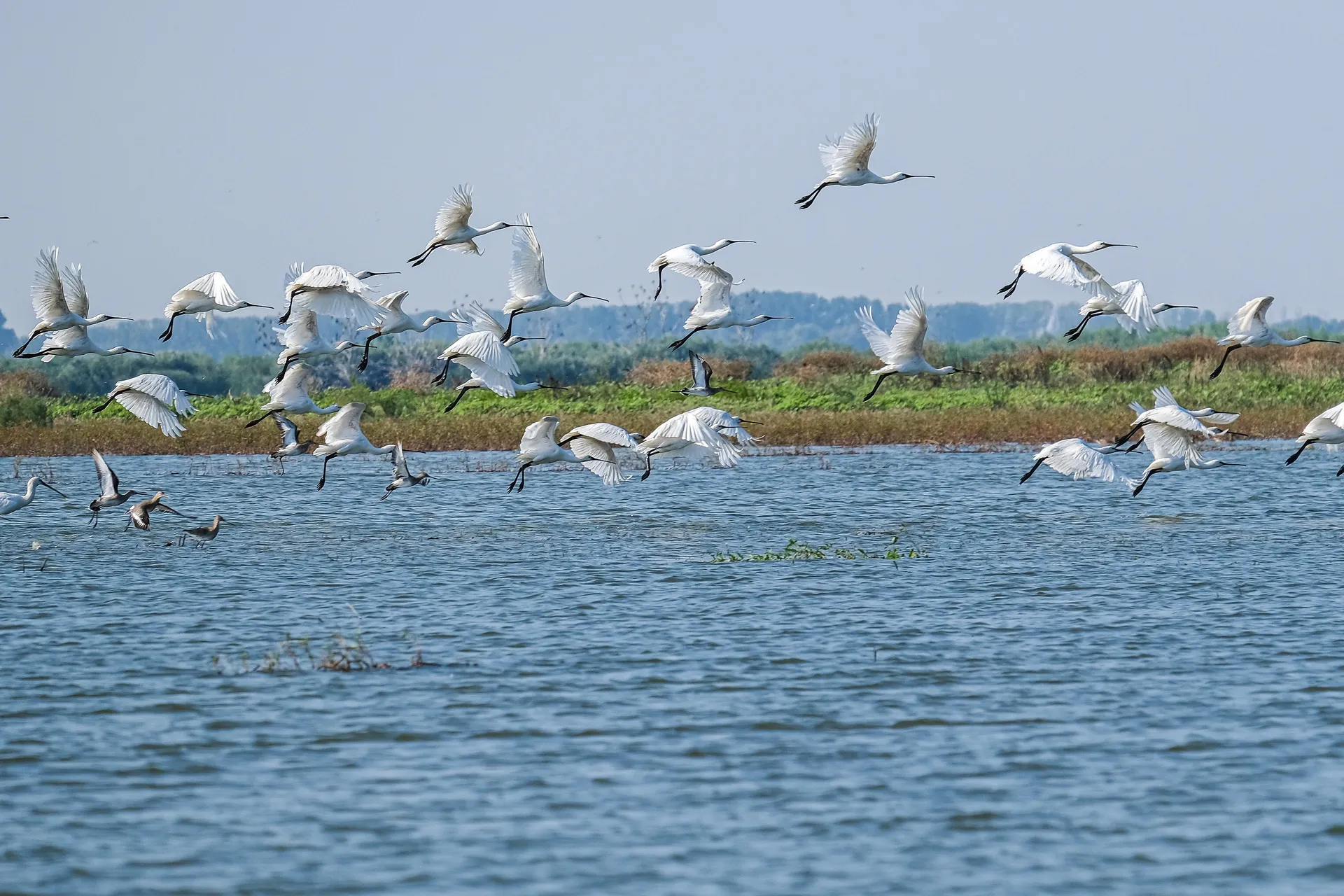
Where the Argeș surrenders its waters to the mighty Danube, Oltenița has stood watch over this confluence since the fourteenth century, its strategic position earning it a place in the annals of both Ottoman and Romanian history. The city witnessed one of the opening salvos of the Crimean War in 1853, when Ottoman forces crossed the Danube here in a battle that would draw the great European powers into conflict. Archaeological discoveries at nearby Gumelnița — a Chalcolithic settlement dating to the fifth millennium BCE — reveal that this riverine crossroads has drawn human civilization for over seven thousand years, lending Oltenița a depth of heritage that few Danubian ports can rival.
Today, Oltenița carries itself with the quiet confidence of a city unburdened by tourist spectacle. The promenade along the Danube unfolds in unhurried stretches of linden shade and wrought-iron benches, where fishermen cast their lines into currents that have shaped Wallachian commerce for centuries. Across the water, the Bulgarian town of Tutrakan shimmers in the afternoon haze — a reminder that borders here are drawn in river water, fluid and negotiable. The Paleolithic Museum, housed in a modest but dignified building near the center, presents the remarkable Gumelnița artifacts with a curatorial intimacy impossible in larger institutions, allowing visitors to hold the weight of prehistory at arm's length.
The cuisine of southern Muntenia draws from the Danube's larder with unapologetic generosity. *Saramură de crap* — carp brined and grilled over open flame, then bathed in a sauce of its own juices with garlic and tomato — arrives at riverside tables with a simplicity that borders on ceremony. Pair it with *mămăligă* topped with *brânză de burduf*, the intensely flavored sheep's cheese aged in pine bark, and a carafe of *țuică* from a nearby plum orchard, and you have assembled a meal that no Michelin-starred restaurant could improve upon, only complicate. For something sweeter, seek out *papanași* — golden fried dough crowned with sour cream and forest berry preserves — a dessert that manages to be both rustic and refined, much like Oltenița itself.
The city's position in the southern Wallachian plain makes it an exceptional staging ground for excursions into Romania's more celebrated landscapes. Giurgiu, just an hour west along the Danube, offers its own Ottoman-era fortress and a graceful bridge linking Romania to Bulgaria. More ambitious travelers will find that Brașov, with its Gothic Black Church and Habsburg-era grandeur, lies within a half-day's journey northward through the Carpathian foothills. Beyond it, the medieval citadel of Sighișoara — birthplace of Vlad the Impaler and a UNESCO World Heritage jewel — rewards those willing to venture deeper into Transylvania, while Sibiu, the former European Capital of Culture, presents one of the continent's most perfectly preserved old towns, its pastel façades and watchful roof eyes gazing over cobblestone squares where café culture thrives with distinctly Central European élan.
Oltenița serves as a favored calling point for river cruise lines navigating the lower Danube corridor. Avalon Waterways positions the city within its grand European river itineraries, offering passengers panoramic views from their signature open-air balcony staterooms as the vessel approaches the Argeș confluence. CroisiEurope, the French line renowned for its inclusive approach to Danubian voyaging, frequently includes Oltenița on routes connecting the Black Sea to Budapest, bringing Gallic sophistication to Wallachian shores. Seabourn, extending its ultra-luxury pedigree from ocean to river, calls here on expedition-style Danube voyages that treat each port not as a checkbox but as a chapter — and Oltenița, with its layers of history, cuisine, and quiet riverside beauty, offers a chapter well worth reading slowly.

