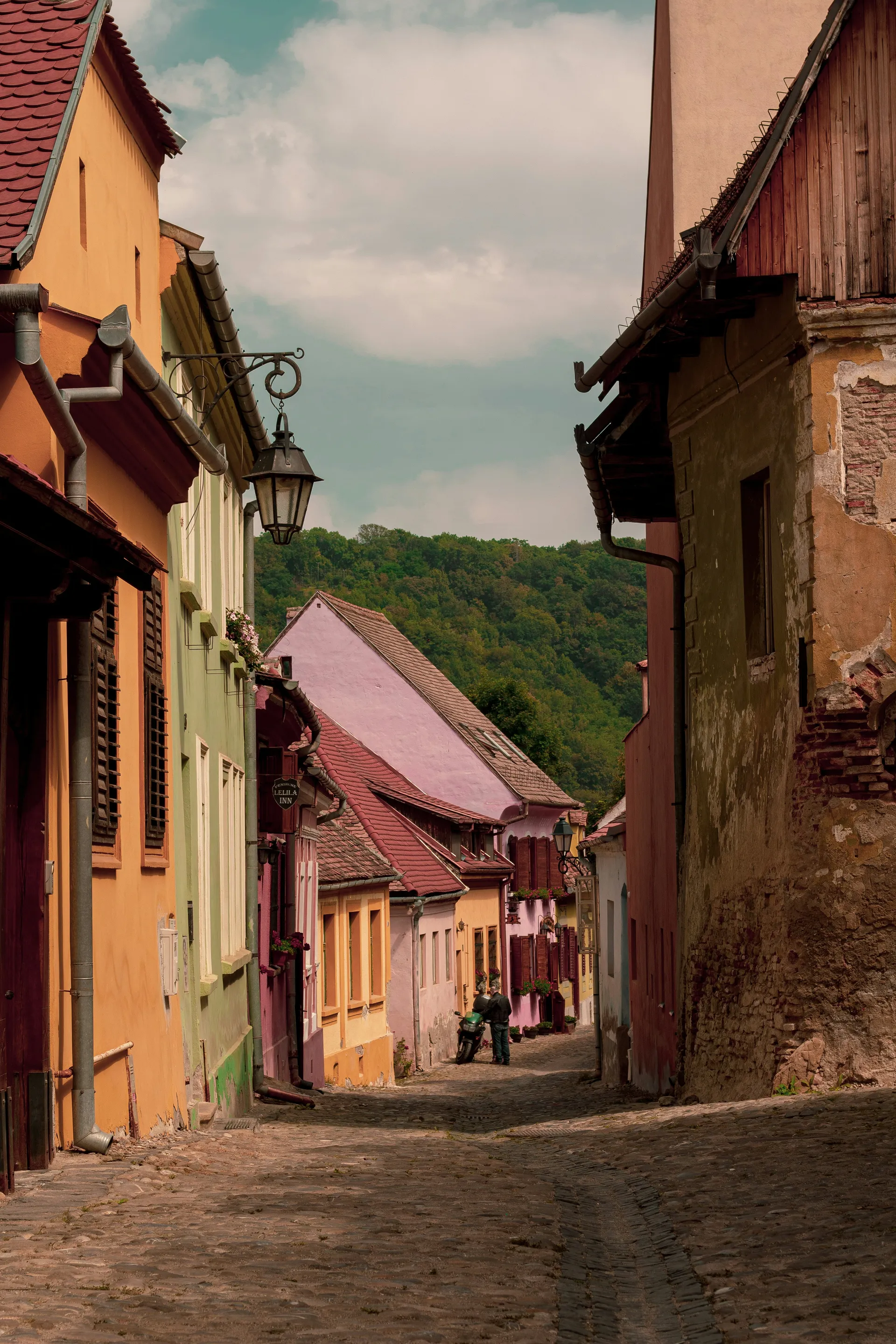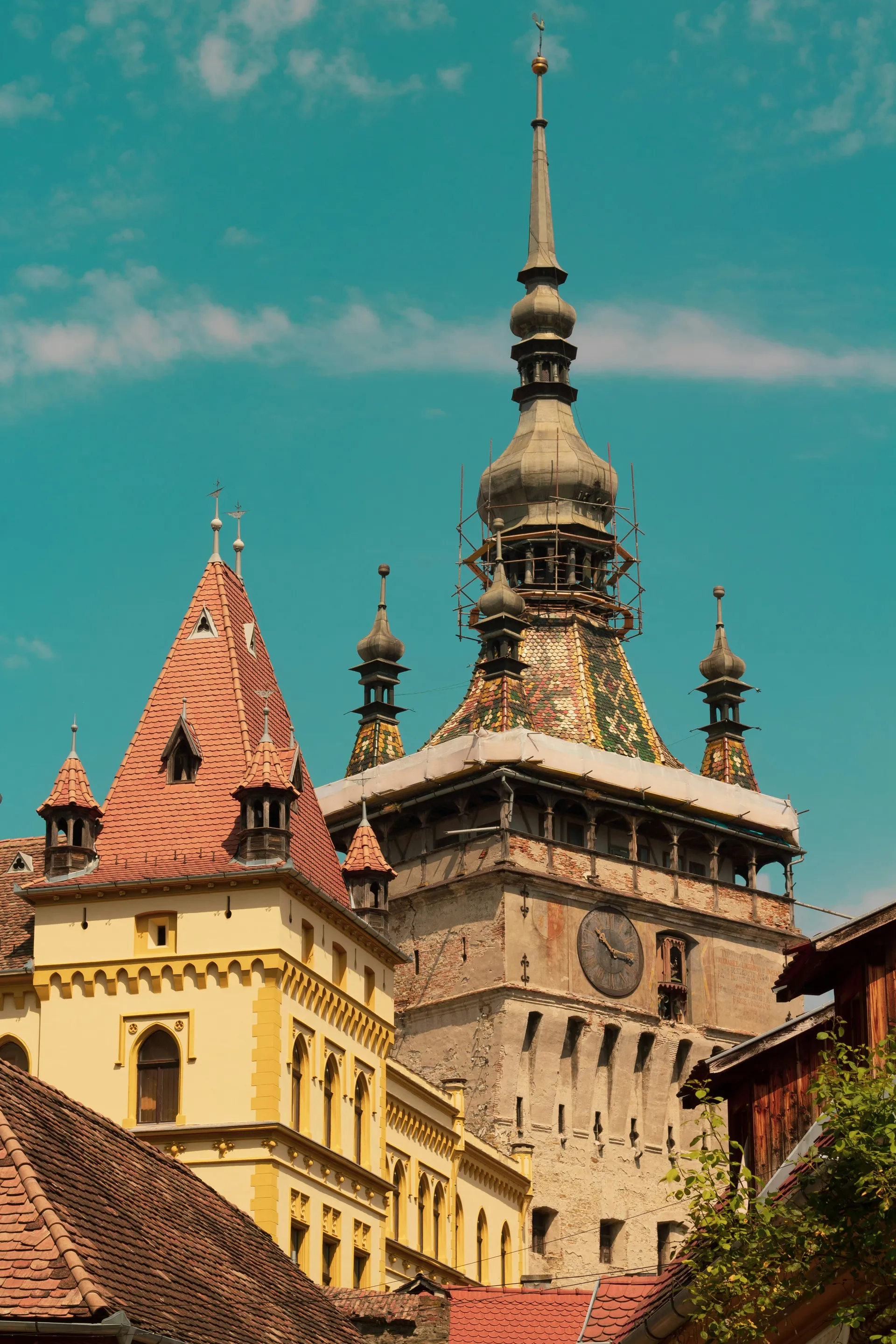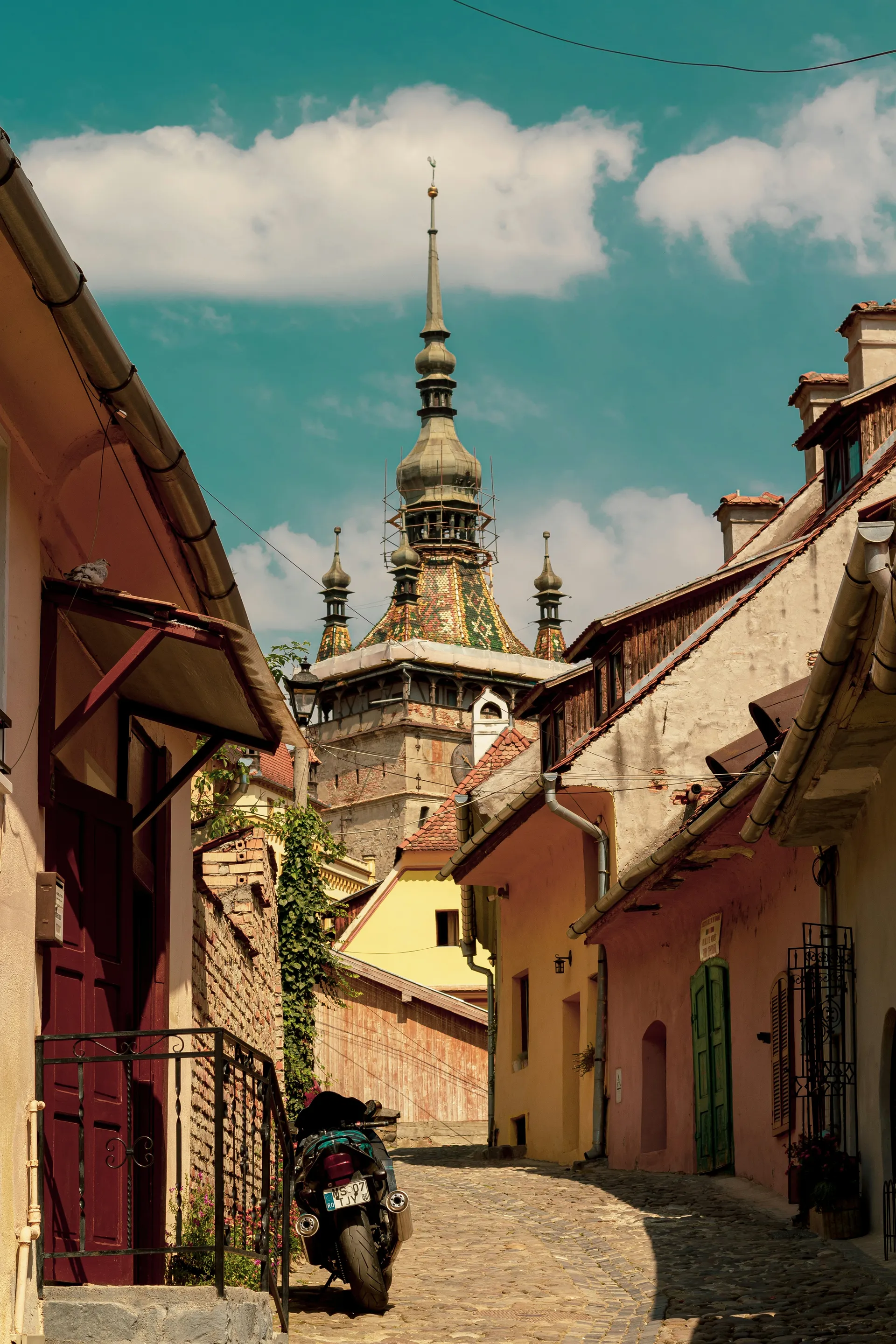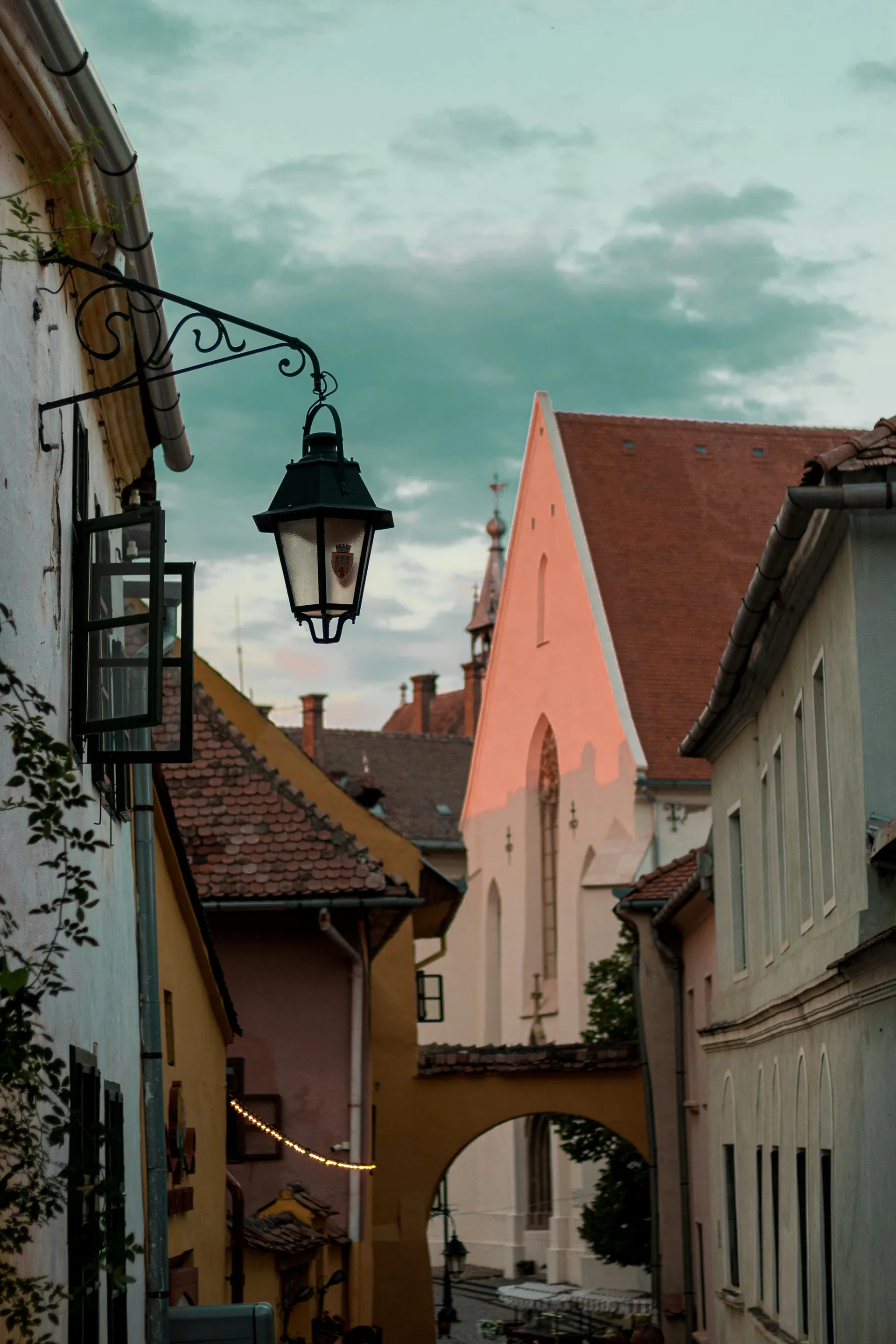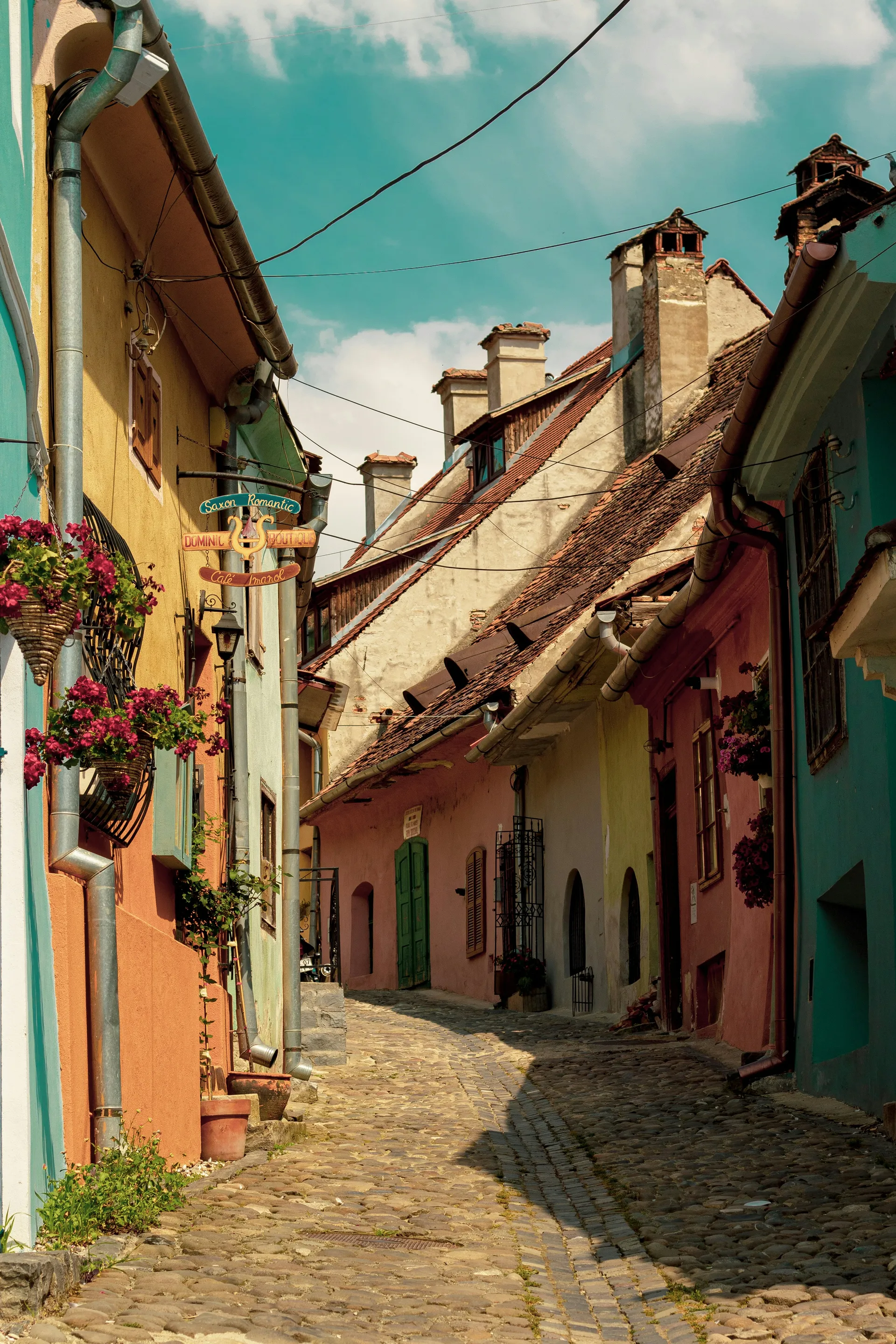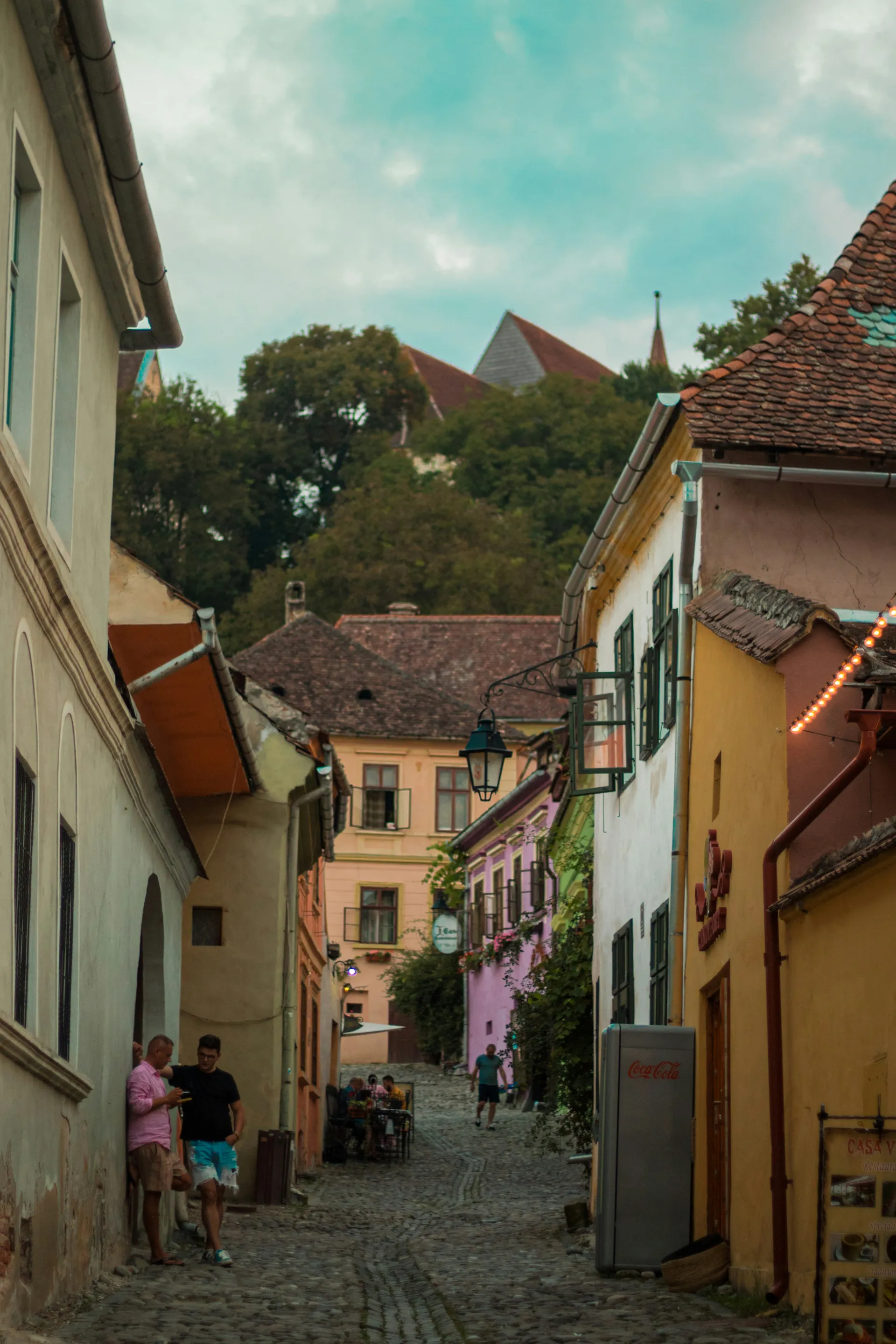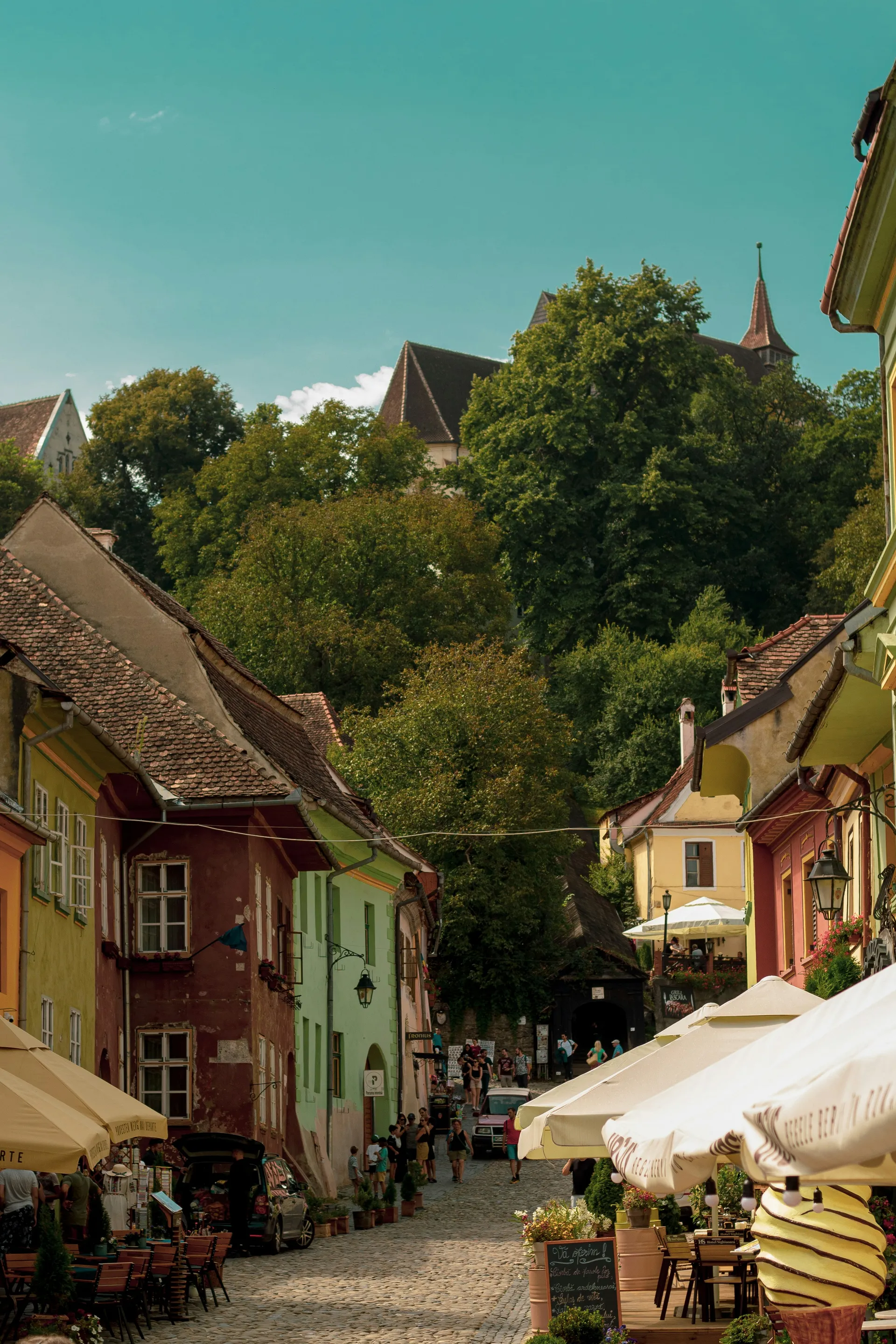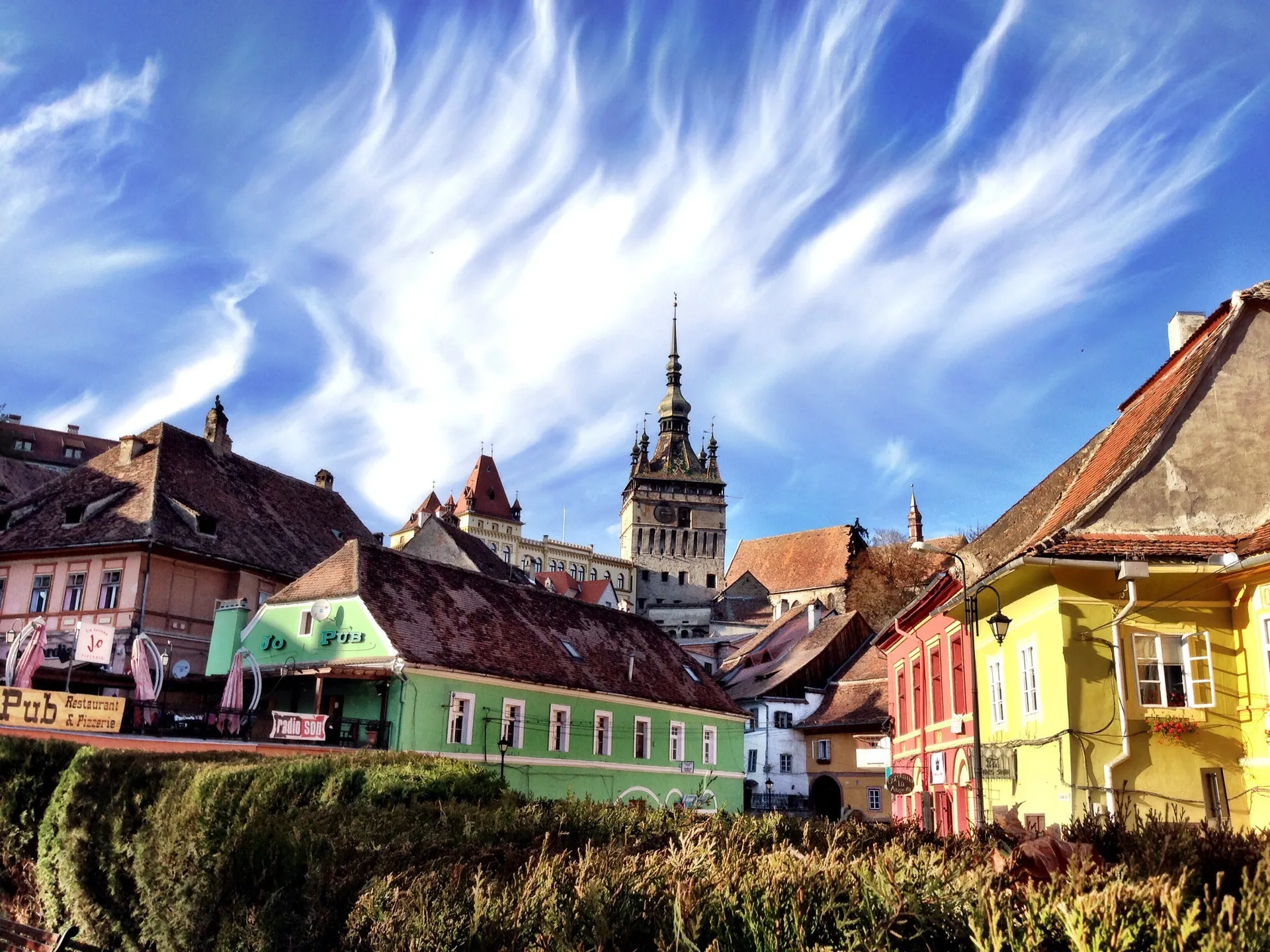
Sighișoara is the best-preserved inhabited medieval citadel in Europe — a fortified hilltop town in the heart of Transylvania that has survived essentially intact since the fourteenth century, its cobblestoned streets, painted merchant houses, and defensive towers creating a streetscape that seems to exist outside of time. Founded by Transylvanian Saxon settlers in the twelfth century, the city developed as a prosperous trading center whose nine guild towers — each built and defended by a different craftsmen's guild — still punctuate the fortification walls that encircle the upper town. The Clock Tower, Sighișoara's defining landmark, rises sixty-four meters above the main gate, its seventeenth-century clockwork figures — representing the days of the week as carved wooden figurines — still performing their daily rotation with the precision of Teutonic engineering.
The citadel is also the birthplace of Vlad III Dracula — Vlad Țepeș, "Vlad the Impaler" — the fifteenth-century Wallachian prince whose brutal military tactics against the Ottoman Empire and whose reputed habit of impaling enemies on stakes inspired Bram Stoker's 1897 novel Dracula. The house where Vlad was born in 1431 still stands on the main street of the citadel, now operating as a restaurant and small museum. The Dracula connection, while commercially exploited, should not overshadow the genuine historical interest of a prince who, in Romanian historiography, is regarded as a national hero — a defender of Christendom against Ottoman expansion whose methods, while extreme, were not unusual for the era.
The cuisine of Sighișoara draws on the same Transylvanian traditions that characterize the broader region — hearty, meat-centered, and shaped by centuries of Saxon, Romanian, and Hungarian coexistence. Restaurant Casa Dracula, in the prince's birthplace, serves both Romanian classics and Dracula-themed novelties, while the small restaurants and cafés throughout the citadel offer ciorbă de burtă (tripe soup, a beloved Romanian hangover cure), tocăniță (stew), and the grilled meats — mici, pork chops, chicken — that are prepared over charcoal at every Romanian gathering. Papanași (fried doughnuts with sour cream and jam) provide the dessert, and țuică (plum brandy), the national spirit distilled in virtually every rural household, provides the aperitif.
The Medieval Festival of Sighișoara, held annually in late July, transforms the citadel into a spectacle of period costumes, jousting, fire-eating, folk music, and craft demonstrations that is Transylvania's largest and most popular cultural event. For the rest of the year, the citadel's charm lies in its quietness — the residential upper town is home to a few hundred people, and wandering its streets in the early morning, when the light filters through the medieval passageways and the only sounds are church bells and birdsong, provides one of Europe's most atmospheric urban experiences. The Covered Stairway, a seventeenth-century wooden tunnel of 175 steps connecting the lower citadel to the hilltop Church on the Hill and the German cemetery, is both an engineering curiosity and a meditative ascent through the layers of Sighișoara's history.
Sighișoara is reached by train from Bucharest (approximately five hours) or Brașov (two and a half hours), and by road. The town is a popular inclusion on Transylvanian touring itineraries that combine it with Sibiu, Brașov, and the fortified churches of the Saxon villages. The citadel is compact and walkable — the entire upper town can be explored in a few hours. The best visiting months are May through October, with the Medieval Festival in late July providing the peak experience. Winter brings snow-dusted towers and empty streets that evoke the citadel's medieval character more powerfully than any summer festival.