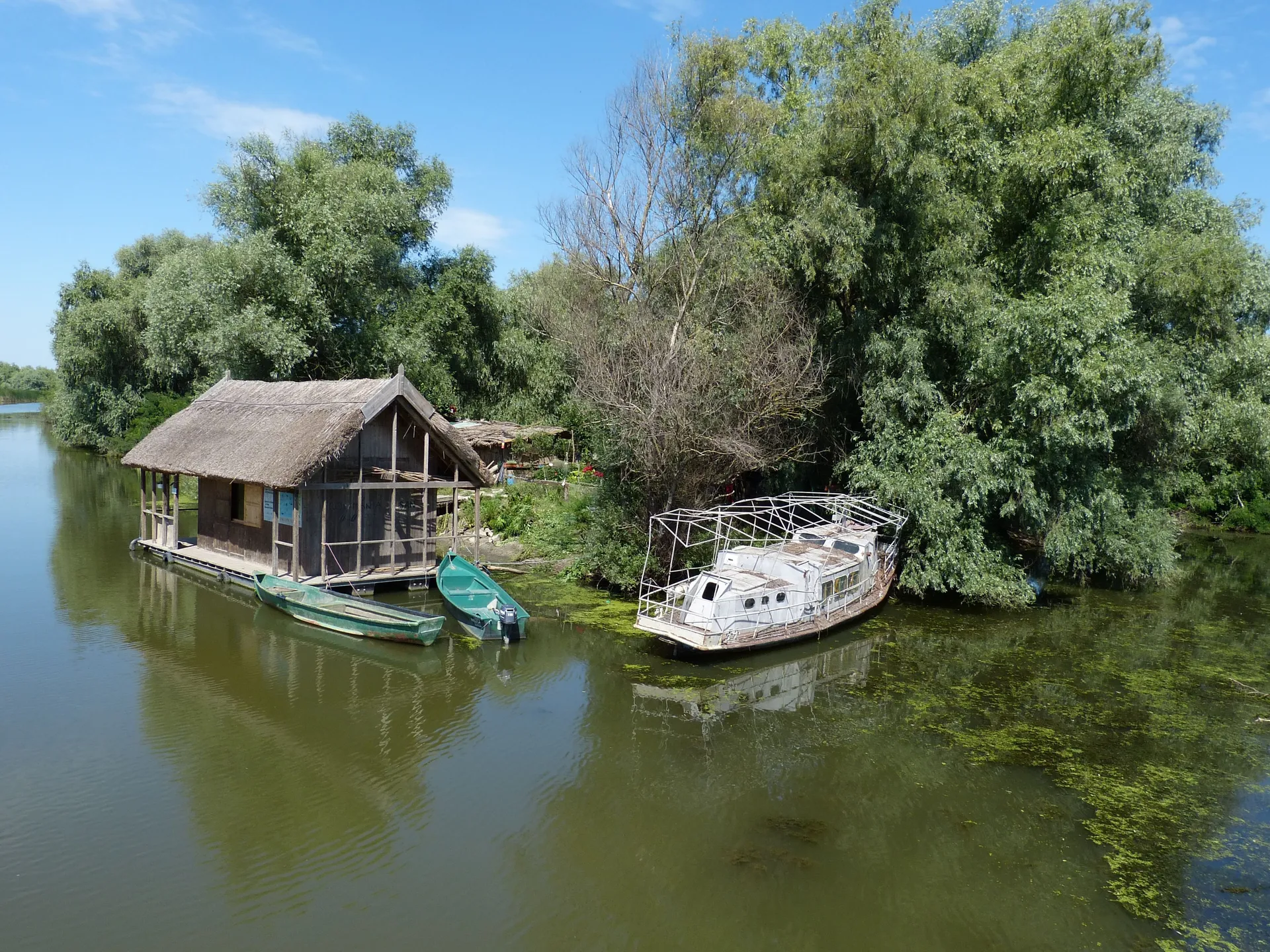
Tulcea sits at the western gateway to the Danube Delta—the largest and best-preserved river delta in Europe, a UNESCO World Heritage Site and Biosphere Reserve that spreads across 5,165 square kilometers of reed beds, floating islands, lagoons, and channels in a landscape so flat and vast that it seems to merge with the sky at every horizon. The city itself, perched on the Danube's southern bank where the river begins its final division into three main branches before reaching the Black Sea, serves as the embarkation point for one of Europe's most extraordinary natural experiences.
Tulcea's own history extends well beyond its role as delta gateway. Founded as a Geto-Dacian settlement and later developed by the Romans, Byzantines, and Ottomans, the city's layered heritage is visible in its hillside positioning, its mosque minarets, and its Orthodox churches that coexist in the multicultural harmony that has long characterized this corner of Romania. The Art Museum, housed in an elegant nineteenth-century building, contains one of Romania's finest collections of painting and sculpture, while the Danube Delta Museum provides essential ecological context for the landscape that begins at the city's doorstep.
The delta itself is a world apart. Navigating its channels by small boat is an immersion in a landscape that has barely changed since the Danube first began building its delta some 13,000 years ago. Reed beds, some reaching five meters in height, line the channels in walls of green that open periodically onto floating islands where water lilies carpet the surface and pelicans wheel overhead. The delta supports the largest colony of white pelicans in Europe—over 2,500 breeding pairs—along with Dalmatian pelicans, pygmy cormorants, and over 300 other bird species that make it one of the most important ornithological sites in the world.
The fishing communities of the delta—predominantly Lipovan Russians, descendants of Old Believers who fled religious persecution in the eighteenth century—maintain a way of life governed entirely by the water. Their villages, accessible only by boat, consist of brightly painted houses perched on stilts above the marshy ground, connected by waterways that serve as streets. The traditional delta cuisine revolves around fish: pike perch, catfish, and the prized sterlet sturgeon prepared in thick sour soups called ciorbă, grilled over open fires, or served as caviar—the delta's most luxurious export.
River cruise ships dock at Tulcea's dedicated cruise terminal on the Danube waterfront, where passengers transfer to smaller vessels and motorboats for delta excursions. The delta's shallow channels and narrow waterways cannot accommodate large ships, making the transfer to smaller craft an essential part of the experience. The best season for bird watching is April through June, when the migratory birds arrive and the breeding colonies are at peak activity. Summer brings warm temperatures reaching 30°C and lush vegetation, while autumn offers spectacular congregations of migratory waterfowl preparing for their southward journey. The delta's mosquitoes are legendary—insect repellent is as essential as binoculars for any delta excursion.

