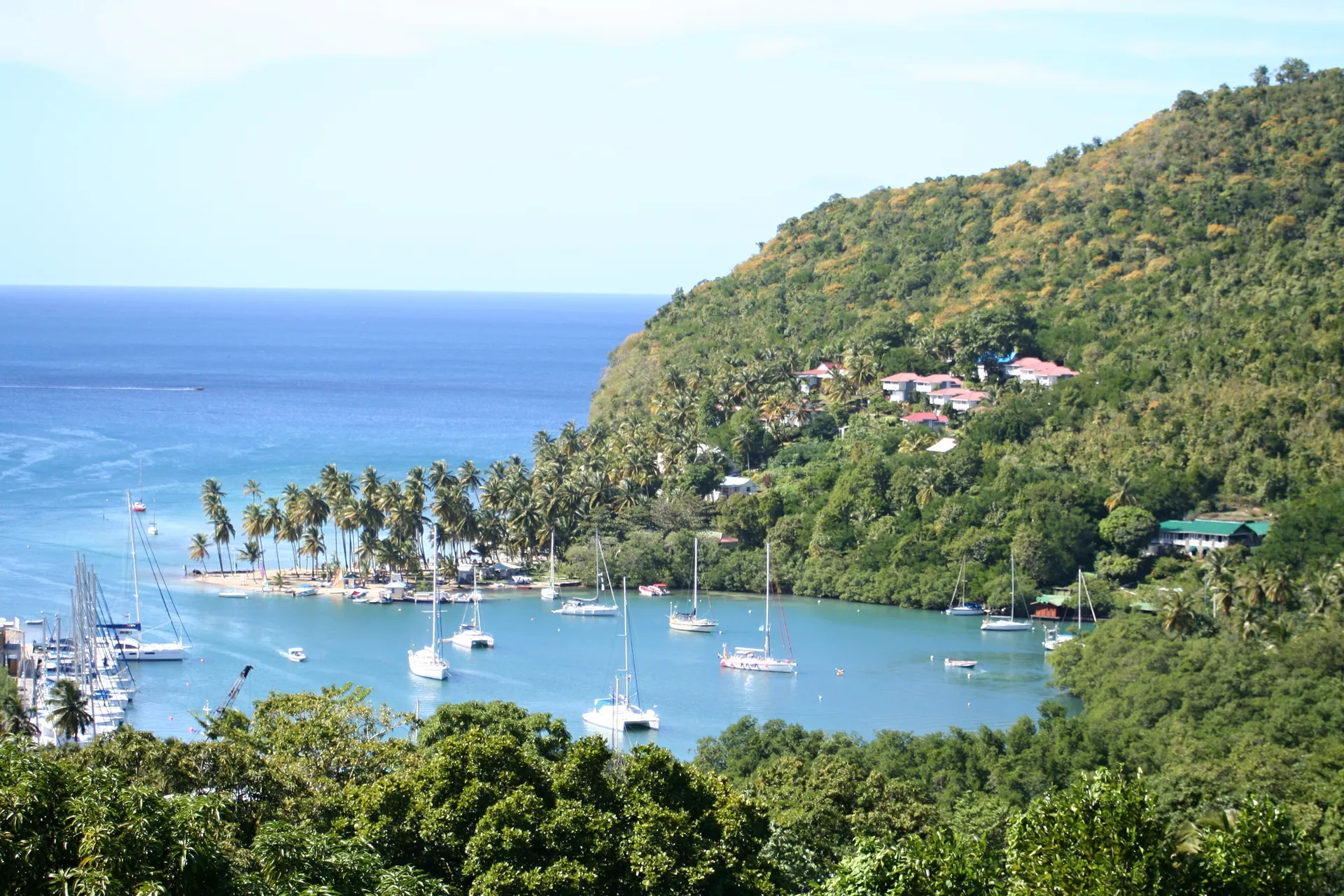
Admiral Lord Rodney, the eighteenth-century British naval commander, is said to have hidden his entire fleet in Marigot Bay during the wars with France — and when you see the bay for the first time, the story seems entirely plausible. This deep, narrow inlet on Saint Lucia's western coast is so perfectly sheltered by steep, palm-clad hillsides that a ship anchored within its embrace is invisible from the open sea. Today, Marigot Bay has traded warships for yachts and its strategic importance for aesthetic supremacy, earning recognition as one of the most beautiful bays in the Caribbean — a distinction that, in this part of the world, means something considerable.
The bay's setting is almost absurdly scenic. Steep green hillsides, dense with coconut palms, breadfruit trees, and tropical hardwoods, plunge to a narrow channel of calm, azure water. A mangrove-fringed lagoon at the bay's inner reaches provides shelter for boats and a habitat for herons, kingfishers, and the occasional green heron. The small beach on the bay's south side, accessible by a charming water taxi that runs continuously across the bay, offers swimming in clear, warm water within a setting that feels both luxurious and genuinely tropical — a quality increasingly rare in the modern Caribbean.
Saint Lucian cuisine at Marigot Bay showcases the island's Creole heritage with sophistication. Green fig (green banana) and saltfish — the national dish — appears alongside Caribbean staples like fried plantain, breadfruit, and callaloo soup. Fresh-caught dorado, snapper, and lobster are prepared with the Creole seasonings — thyme, bay leaf, Scotch bonnet pepper, and local spices — that give Saint Lucian cooking its distinctive warmth. The bay's waterside restaurants range from casual beach bars serving rum punch and grilled fish to more refined establishments where French Caribbean culinary traditions (reflecting Saint Lucia's dual colonial heritage) produce sophisticated dishes that rival anything on the island.
Beyond the bay, Saint Lucia offers natural spectacles of genuine grandeur. The Pitons — Gros Piton and Petit Piton, twin volcanic spires rising dramatically from the sea on the island's southwestern coast — are UNESCO World Heritage landmarks and among the most iconic natural features in the Caribbean. The Soufriere sulphur springs, billed as the world's only "drive-in volcano," allow visitors to walk among steaming fumaroles and bubbling mud pools. The rainforest interior harbors the endangered Saint Lucia parrot, beautiful waterfalls, and zip-line canopy tours that traverse the treetops with exhilarating views of the island's mountainous spine.
Marigot Bay can accommodate smaller cruise vessels and luxury yachts at its marina, while larger ships anchor off the coast and tender passengers in. The bay is located approximately 45 minutes from Castries, the capital, and approximately 90 minutes from the Pitons. Saint Lucia enjoys a tropical climate with a dry season from January to April that offers the most reliable sunshine and calmest seas. The hurricane season runs from June to November, with September and October carrying the highest risk. Marigot Bay offers cruise travellers an intimate Caribbean experience — a pocket of tropical perfection where natural beauty, Creole culture, and the gentle rhythms of island life converge in a setting of extraordinary charm.

