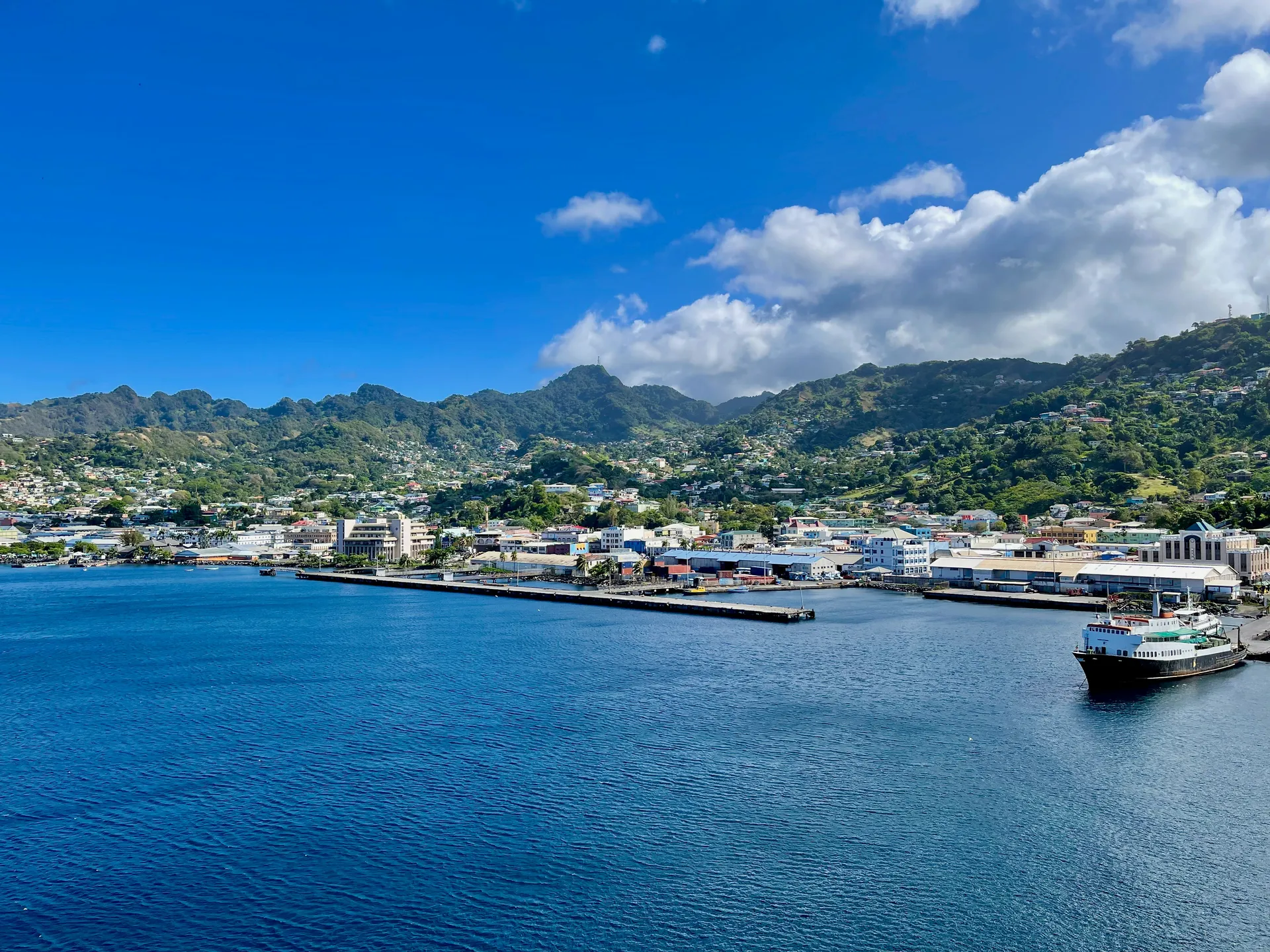
Founded in the early eighteenth century by French settlers who recognised the sheltered brilliance of its harbour, Kingstown has served as the capital of Saint Vincent since British colonial rule was formalised in 1763. The city's Georgian architecture — most strikingly, St George's Anglican Cathedral, consecrated in 1820 with its remarkable stained-glass windows originally commissioned for St Paul's Cathedral in London — speaks to a layered past where indigenous Garifuna resistance, European ambition, and African resilience converged on these volcanic shores. Few Caribbean capitals carry their history so visibly, with cobblestone lanes and arched stone warehouses still framing daily life along the waterfront.
Walking through Kingstown is an exercise in sensory immersion. The city cascades from the ridgeline of Berkshire Hill down to the crescent of its deep-water harbour, its streets alive with the cadence of Vincentian patois and the bright geometry of painted wooden balconies. The covered market on Halifax Street, operating since 1901, remains the archipelago's beating commercial heart — a cathedral of tropical produce where vendors arrange nutmeg, arrowroot, and cinnamon bark into fragrant still lifes. Beyond the market's iron roof, the Botanic Gardens of Saint Vincent, established in 1765 and among the oldest in the Western Hemisphere, harbour a breadfruit tree descended from the original specimens Captain Bligh delivered aboard HMS Providence in 1793.
The culinary landscape of Kingstown rewards those who venture beyond resort dining with a vocabulary of flavours unique to these Windward Islands. Roasted breadfruit, sliced and served alongside saltfish buljol — a piquant salad of shredded salt cod, tomatoes, and Scotch bonnet peppers — anchors the national plate with understated brilliance. Street vendors offer fried jackfish with provisions, the local term for a medley of dasheen, eddoes, and green plantain that forms the starchy foundation of Vincentian cuisine. For something sweeter, seek out a glass of sorrel drink, steeped from dried hibiscus flowers with cinnamon and clove, or the locally distilled Sunset rum, best sipped with a squeeze of Grenadine lime while overlooking the harbour at dusk.
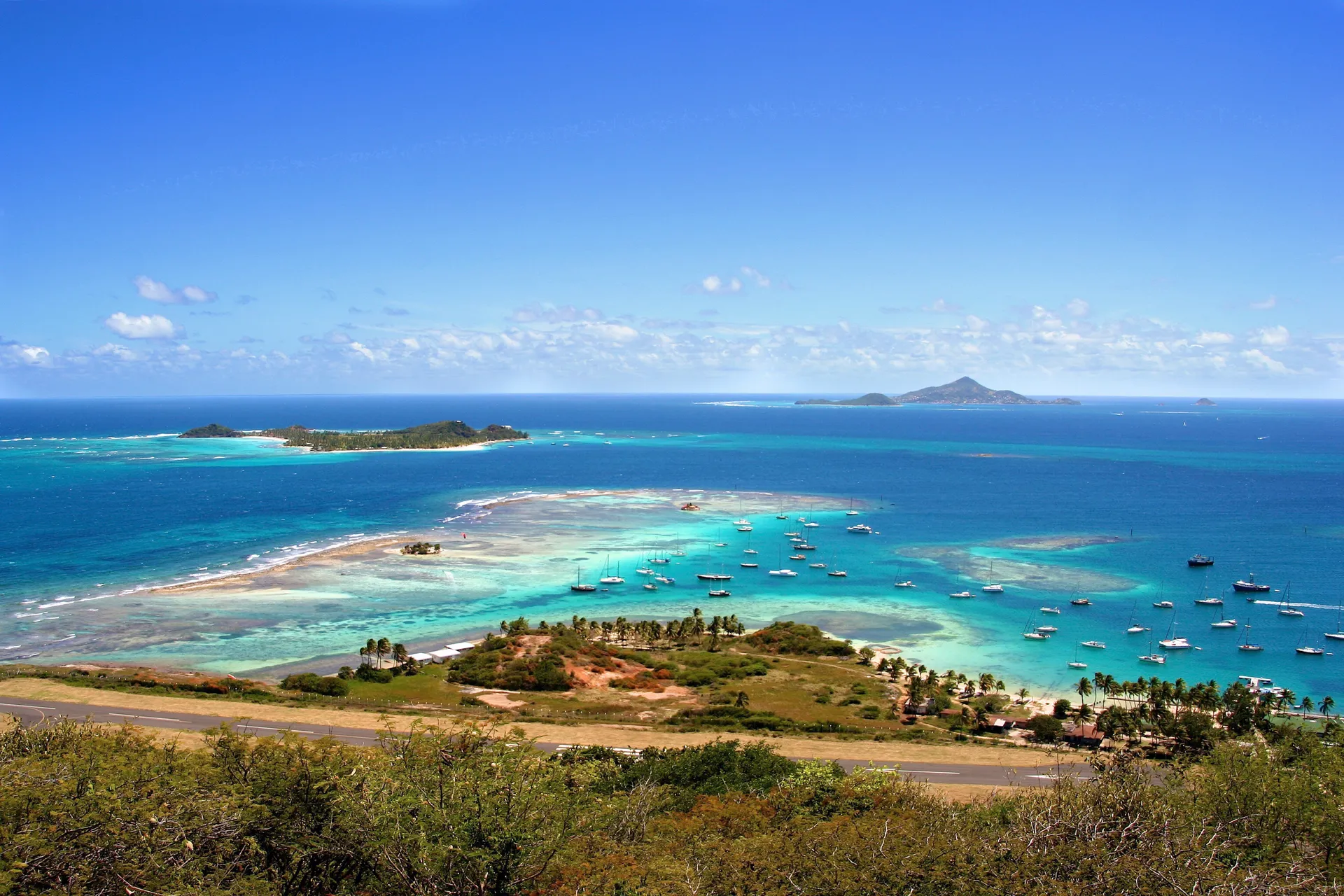
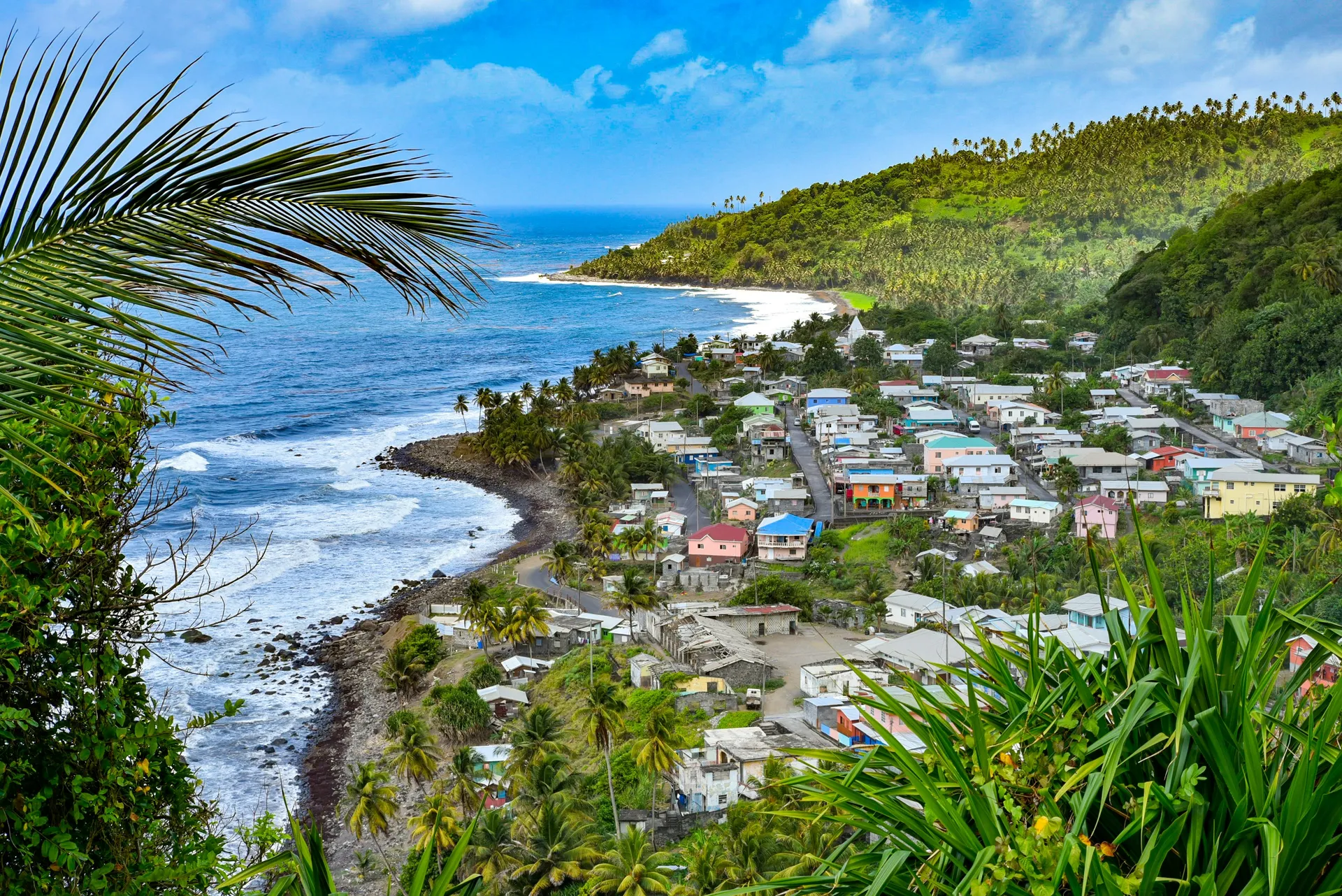
Kingstown's position as the gateway to the Grenadines transforms any port call into an invitation for wider exploration. The volcanic drama of Saint Vincent itself — from the smouldering La Soufrière volcano to the black-sand beaches of the windward coast — offers raw, untamed beauty rarely found this close to a capital city. To the south, the archipelago unfurls in a chain of thirty-two islands and cays, with Union Island serving as the bohemian outpost where kite surfers and yacht crews mingle against a backdrop of the Pinnacle's jagged silhouette. Grenada, the fragrant Spice Isle, lies within easy reach, its nutmeg plantations and Grand Anse beach completing a circuit of Windward Island splendour that few Caribbean itineraries can rival.
Kingstown's modern cruise terminal at the deep-water port accommodates the full spectrum of contemporary voyaging, from the intimate expeditions of Emerald Yacht Cruises and the classic British sensibility of Ambassador Cruise Line and P&O Cruises, to the grand-scale sailings of Royal Caribbean and MSC Cruises. European travellers arrive aboard AIDA, Costa Cruises, and TUI Cruises Mein Schiff, their passengers spilling into the market district with the curiosity that only a genuine working capital — rather than a manufactured cruise village — can satisfy. Oceania Cruises, with its culinary-forward philosophy, finds a natural ally in Kingstown's authentic food culture, and tender-free berthing means guests step directly from gangway to cobblestone with nothing between them and the island's unhurried rhythm.