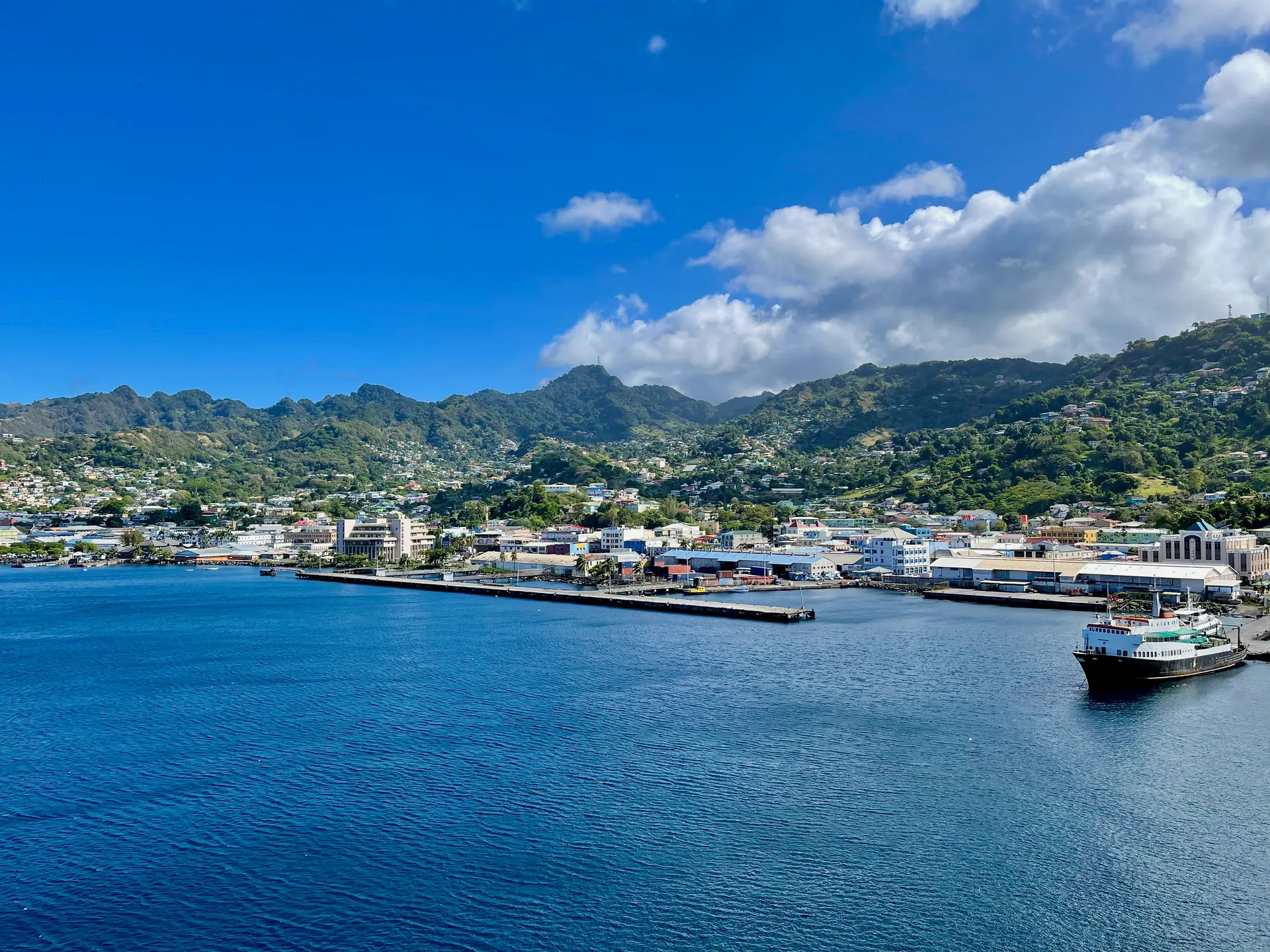
Once a whaling outpost settled by French and British colonists in the 18th century, Port Elizabeth on the island of Bequia retains an authenticity that the wider Caribbean has long since traded for resort complexes and cruise terminals. The town's heritage is woven into its waterfront — the Bequia Maritime Museum chronicles the island's centuries-old boat-building tradition, while the nearby Old Hegg Turtle Sanctuary speaks to a quieter conservation story that predates modern eco-tourism. It is, in every sense, a place that earned its character rather than designed it.
Admiralty Bay unfolds before you like a watercolour left to dry in the sun: wooden schooners and polished yachts share the same turquoise anchorage, while the Belmont Walkway traces the shore past gingerbread-trimmed cottages painted in faded coral and sea-glass blue. Port Elizabeth moves at the pace of a conversation — unhurried, warm, genuinely curious about the stranger who wandered in. The Saturday morning market along the waterfront is less a commercial affair than a social ritual, where fishermen offload the morning's catch and women arrange pyramids of soursop, golden apples, and fragrant nutmeg. There is no velvet rope here, only the quiet confidence of a place that knows exactly what it is.
The culinary landscape of Bequia rewards those willing to eat where the locals eat. Seek out *lobster grilled over charcoal* at one of the beachside shacks along Lower Bay, where the crustaceans arrive so fresh they practically introduce themselves. The national dish, *roasted breadfruit with fried jackfish*, is elemental Caribbean cooking — smoky, flaky, and impossibly satisfying when paired with a sharp pepper sauce made from local Scotch bonnet chillies. For something more refined, the waterfront restaurants serve *lambi* — tenderised conch simmered in coconut curry — alongside rum punch mixed with the island's own Sunset rum. Do not leave without trying *coconut drops*, the dense, caramelised confection sold in brown paper from market stalls, or a plate of *callaloo soup* enriched with dasheen leaves and salt pork, a dish that has anchored Vincentian tables for generations.
Bequia's position at the northern edge of the Grenadines makes it a natural gateway to some of the Caribbean's most unspoiled landscapes. A short sail south reaches the dramatic volcanic silhouette of Union Island, where the Tobago Cays Marine Park offers snorkelling among hawksbill turtles in water so clear it barely registers as liquid. The lush, mountainous interior of Saint Vincent — the archipelago's mainland — rewards day-trippers with the La Soufrière volcano trail and the oldest botanical gardens in the Western Hemisphere, established in 1765. Further south still, Grenada's spice plantations and Grand Anse Beach provide a fragrant counterpoint to the Grenadines' stripped-back beauty. Together, Saint Vincent and the Grenadines compose a cruising ground where each island feels like a different movement in the same symphony.
Port Elizabeth's deep, sheltered Admiralty Bay has welcomed sailing vessels for centuries, and today it serves as a tender port for some of the most distinguished names in expedition and luxury cruising. Silversea and Seabourn frequently include Bequia on their intimate Caribbean itineraries, their small-ship profiles perfectly suited to the bay's proportions. Ponant and Azamara bring a spirit of cultural immersion, often scheduling extended calls that allow passengers to wander beyond the waterfront, while Regent Seven Seas Cruises and Cunard offer the port as a jewel-box stop on broader Caribbean voyages. Viking and Costa Cruises have increasingly added Bequia to their seasonal rotations, recognising that seasoned travellers now crave the unhurried and the authentic over the engineered and the familiar. Arriving by tender — the bay glittering, the hillside rising green above painted rooftops — remains one of the Caribbean's most cinematic port approaches.

