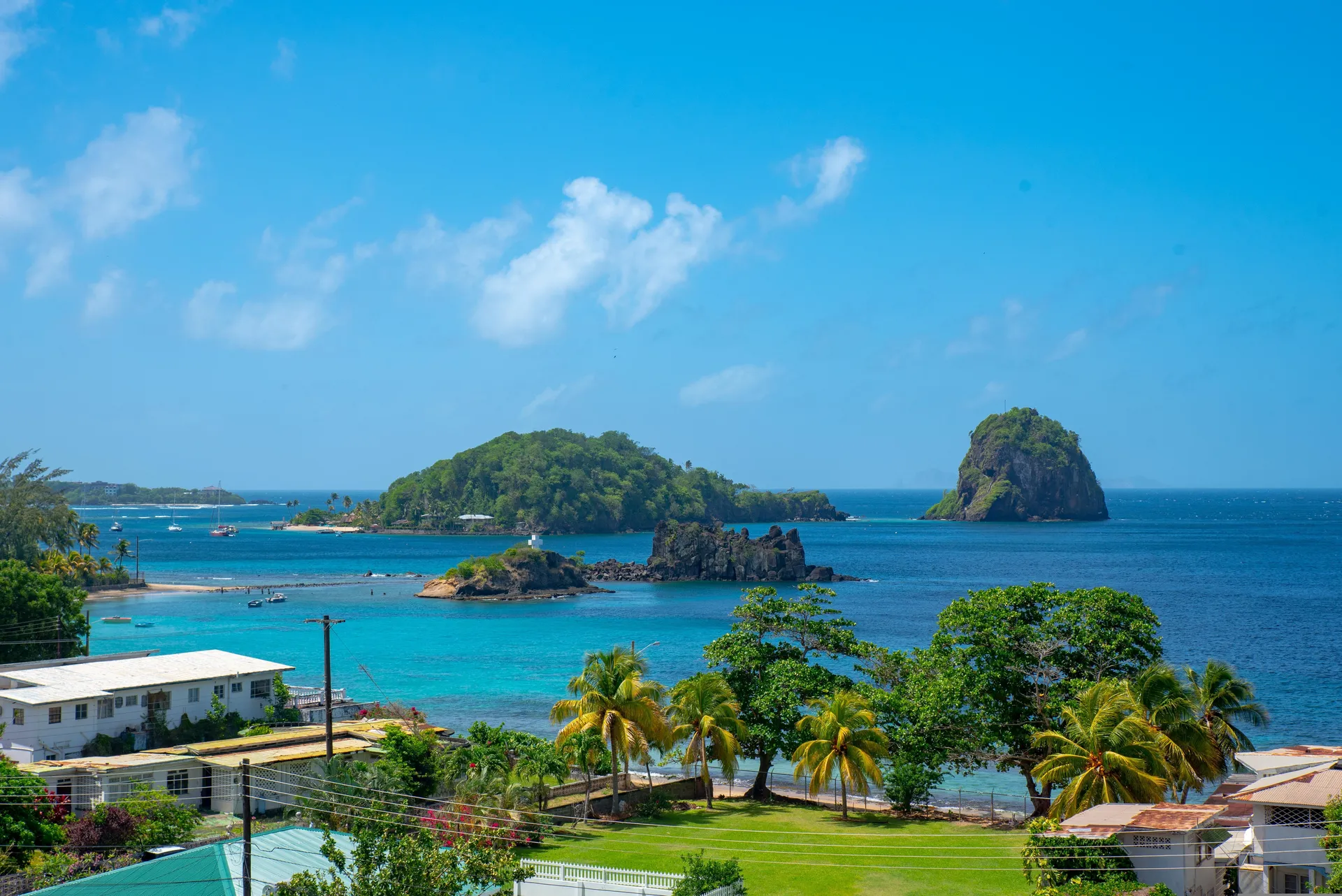
The Tobago Cays are a vision of the Caribbean distilled to its purest elements—five tiny uninhabited islands surrounded by coral reefs, enclosed by a horseshoe-shaped barrier reef, and set in water so clear that you can read the name on an anchor chain twenty feet below. Part of the Tobago Cays Marine Park in the southern Grenadines, this protected archipelago represents one of the last relatively pristine reef ecosystems in the Caribbean, and the experience of swimming, snorkeling, and anchoring among these islands has earned a reputation that draws sailors and expedition cruise passengers from around the world.
The cays—Petit Rameau, Petit Bateau, Baradal, Petit Tabac, and Jamesby—are small enough to wade around at low tide, their white-sand beaches fringed by sea grape trees and coconut palms that lean with the trade winds. The surrounding waters display a gradient of blues and greens that defy the capacity of cameras: turquoise in the shallows, aquamarine over the sea grass beds, and deep sapphire in the channels between the cays. Petit Tabac, the most photogenic of the group, was used as a filming location for Pirates of the Caribbean, and its deserted beach and single grove of palms match the castaway fantasy with almost cinematic precision.
The marine life of the Tobago Cays is the primary attraction and the reason for the marine park's existence. The Horseshoe Reef, which protects the cays from the open Atlantic, supports populations of brain coral, elkhorn coral, fan coral, and a diversity of tropical fish—parrotfish, angelfish, sergeant majors, and the vivid blue tang—that make snorkeling here accessible and rewarding even for beginners. Green sea turtles are abundant in the sea grass beds between the cays, grazing with a languid unconcern that allows snorkelers to swim alongside them for extended encounters. Hawksbill turtles and the occasional southern stingray complete the marine tableau. The park's no-take fishing regulations have allowed marine populations to recover, making the Tobago Cays a living demonstration of what Caribbean reefs can look like when properly protected.
The experience at the Tobago Cays is one of elegant simplicity. There are no hotels, no restaurants, and no infrastructure on the islands—just sand, palm trees, and reef. Local boat boys from Mayreau and Union Island sell grilled lobster, lambi (conch), and cold drinks from their boats, setting up impromptu barbecues on the beach that constitute some of the most memorable meals in the Caribbean. The anchorage between Petit Rameau and Petit Bateau fills with yachts and catamarans, creating a floating community where sundowners on deck, shared stories, and the evening appearance of the green flash on the horizon are the social rituals.
The Tobago Cays are accessed by boat from Union Island, Mayreau, or sailing charters based throughout the Grenadines. Expedition cruise ships and luxury yachts anchor in the protected waters and offer Zodiac excursions to the beaches and snorkeling sites. The best time to visit is December through May, when the trade winds are steady, rainfall is minimal, and the visibility for snorkeling is at its best. The marine park charges a modest entry fee that supports conservation efforts. June through November is wetter and falls within hurricane season, though the Grenadines lie south of the main hurricane track and experience fewer direct hits than the northern Caribbean.

