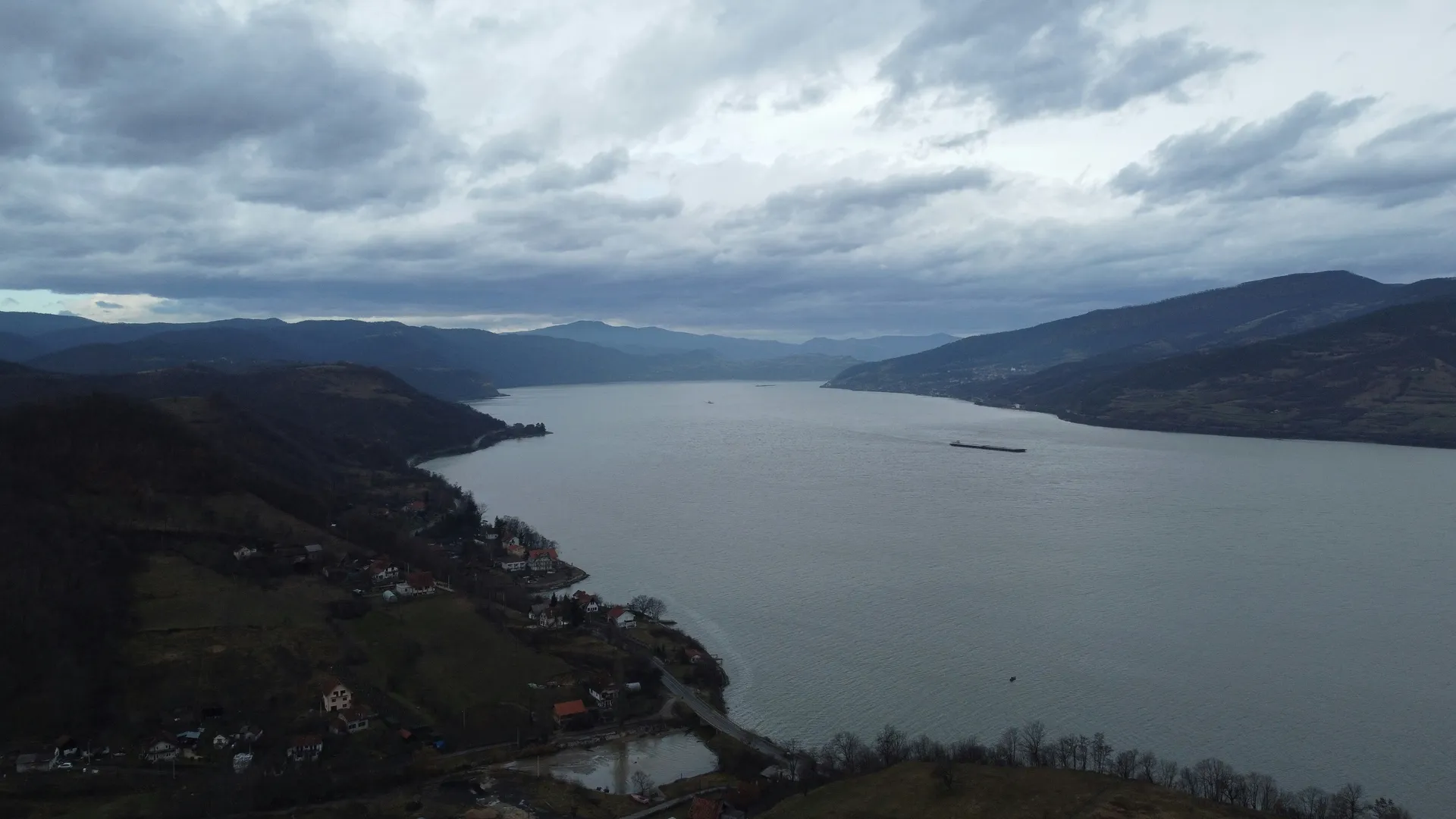
Where the Danube narrows into the Iron Gates gorge — one of Europe's most dramatic natural corridors — the small Serbian town of Donji Milanovac sits perched above waters that have carried civilizations for millennia. This stretch of river has witnessed Roman emperor Trajan's ambitious road carved into sheer cliff faces in the first century AD, remnants of which still cling to the gorge walls as a testament to imperial ambition. Before the construction of the Đerdap hydroelectric dam in the 1960s and 70s, the old town was submerged beneath the rising reservoir, and its inhabitants relocated to higher ground — a quiet tragedy that lends this place an almost spectral depth.
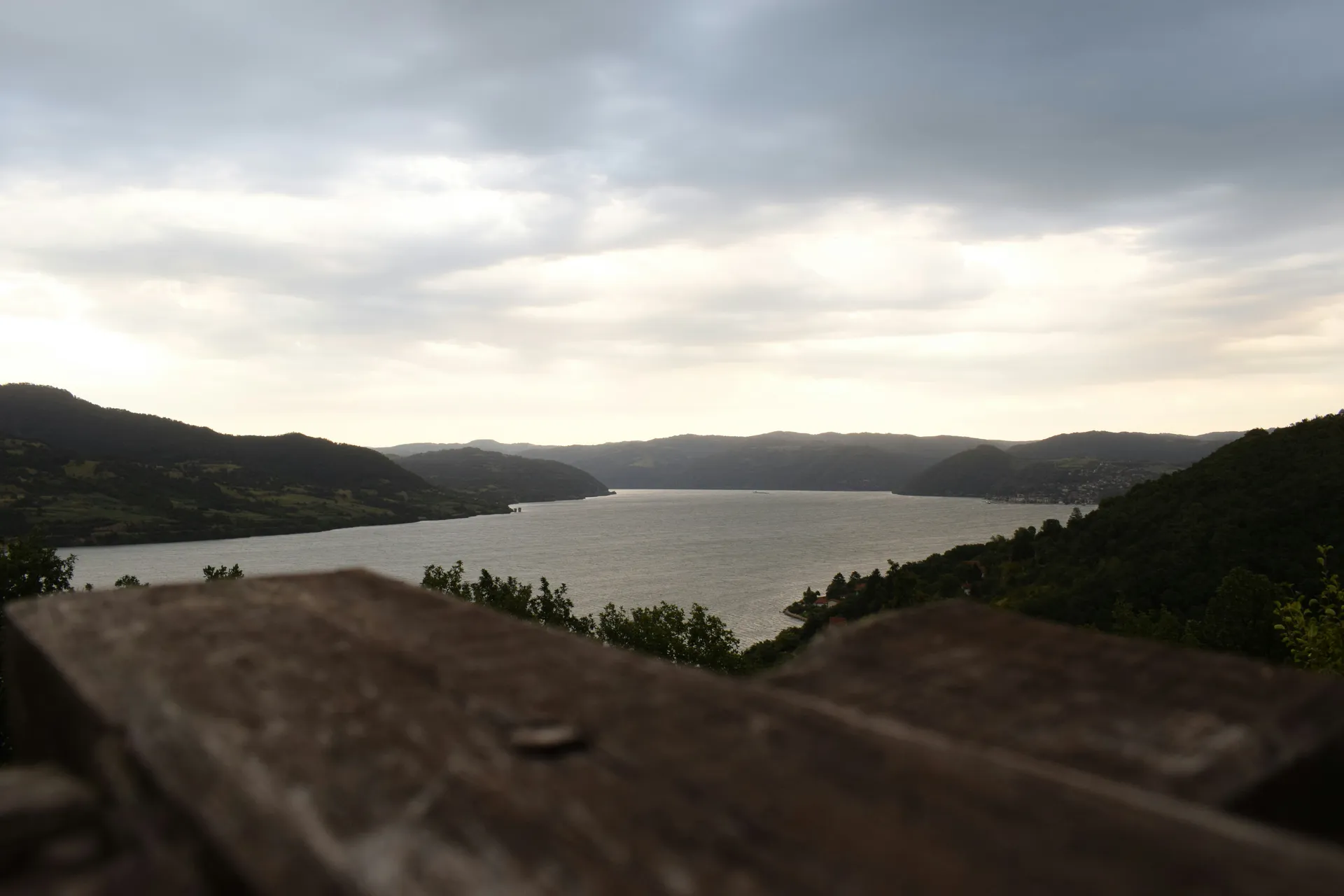
Today's Donji Milanovac is an unhurried settlement of some 2,400 souls, draped along the right bank of Lake Đerdap like a watercolour left to dry in the afternoon sun. The promenade traces the lakeshore with an intimacy that larger ports cannot replicate — here, the Danube is not a thoroughfare but a presence, slate-blue and immense, hemmed by forested limestone cliffs that rise vertically from the water's edge. Đerdap National Park envelops the town in old-growth beech and oak, and the air carries the mineral coolness of the gorge even in high summer. For travellers weary of Europe's over-curated riverside cities, this is a revelation: nature at a scale that humbles, paired with a quietness that restores.
Serbian cuisine in this corner of the country draws from both the river and the surrounding Homolje mountains, and locals will insist you begin with a bowl of riblja čorba — a paprika-stained fish soup ladled from cauldrons that have simmered since morning, made with catfish or carp pulled from the Danube. Follow it with ćevapi or pljeskavica from a local grill, the charcoal smoke drifting through the village like an invitation. Kajmak, a luscious clotted cream spread, accompanies nearly everything, and the region's šljivovica — plum brandy aged in mulberry-wood casks — is sipped slowly and with reverence. For those with a sweet tooth, the walnut-stuffed orahnjača pastry offers a fitting conclusion, best enjoyed at a terrace overlooking the lake as the light softens to amber.
The hinterland rewards exploration in every direction. Upstream, the medieval fortress of Golubac rises from a rocky promontory like a page torn from a storybook, its ten towers recently restored to brooding grandeur. A short journey inland leads to Lepenski Vir, the extraordinary Mesolithic archaeological site where seven-thousand-year-old sculpted boulders — haunting, fish-faced figures — offer evidence of one of Europe's earliest organised settlements along the Danube. Belgrade, Serbia's vibrant capital, lies roughly 250 kilometres to the west, its Bohemian quarter of Skadarlija and the mighty Kalemegdan fortress warranting at least a full day. Novi Sad, the refined cultural capital of Vojvodina, provides a gentler counterpoint with its Petrovaradin Fortress and flourishing café scene along Zmaj Jovina street.
Donji Milanovac has become a valued waypoint for river cruise lines navigating the Lower Danube, and the town's compact dock welcomes some of the industry's most distinguished vessels. Avalon Waterways and Emerald Cruises typically anchor here as part of their grand Danube itineraries, using the stop as a gateway to Iron Gates excursions and Lepenski Vir. Uniworld River Cruises, with its boutique-hotel sensibility, treats the call as a highlight rather than a transit point, while VIVA Cruises brings a contemporary European flair to the same waters. Viking, perhaps the name most synonymous with river cruising, frequently includes Donji Milanovac on its longer sailings between Budapest and the Black Sea, offering guided walks through the gorge that leave even seasoned travellers momentarily speechless.
In a continent where river ports compete for attention with cathedrals and Christmas markets, Donji Milanovac offers something rarer: the chance to stand at the edge of a gorge that predates human memory and feel, for a suspended moment, genuinely small. It is not a destination that shouts. It whispers — and those who lean in to listen rarely forget what they hear.