Novi Sad — meaning "New Garden" in Serbian — was founded in 1694 by Serbian merchants and artisans who settled across the Danube from the Habsburg fortress of Petrovaradin. The city earned the epithet "Serbian Athens" in the nineteenth century for its role as the cultural and intellectual capital of the Serbs within the Austro-Hungarian Empire. During the Hungarian Revolution of 1848-49, the city was heavily bombarded and largely destroyed, but rebuilt with the confident neoclassical and art nouveau architecture that defines its center today.
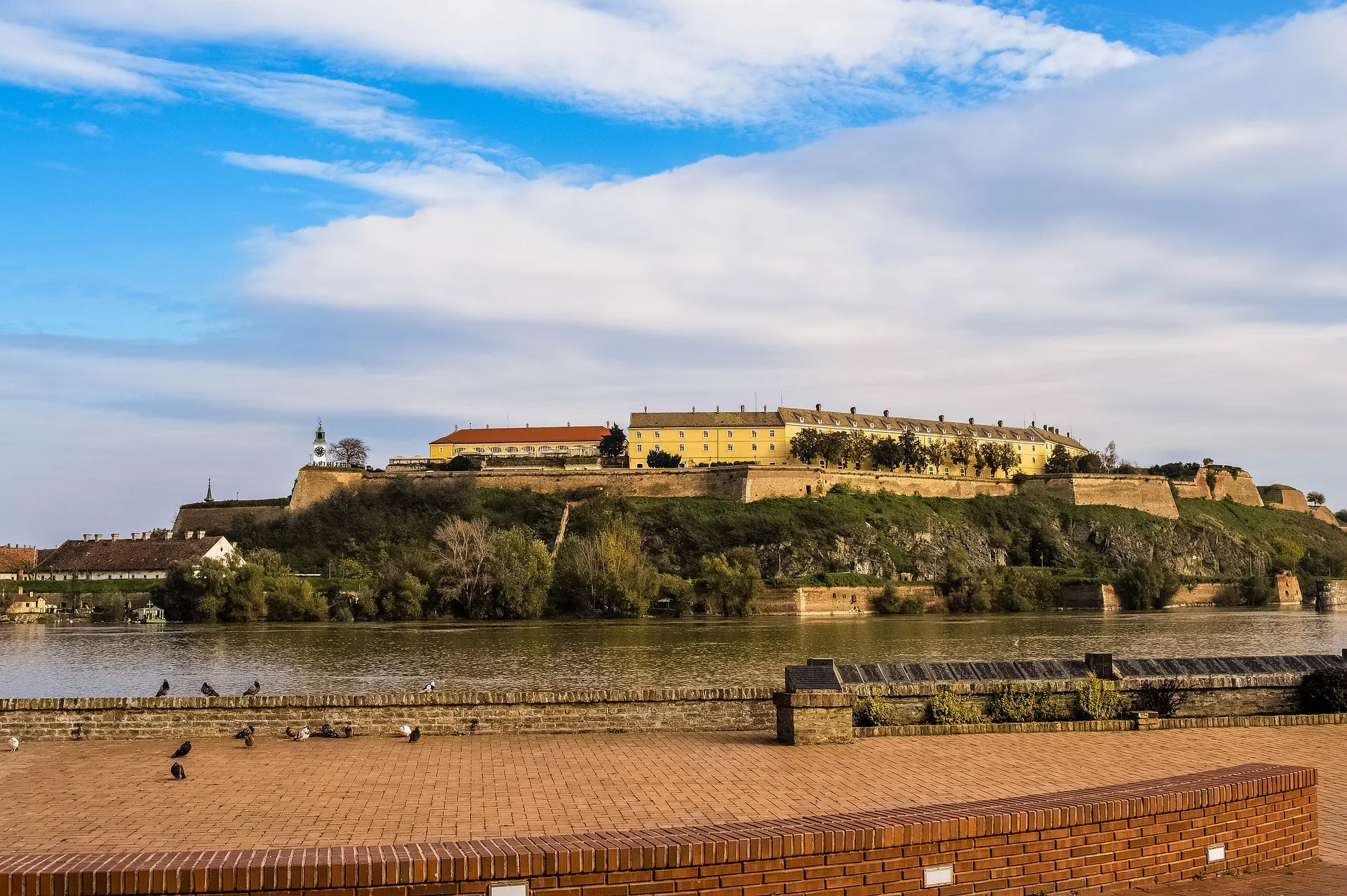
The Petrovaradin Fortress, rising from a volcanic outcrop on the right bank of the Danube, is Novi Sad's defining landmark. Built over nearly a century by the Habsburgs and completed in 1780, this "Gibraltar of the Danube" features sixteen kilometers of underground tunnels, a clock tower whose hands are reversed, and panoramic views across the Vojvodina plain. Since 2000, the fortress has hosted EXIT Festival, one of Europe's largest music festivals, drawing over 200,000 visitors each July. Below, the Danube promenade buzzes with cafés and the peculiarly Serbian institution of the kafana — taverns where live folk music and spirited conversation flow as freely as the rakija.
Vojvodina's cuisine reflects its extraordinary ethnic mosaic — Serbs, Hungarians, Croats, Slovaks, and Romanians have lived side by side for centuries. Ćevapi, the ubiquitous grilled minced-meat sausages served in lepinja flatbread with kajmak, are the national obsession. But Novi Sad's tables also feature Hungarian-influenced dishes: riblja čorba, a fiery paprika-spiked river fish soup; čvarci, crunchy pork cracklings; and kulen, a spicy cured sausage from Srem. For dessert, štrudla filled with poppy seeds, sour cherries, or walnuts reveals the Austro-Hungarian heritage.
Day trips from Novi Sad explore the Fruška Gora, a low mountain range designated as a national park. The "Holy Mountain of the Serbs" shelters sixteen Orthodox monasteries dating from the fifteenth to eighteenth centuries. Sremski Karlovci, a baroque gem fifteen minutes downstream, is famous for its wine cellars and the site where the Treaty of Karlowitz was signed in 1699, ending Ottoman expansion into central Europe.
Novi Sad is a highlight of Danube river cruises. A-ROSA, AmaWaterways, APT Cruising, Avalon Waterways, CroisiEurope, Riviera Travel, Saga River Cruises, Scenic River Cruises, Uniworld River Cruises, Viking, and VIVA Cruises all call here. Nearby ports include Belgrade, Golubac, and the Iron Gates gorge. The season runs from April through October, with late spring and early autumn offering the most pleasant weather.