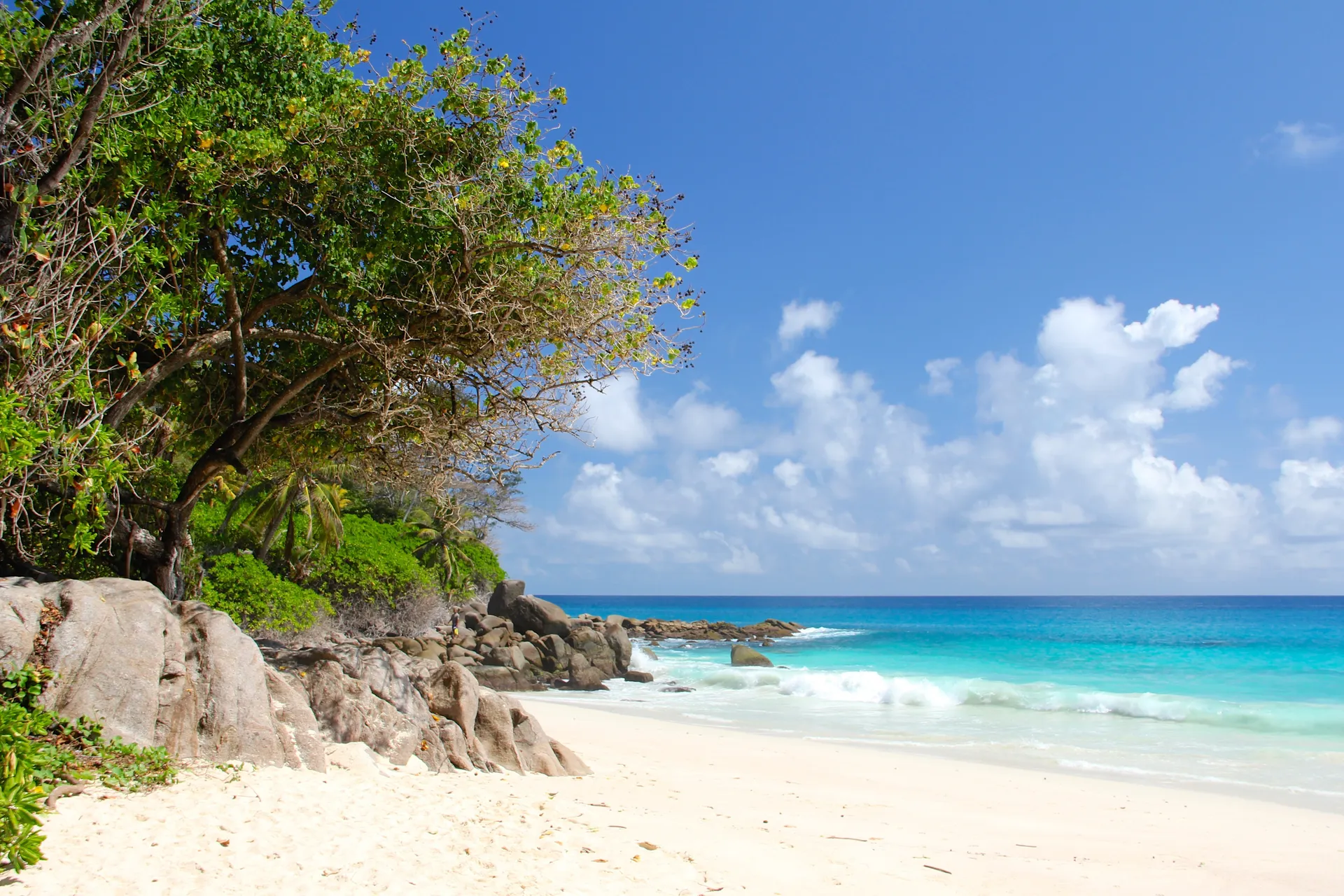
Aride Island is a nature reserve of such concentrated biodiversity that stepping ashore feels like entering a David Attenborough documentary. This small granitic island, just 68 hectares in area and located ten kilometers north of Praslin in the Seychelles archipelago, supports the densest population of breeding seabirds in the Indian Ocean, including the world's largest colonies of lesser noddies and Audubon's shearwaters. The island has been a special reserve since 1973, managed by the Island Conservation Society, and its strict protection has created a sanctuary where nature operates without human interference on a scale that is vanishingly rare in the twenty-first century.
The approach to Aride by zodiac or local boat reveals an island that seems almost alive with birds. Sooty terns wheel overhead in clouds so dense they create shadows on the water. Frigate birds hang motionless on thermals above the island's central ridge, their forked tails silhouetted against the tropical sky. On landing, visitors walk through forest where white-tailed tropicbirds nest in the roots of trees and Seychelles warblers — once one of the world's rarest birds, reduced to just 26 individuals before a successful conservation program — flit through the native vegetation. The island supports ten species of breeding seabirds in total, with over a million birds present during the peak breeding season.
Aride's terrestrial ecosystem is equally remarkable. Wright's gardenia, a flowering plant found nowhere else on Earth, blooms on the island's hillsides. Giant bronze geckos, Seychelles skinks, and hermit crabs are common along the forest trails. The surrounding coral reefs are in excellent health, supporting hawksbill turtles that nest on the island's beaches and a diversity of tropical fish that makes the snorkeling exceptional. Whale sharks have been spotted in the waters around Aride during the plankton-rich months of October and November.
Visiting Aride is a carefully managed experience designed to minimize human impact. Access is limited to small groups, typically arriving by boat from Praslin, and guided walks follow established trails through the forest and along the coast. The island has no permanent accommodation — visitors spend a few hours ashore before returning to their ship or base on Praslin. This limitation is part of Aride's appeal: the island exists on nature's terms, and visitors are privileged guests rather than paying customers.
Emerald Yacht Cruises and Lindblad Expeditions include Aride Island on their Seychelles itineraries, with zodiac landings providing access to the reserve. The best time to visit is October through April, when the northwest monsoon brings calmer seas and the seabird breeding season is at its most active. May through September's southeast monsoon can make landings difficult due to rougher seas. Aride is a reminder of what the natural world looks like when humans step aside — and the experience of standing amid a million nesting seabirds, with nothing but ocean in every direction, is one of the Indian Ocean's most profound encounters.

