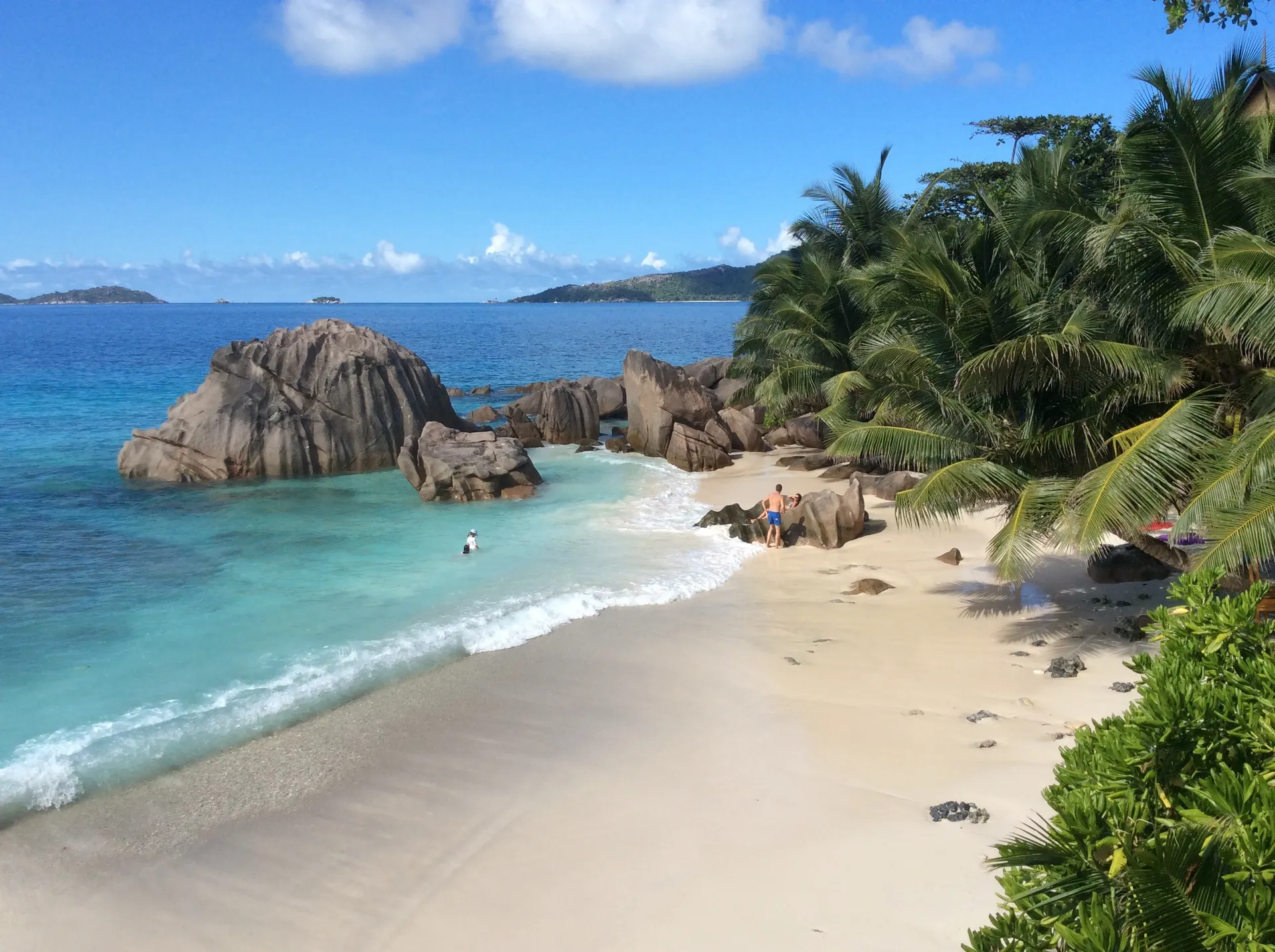
In the warm waters of the Indian Ocean, a thousand miles east of the African coast, the island of La Digue exists in a state of perfection so absolute that first-time visitors often suspect their eyes of exaggeration. This is the smallest of the Seychelles' three inhabited granitic islands, a place of just ten square kilometres where the mode of transport is the bicycle and the ox cart, where granite boulders the size of houses line beaches of powder-white sand, and where the pace of life has not so much slowed as stopped to consider whether hurrying was ever really necessary.
The Seychelles archipelago, comprising 115 islands scattered across an area of ocean larger than France, is one of the most geologically unusual island groups on Earth. Unlike the volcanic or coral origins of most tropical islands, the inner Seychelles — including La Digue — are granitic, fragments of the ancient supercontinent Gondwana that separated from India roughly 65 million years ago. This geological heritage gives La Digue its most distinctive feature: the massive, smooth-weathered granite boulders that line its beaches like sculptures placed by a divine landscape architect. Nowhere is this more spectacular than at Anse Source d'Argent, consistently ranked among the most beautiful beaches in the world, where enormous pink-grey boulders create sheltered coves of crystalline water, their organic shapes framing views so exquisite that they seem artificial.
La Digue's human history is brief compared to its geological antiquity. The island was named by French explorer Marion Dufresne in 1768 after one of his ships, and remained largely uninhabited until the establishment of coconut and vanilla plantations in the nineteenth century. L'Union Estate, a preserved copra plantation, offers visitors a window into this colonial agricultural past — giant tortoises roam its grounds, a traditional copra mill demonstrates how coconut flesh was dried and pressed for oil, and the plantation house maintains the atmospheric simplicity of a Seychellois country home from a century past.
The island's small size and gentle topography make the bicycle the perfect vehicle for exploration. Cycling the island's single main road and its handful of tributary lanes, one passes through a landscape of extraordinary tropical lushness: breadfruit trees, coconut palms, takamaka trees whose spreading branches shade the beaches, and the coco de mer — the extraordinary double-lobed coconut, native only to the Seychelles, that produces the largest seed in the plant kingdom. The Veuve Nature Reserve, in the island's interior, protects the habitat of the Seychelles paradise flycatcher, a critically endangered bird found only on La Digue whose males trail long black tail feathers through the forest canopy with an elegance that justifies their species name.
Creole cuisine in the Seychelles is a delicious synthesis of French, Indian, Chinese, and African influences, shaped by the islands' tropical bounty. Grilled red snapper with Creole sauce — a vibrant blend of tomatoes, onions, garlic, ginger, and chilli — is the quintessential Seychellois dish. Octopus curry, slow-cooked in coconut milk until tender, appears on menus across the island. Ladob, a dessert of ripe plantains simmered in coconut cream with vanilla and nutmeg, showcases the islands' vanilla heritage. Freshly pressed sugarcane juice and the local Seybrew beer provide refreshment, while the fruit bats that hang like furry ornaments from the trees at dusk are, in Seychellois tradition, transformed into a rich curry that adventurous diners may encounter.
AIDA, Azamara, Emerald Yacht Cruises, and Ponant include La Digue on their Indian Ocean itineraries, with passengers typically tendered to the island's small jetty for a half-day or full-day visit. The Seychelles enjoy a tropical climate moderated by ocean breezes, with temperatures ranging between 24 and 32 degrees Celsius year-round. The calmest seas and most consistent sunshine occur during the transitional months of April-May and October-November, between the northwest and southeast monsoons. La Digue is the island that exists in every traveller's imagination before they know its name — a place where natural beauty achieves a standard so high that the word "paradise" feels not like hyperbole but like honest description.

