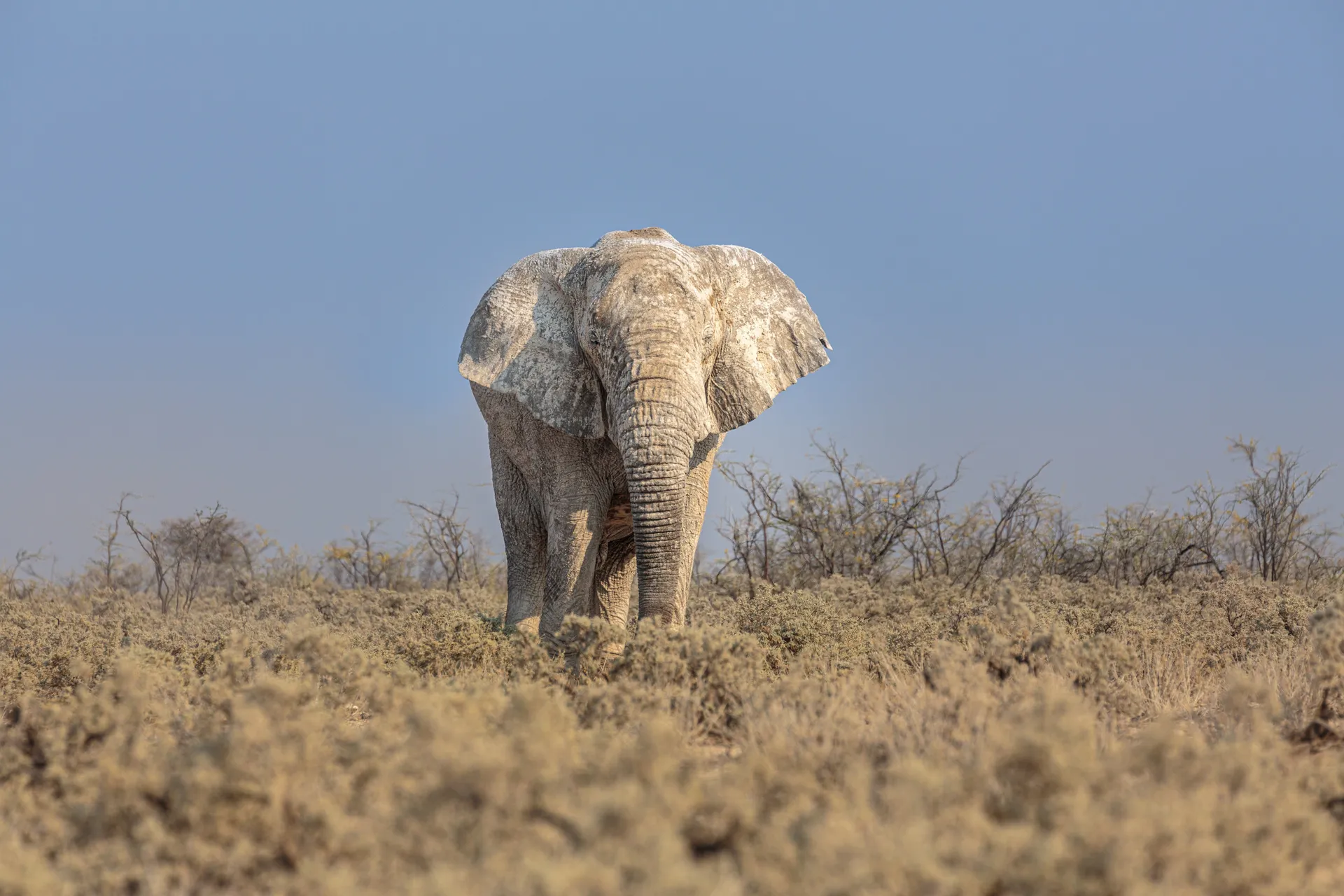
Established in 1898 by President Paul Kruger as the Sabie Game Reserve — one of Africa's first protected wilderness areas — Kruger National Park has evolved over more than a century into a sanctuary spanning nearly two million hectares of untamed bushveld. Officially designated a national park in 1926, it became the cornerstone of South Africa's conservation legacy, sheltering the densest concentration of large mammals on the continent. Today, Kruger stands not merely as a game reserve but as a living testament to the enduring covenant between humanity and the wild.
To arrive at Kruger is to step into a landscape that operates on its own unhurried clock. Dawn breaks in gradients of amber and copper over the Lebombo Mountains, while the bushveld stirs with the low rumble of elephants moving through marula groves and the distant, sawing call of a leopard marking its territory. The park's southern regions, around Lower Sabie and Skukuza, offer the most prolific game viewing — here, the Sabie River draws vast herds to its banks in the dry winter months, creating scenes of almost theatrical intensity. Whether traversing the park in an open Land Cruiser at first light or watching a breeding herd of buffalo from the elevated deck of a private lodge, Kruger delivers the kind of visceral encounter with nature that reshapes one's understanding of wilderness.
The culinary landscape surrounding Kruger has matured into something genuinely compelling. Within the park's luxury concessions, chefs craft multi-course dinners served under ancient jackalberry trees, weaving indigenous ingredients into refined plates — think biltong-crusted springbok loin, morogo (wild spinach) with smoked tomato, and bobotie reimagined with slow-braised kudu. At the legendary Jock Safari Lodge, sundowners come paired with droëwors and chakalaka, the piquant vegetable relish that anchors every braai worth attending. Beyond the park gates, the Lowveld town of White River has become an unexpected gastronomic corridor, where farm-to-table restaurants showcase macadamia nuts, avocados, and subtropical fruits grown in the rich volcanic soils of the escarpment.
Kruger's position in South Africa's northeast makes it a natural anchor for a broader exploration of the region. The administrative capital Pretoria lies roughly four hours southwest, its jacaranda-lined avenues and the imposing Union Buildings offering a study in South African political history. Nearby Sandton, Johannesburg's gleaming commercial heart, provides world-class dining and the boutique shopping of Nelson Mandela Square before or after a safari sojourn. For those drawn southward along the coast, the windswept shores of Arniston — a centuries-old fishing village in the Western Cape — present a hauntingly beautiful counterpoint to the bushveld, while Gqeberha (formerly Port Elizabeth) serves as the gateway to the malaria-free reserves of the Eastern Cape, where the Big Five roam against a backdrop of coastal fynbos.
River cruise operators have begun to weave Kruger into their southern African itineraries with considerable artistry. AmaWaterways pairs the park with their Zambezi River voyages, offering pre- or post-cruise safari extensions that place guests in exclusive-use lodges within Kruger's private concessions, where traversing rights mean game drives unfold without the constraints of public road networks. Tauck, renowned for their seamlessly orchestrated journeys, incorporates Kruger into comprehensive South African programmes that balance wildlife encounters with cultural immersion — their small-group safaris are led by field guides whose knowledge of animal behaviour transforms each sighting into an education. Both operators understand that Kruger is not simply a destination to be visited but an experience to be absorbed, and their itineraries reflect a respect for the rhythms of the bush that seasoned travellers will appreciate.
What distinguishes Kruger from the continent's other great parks is its remarkable accessibility paired with genuine wildness. One can fly into Kruger Mpumalanga International Airport and be watching a pride of lions within two hours, yet the park's northern wilderness areas — the Pafuri region, where baobabs tower over fever tree forests and Makuleke communities share ancestral land with wandering tuskers — feel as remote as any corner of the Okavango. It is this duality that makes Kruger endlessly compelling: civilisation and wilderness not in opposition but in conversation, each enriching the understanding of the other.

