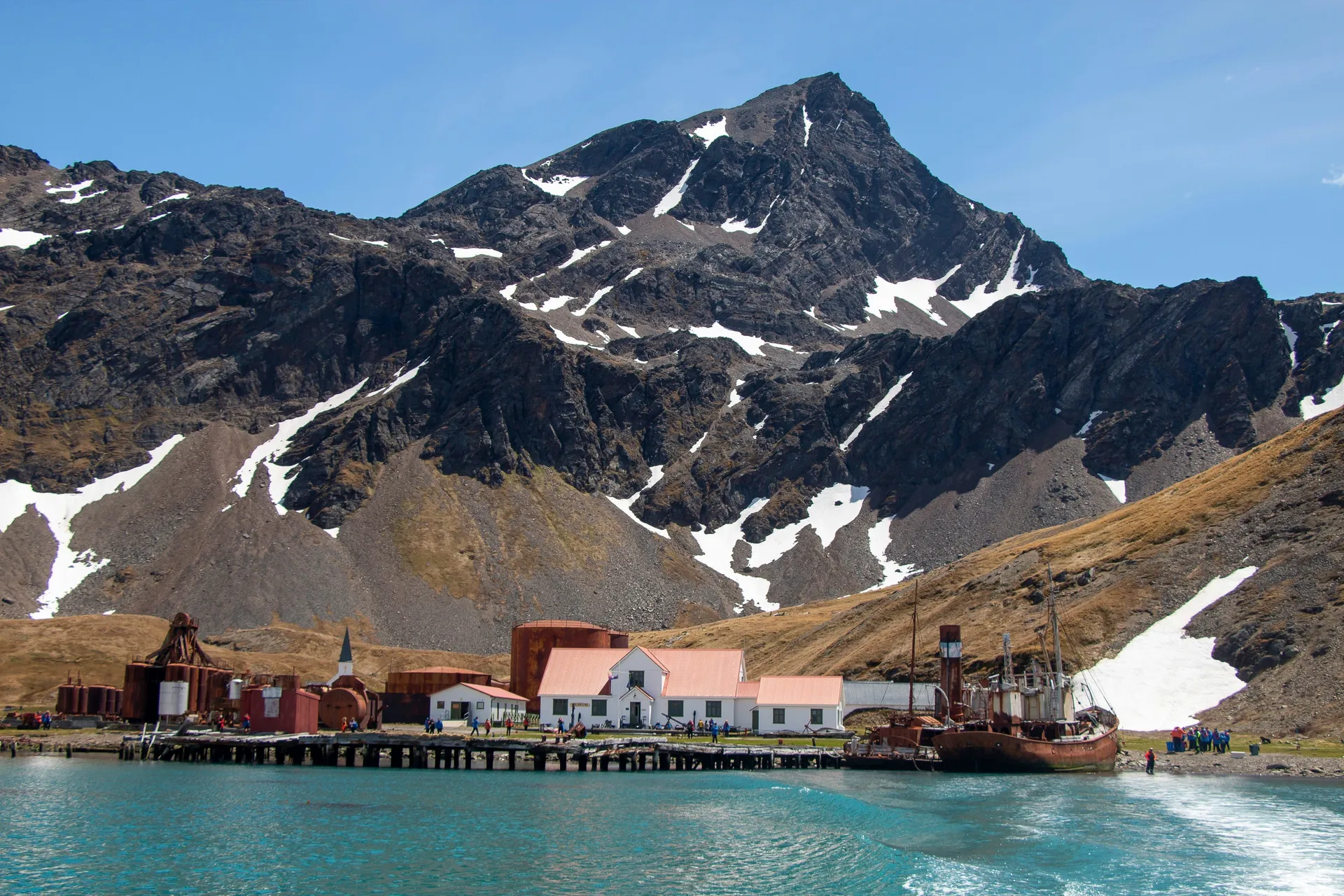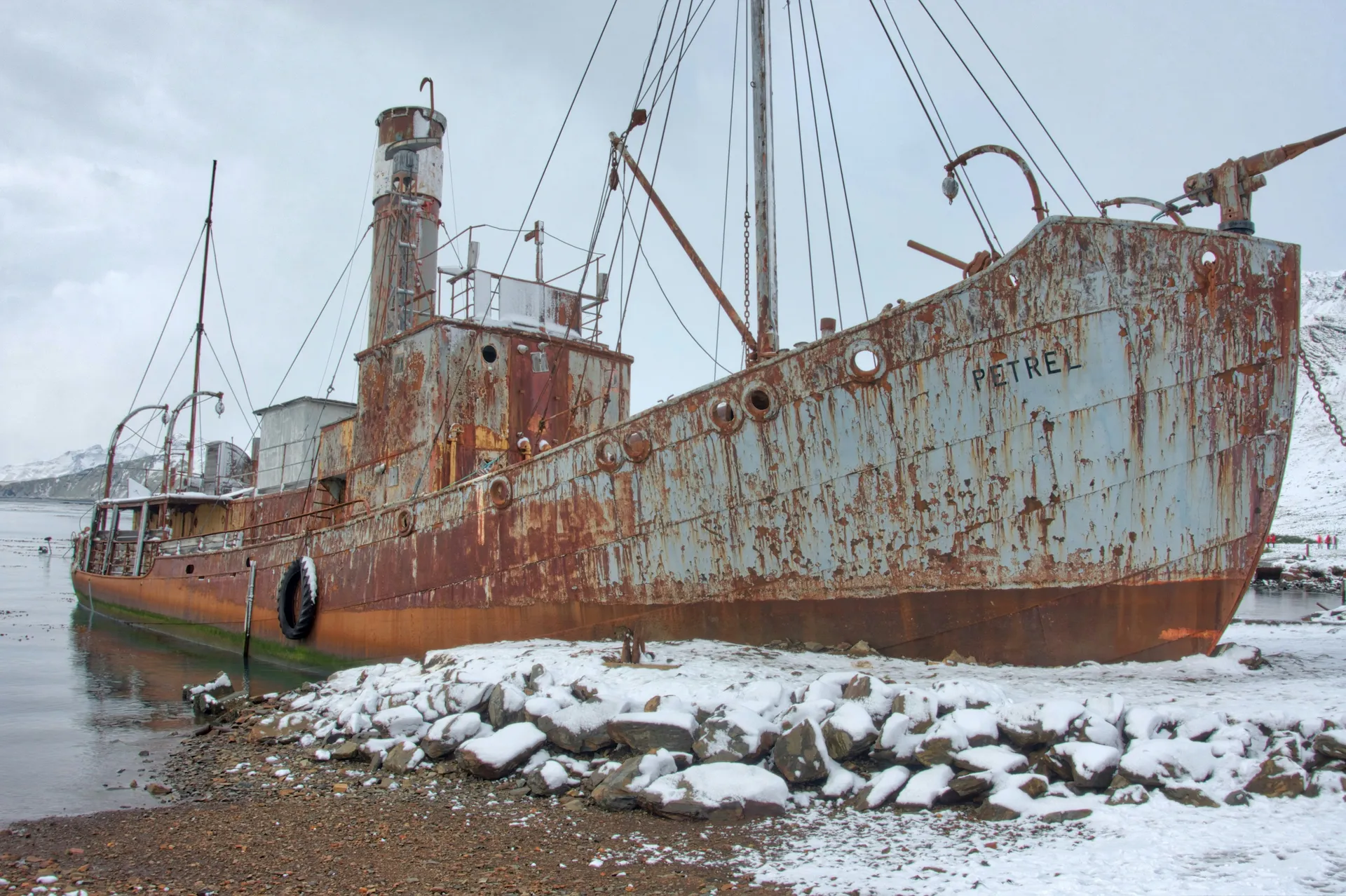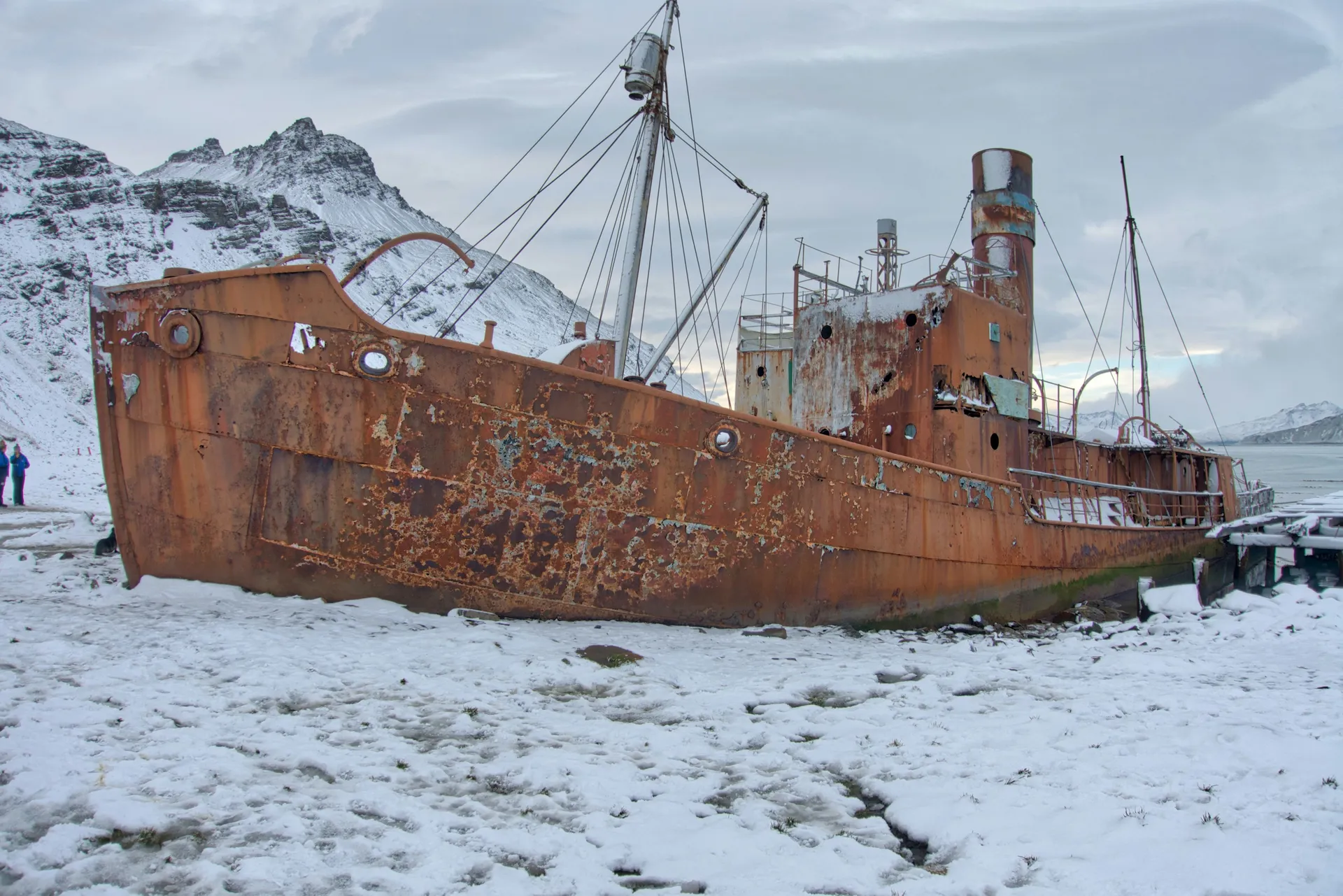
On the northeastern coast of South Georgia, tucked into the sheltered waters of King Edward Cove, Grytviken stands as the most evocative and historically significant abandoned whaling station in the Southern Ocean. Founded in 1904 by the Norwegian sea captain Carl Anton Larsen, the station operated for sixty years, processing the carcasses of over 175,000 whales and transforming their blubber into oil that lit the lamps and lubricated the machinery of the industrialized world. The rusting remnants of that enterprise—boilers, pressure cookers, flensing platforms, and the skeletons of whale catchers—create an industrial ghost town of extraordinary atmospheric power, set against a backdrop of glaciated mountains and wildlife that has reclaimed the site with remarkable thoroughness.
The character of Grytviken today is defined by the collision of industrial decay and natural recovery. Elephant seals haul out on the old slipway where whale carcasses were once winched ashore, their massive bodies lounging among rusting chains and machinery with an air of triumphant reclamation. Fur seals breed in the ruins of the workers' barracks, and king penguins process along the foreshore with the same purposeful dignity they would display on any wild beach. The whaling museum, housed in the former station manager's villa, provides a sobering but essential context for understanding the scale of the industry that operated here: photographs of flensing operations, harpoon heads, and the personal effects of the Norwegian, British, and South American workers who lived in this remote outpost create a narrative that is by turns fascinating and deeply uncomfortable.
The grave of Sir Ernest Shackleton lies in the small whalers' cemetery above the station, marked by a simple granite headstone facing south toward the Antarctic continent that defined his life and legacy. Shackleton died at Grytviken in January 1922, at the beginning of his final expedition, and his widow Emily requested that he be buried here rather than returned to England—a decision that has made the cemetery a place of pilgrimage for polar enthusiasts. Visitors traditionally raise a toast to Shackleton at his graveside, and the expedition leaders who conduct these ceremonies speak of his leadership, endurance, and the extraordinary rescue mission that brought him to South Georgia's opposite coast in 1916.
The natural environment surrounding Grytviken has recovered from the whaling era with impressive vitality. The bay itself supports a resident population of fur seals whose numbers have increased exponentially since the cessation of whaling, and elephant seal harems dominate the beach during the breeding season from September through November. The surrounding mountains, rising to over 2,000 meters, feed glaciers that calve into the bay and provide a dramatic backdrop to the station's industrial ruins. South Georgia pipits—the only songbird in the sub-Antarctic—have benefited from the recent eradication of rats from the island and can now be heard singing in the tussock grass around the station.
Grytviken is visited by expedition cruise vessels operating in the Southern Ocean, typically as part of itineraries that include the Falkland Islands and the Antarctic Peninsula. The station is managed by the South Georgia Heritage Trust, and all visitors must check in at the museum and receive a biosecurity briefing before exploring the site. The visiting season runs from October through March, with December and January offering the best weather. The station's various buildings are in differing states of structural integrity, and visitors must observe clearly marked restricted areas. The whalers' church, restored and reconsecrated, hosts occasional services and is one of the most southerly places of worship in the world.