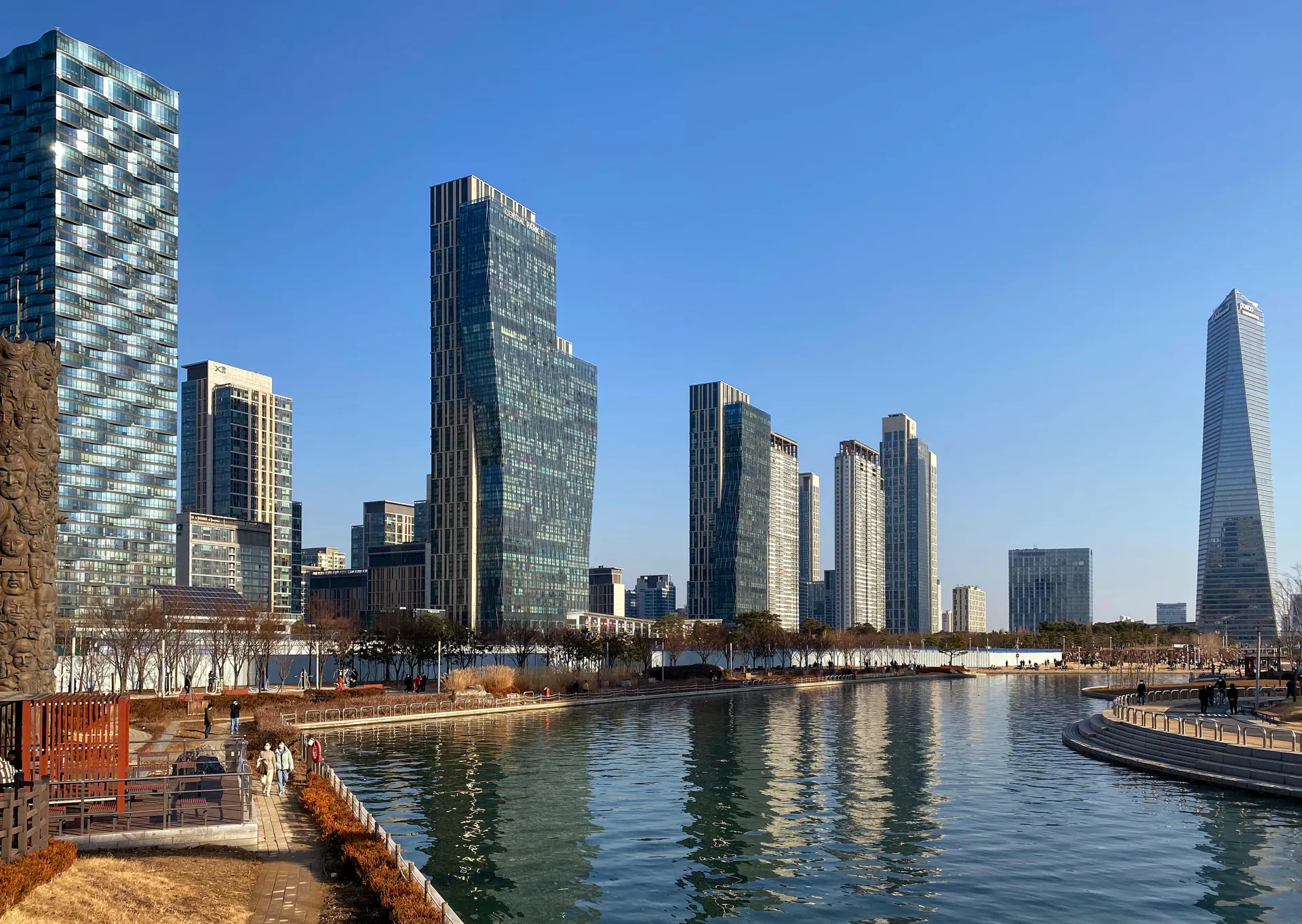
Incheon has reinvented itself from a modest fishing port into South Korea's primary gateway city—a metropolis of three million that serves as the country's main international airport hub and the maritime entry point to Seoul, the capital that lies just 40 kilometers to the east. But Incheon's history runs far deeper than its modern infrastructure suggests. It was here, on September 15, 1950, that General Douglas MacArthur launched the audacious amphibious assault that turned the tide of the Korean War—an event commemorated at the MacArthur Landing Memorial and the Incheon Landing Operation Memorial Hall with exhibits that bring the desperation and genius of the operation to vivid life.
The city's most compelling cultural district is Chinatown, the only official Chinatown in South Korea, established when the port opened to international trade in 1883. Its streets of Chinese restaurants, bakeries, and shops—marked by ornate gates and bilingual signage—provide a fascinating window into the Chinese-Korean cultural exchange that has shaped Incheon's identity. Adjacent to Chinatown, the Japanese Colonial Quarter preserves the architectural legacy of the Japanese occupation period (1910–1945) in a complex of stone and brick buildings now housing museums, galleries, and cafés. Jayu Park (Freedom Park), set on the hill above, offers views across the harbor and contains the MacArthur statue that symbolizes both the city's liberation and the complex legacy of the Korean War.
Korean cuisine reaches impressive heights in Incheon, with the added dimension of the city's seafood heritage and Chinese-Korean fusion traditions. Jajangmyeon—thick wheat noodles in a rich black bean sauce with diced pork and vegetables—was invented in Incheon's Chinatown and has become one of Korea's most beloved comfort foods, celebrated with its own national day (April 14). The fish markets of Yeonan Pier serve an extraordinary array of fresh seafood: sannakji (live octopus, still wriggling when served), grilled shellfish, raw crab marinated in soy sauce (ganjang gejang), and sashimi platters of flounder, sea bream, and abalone. For something heartier, dakgalbi (spicy stir-fried chicken with vegetables and rice cakes) and galbi-jjim (braised short ribs) are served at restaurants throughout the city.
Incheon's islands are a surprisingly rich resource for exploration. The city administers 168 islands in the Yellow Sea, several of which are accessible by ferry from the Yeonan Pier terminal. Ganghwa Island, connected to the mainland by bridge, preserves prehistoric dolmen tombs (UNESCO World Heritage), Buddhist temples, and the fortifications that defended Korea against Mongol and Japanese invasions. Muuido, just offshore from the airport, offers beaches and tidal flats within sight of arriving aircraft. Deokjeokdo, further out, provides pristine beaches and hiking through pine forests. The Korean Demilitarized Zone (DMZ), one of the most tense and fascinating geopolitical borders on Earth, is accessible from Incheon as a full-day excursion—the observatories along the border offer views into North Korea and a confrontation with the reality of the divided peninsula.
Celebrity Cruises, Holland America Line, and Silversea call at Incheon, with ships docking at the International Cruise Terminal with good facilities and direct transport connections to Seoul. The KTX high-speed rail and airport express connect Incheon to Seoul Station in under an hour, making the capital's palaces, markets, and nightlife districts easily accessible. April through June and September through November offer the most comfortable visiting conditions, with spring cherry blossoms and autumn foliage providing seasonal highlights. Summer (July–August) brings monsoon rains and intense humidity, while winter (December–February) is cold but clear, with excellent conditions for visiting the DMZ. Incheon is the gateway to one of Asia's most dynamic cultures—a city that wears its complex history openly and welcomes visitors with the warmth and culinary generosity that define Korean hospitality.

