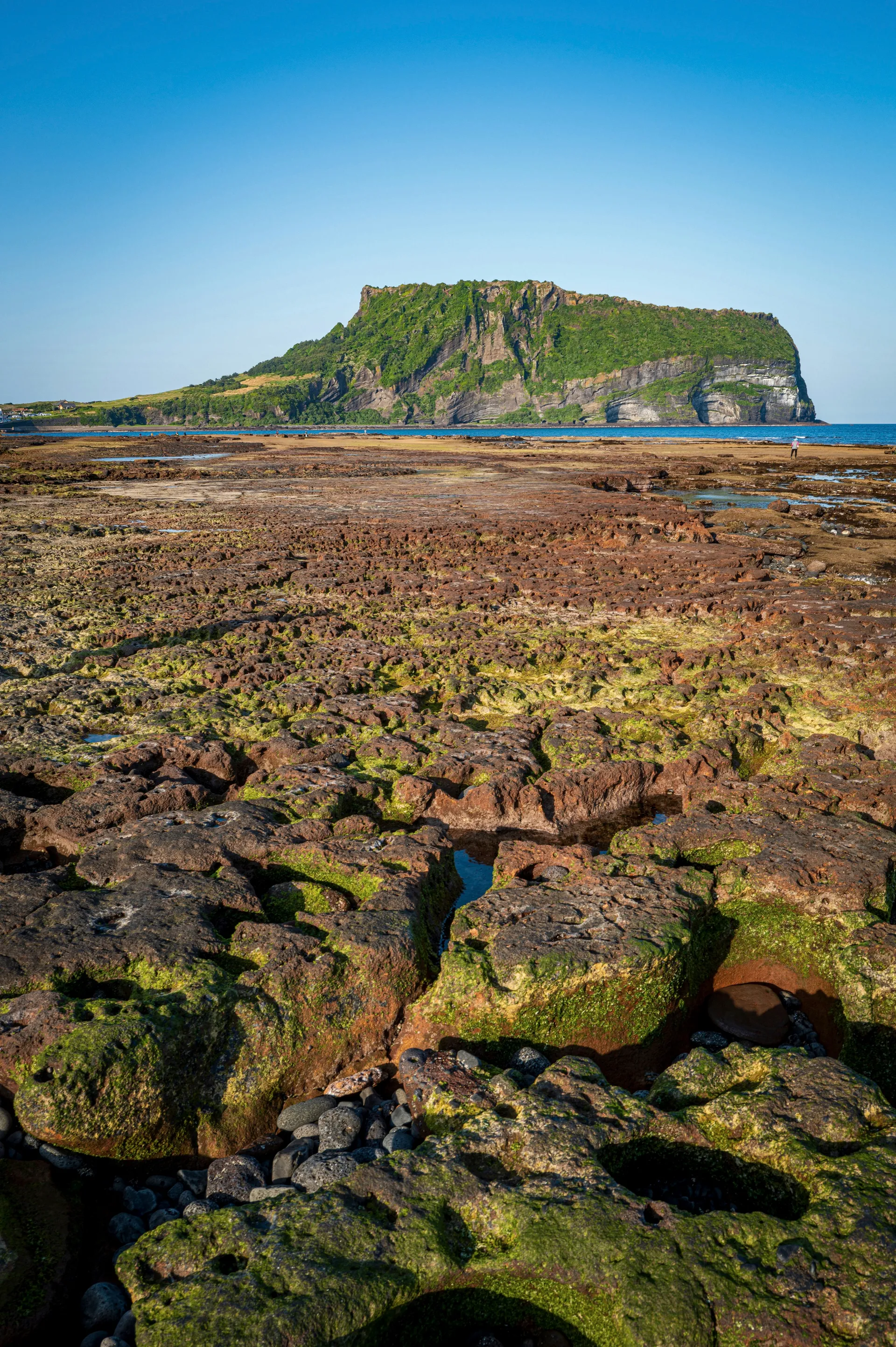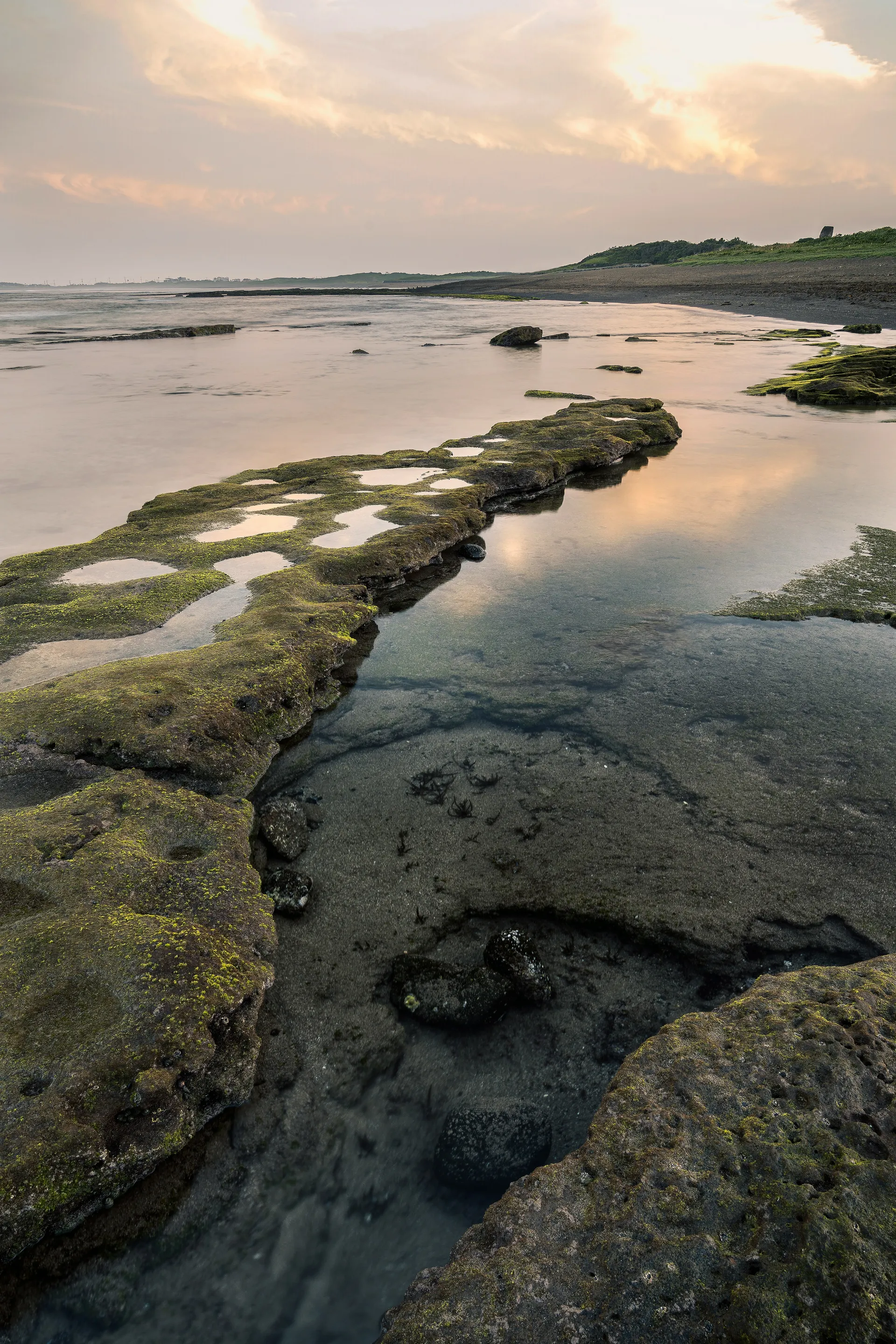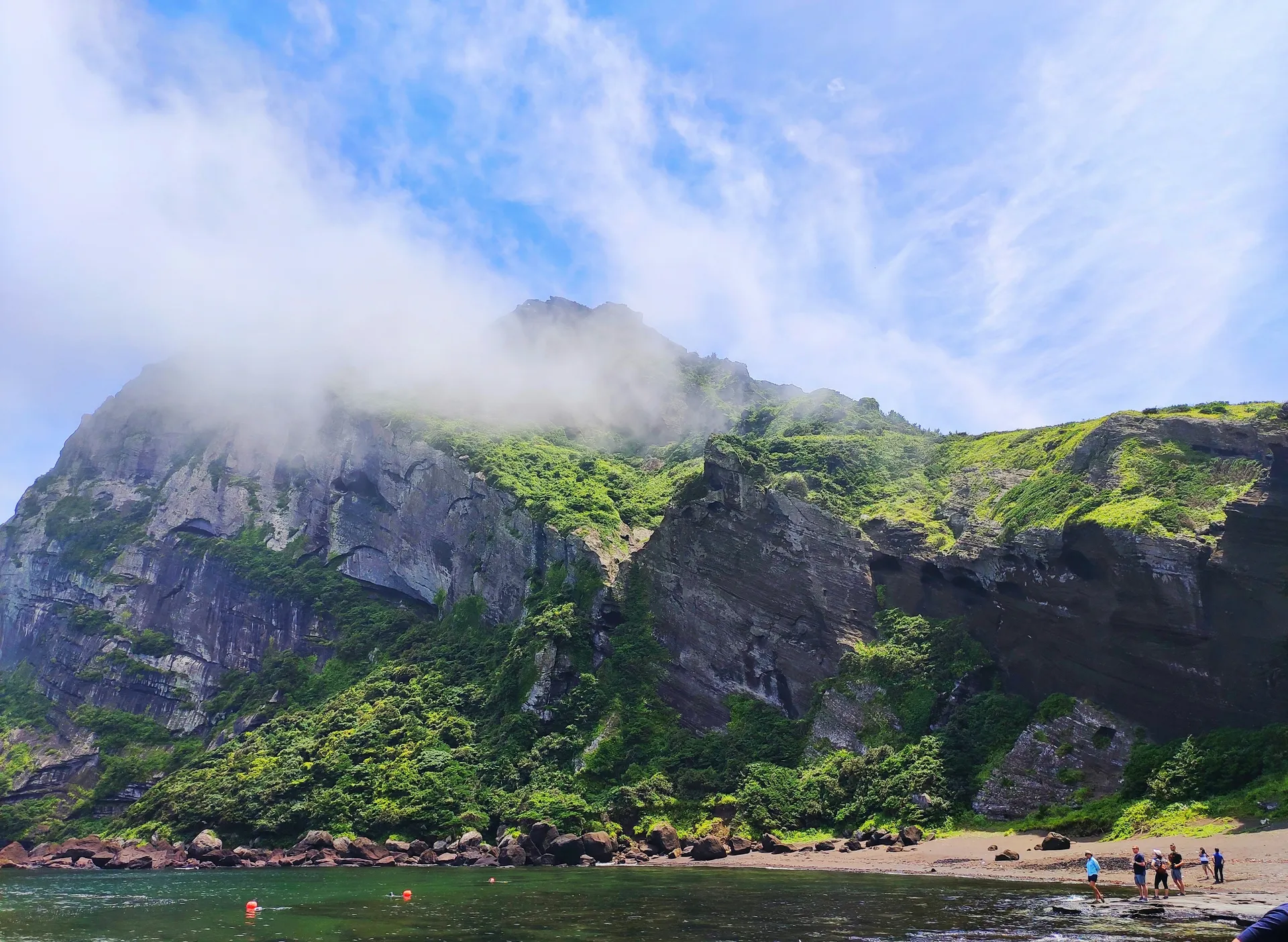
On the southern coast of Jeju Island, where volcanic cliffs meet the warm Kuroshio Current and waterfalls plunge directly into the sea, Seogwipo occupies one of the most naturally dramatic positions of any city in East Asia. Jeju itself—South Korea's largest island and a UNESCO World Heritage Site triple crown holder—was formed by the eruptions of Mount Hallasan, whose 1,950-meter summit still presides over the landscape like a benevolent deity. Seogwipo grew from a fishing village into the island's second city, but its temperament remains closer to the coast than to the commercial bustle of Jeju City on the northern shore.
The natural landmarks of Seogwipo read like a catalogue of geological wonders. Jeongbang Falls, one of the only waterfalls in Asia that cascades directly into the ocean, drops twenty-three meters from a columnar basalt cliff face into churning surf. Cheonjiyeon Falls, whose name translates as the Pond of the Gods, feeds a deep emerald pool surrounded by subtropical forest where rare담팔수나무 trees create a canopy that blocks the sky. The Jusangjeolli Cliffs—a natural wall of hexagonal basalt columns formed by rapidly cooling lava meeting the sea—stretch along the coastline like the pipes of a stone organ, their geometric perfection almost impossible to accept as natural rather than engineered.
Seogwipo's food culture reflects Jeju's unique position as a volcanic island with abundant marine resources and a subtropical agricultural palette unlike mainland Korea. Black pork, raised on the island from a heritage breed, is the signature ingredient—grilled at the table on charcoal and wrapped in sesame leaves with raw garlic and ssamjang paste. Haenyeo, Jeju's legendary female free divers who harvest abalone, sea urchin, and octopus without modern diving equipment, supply the freshest possible seafood to the restaurants along the Seogwipo waterfront. Their catches appear in jeonbok-juk (abalone porridge), raw fish platters of extraordinary variety, and the intense sea urchin soup that is considered a local delicacy. The island's tangerines, benefiting from volcanic soil and mild winters, are the sweetest in Korea.
Beyond the immediate coastline, southern Jeju offers experiences that span from adventure to contemplation. The Olle Trail, a network of coastal walking paths that circumnavigates the entire island, has its most spectacular sections along the Seogwipo coast, winding past volcanic cones, traditional stone-walled villages, and beaches of black and white sand. The Yeomiji Botanical Garden houses the largest glass conservatory in Asia, while the Lee Jung-seop Gallery honors the tragic Korean artist who produced his most beloved works during a brief period of happiness in Seogwipo during the Korean War. For the adventurous, the Manjanggul Lava Tube—one of the longest in the world—offers underground exploration through a tunnel carved by molten rock.
Seogwipo is reached via Jeju International Airport on the island's northern coast, with frequent flights from Seoul, Busan, and other major Korean cities. The drive from the airport takes approximately one hour. The spring months of April and May bring the island's famous canola flower and cherry blossom displays, while summer offers the warmest swimming weather. Autumn foliage on Mount Hallasan in October and November is spectacular, and winter provides the mildest temperatures in Korea. Seogwipo can be visited year-round, though the monsoon season in July and August brings heavy rainfall.