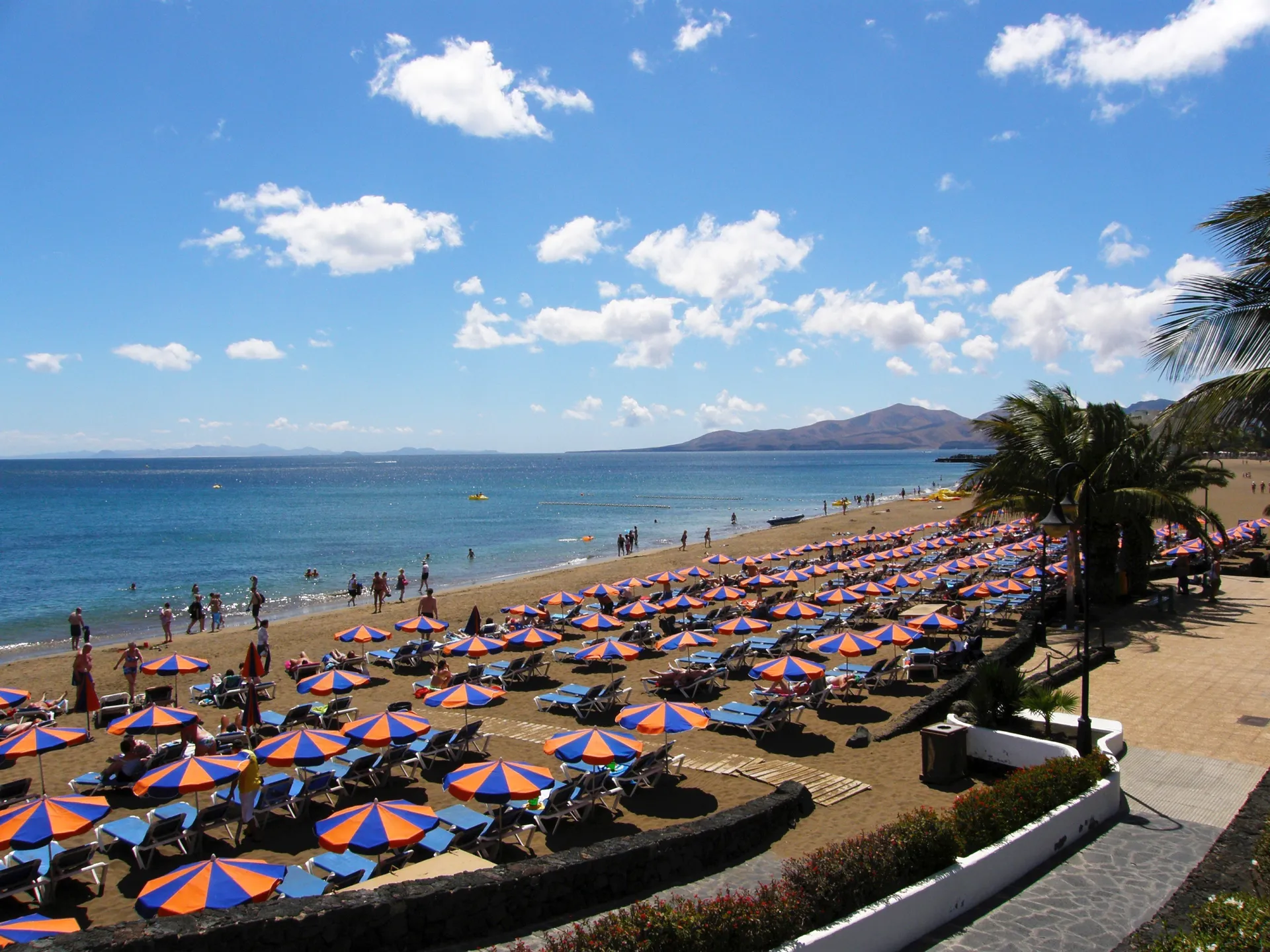
Arrecife takes its name from the Spanish word for reef — a fitting origin for a port town built along the volcanic shoreline of Lanzarote, the easternmost of Spain's Canary Islands. The island was conquered by Norman adventurer Jean de Béthencourt in 1402, one of the first steps in Spain's Atlantic expansion. But Lanzarote's most transformative figure arrived five centuries later: César Manrique, the visionary artist and architect who returned to his native island in 1968 and single-handedly ensured that tourism would develop in harmony with the landscape rather than consuming it. Thanks to his influence, there are no high-rise buildings on Lanzarote, no billboards, and the island's otherworldly volcanic terrain remains spectacularly unspoiled.
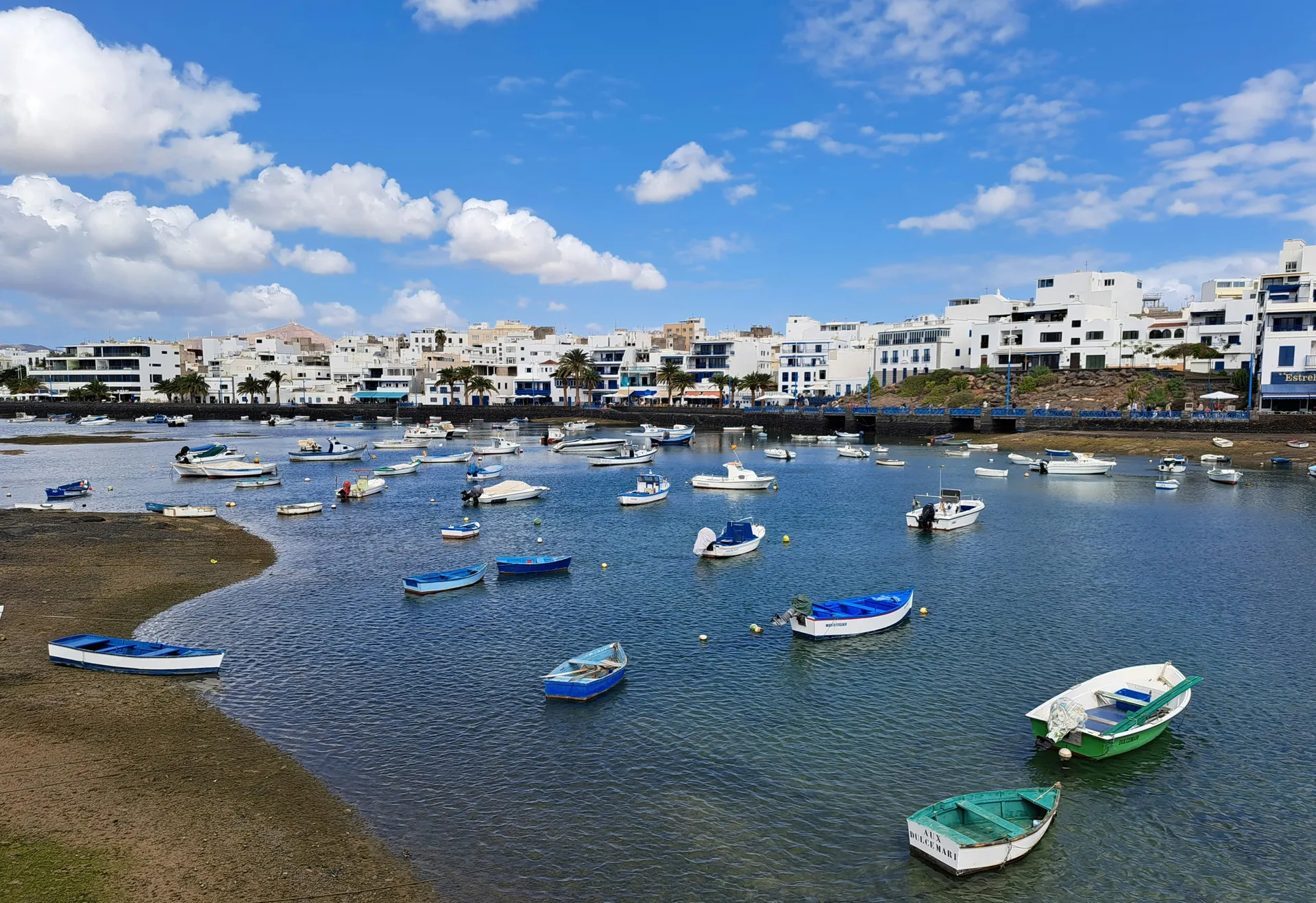
Arrecife itself is an unpretentious working capital of about 60,000 people, its whitewashed buildings and palm-lined promenades reflecting the laid-back Canarian character. The Castillo de San José, an eighteenth-century fortress perched above the harbor, now houses the International Museum of Contemporary Art — another Manrique creation — with works by Miró, Picasso, and Tàpies displayed against views of the Atlantic. The Charco de San Ginés, a tidal lagoon at the town's center, is ringed by fishermen's cottages and tapas bars where locals gather at sunset, lending Arrecife the atmosphere of a village that happens to be a capital.
Canarian cuisine on Lanzarote carries the salt spray of the Atlantic. Papas arrugadas — small wrinkled potatoes boiled in heavily salted water and served with mojo rojo (spicy red pepper sauce) and mojo verde (coriander and green pepper sauce) — are the archipelago's most iconic dish. Fresh fish, particularly vieja (parrotfish) grilled whole and served with a squeeze of lemon, is a daily staple. Gofio, a roasted grain flour of pre-Hispanic Guanche origin, appears in everything from soups to desserts. The Malvasía wines of La Geria — grown in individual volcanic craters protected by low stone walls called zocos — are among the world's most unusual, their mineral-rich, slightly sweet character reflecting the island's volcanic soul.
Lanzarote is effectively an open-air museum. The Timanfaya National Park, thirty minutes west, preserves the devastation of the 1730-1736 eruptions that buried a third of the island under lava — camel rides across the volcanic field and geothermal demonstrations where water turns to steam on contact with subterranean heat are unforgettable experiences. The Jameos del Agua and Cueva de los Verdes, interconnected lava tubes transformed by Manrique into an auditorium and tropical garden, lie twenty minutes north. The Jardín de Cactus, another Manrique masterwork, displays over 1,400 species in a former quarry.
Arrecife draws a diverse roster of cruise lines: Ambassador Cruise Line, Atlas Ocean Voyages, Aurora Expeditions, Costa Cruises, CroisiEurope, Crystal Cruises, Cunard, Emerald Yacht Cruises, Explora Journeys, Explorations by Norwegian, Hapag-Lloyd Cruises, Holland America Line, Marella Cruises, MSC Cruises, Norwegian Cruise Line, Oceania Cruises, P&O Cruises, Ponant, Princess Cruises, Regent Seven Seas Cruises, Saga Ocean Cruises, Scenic Ocean Cruises, Seabourn, Silversea, and TUI Cruises Mein Schiff. The Canary Islands enjoy mild temperatures year-round — typically 20-26°C — earning their nickname as the Islands of Eternal Spring. Nearby ports include La Gomera and Puerto del Rosario on Fuerteventura.