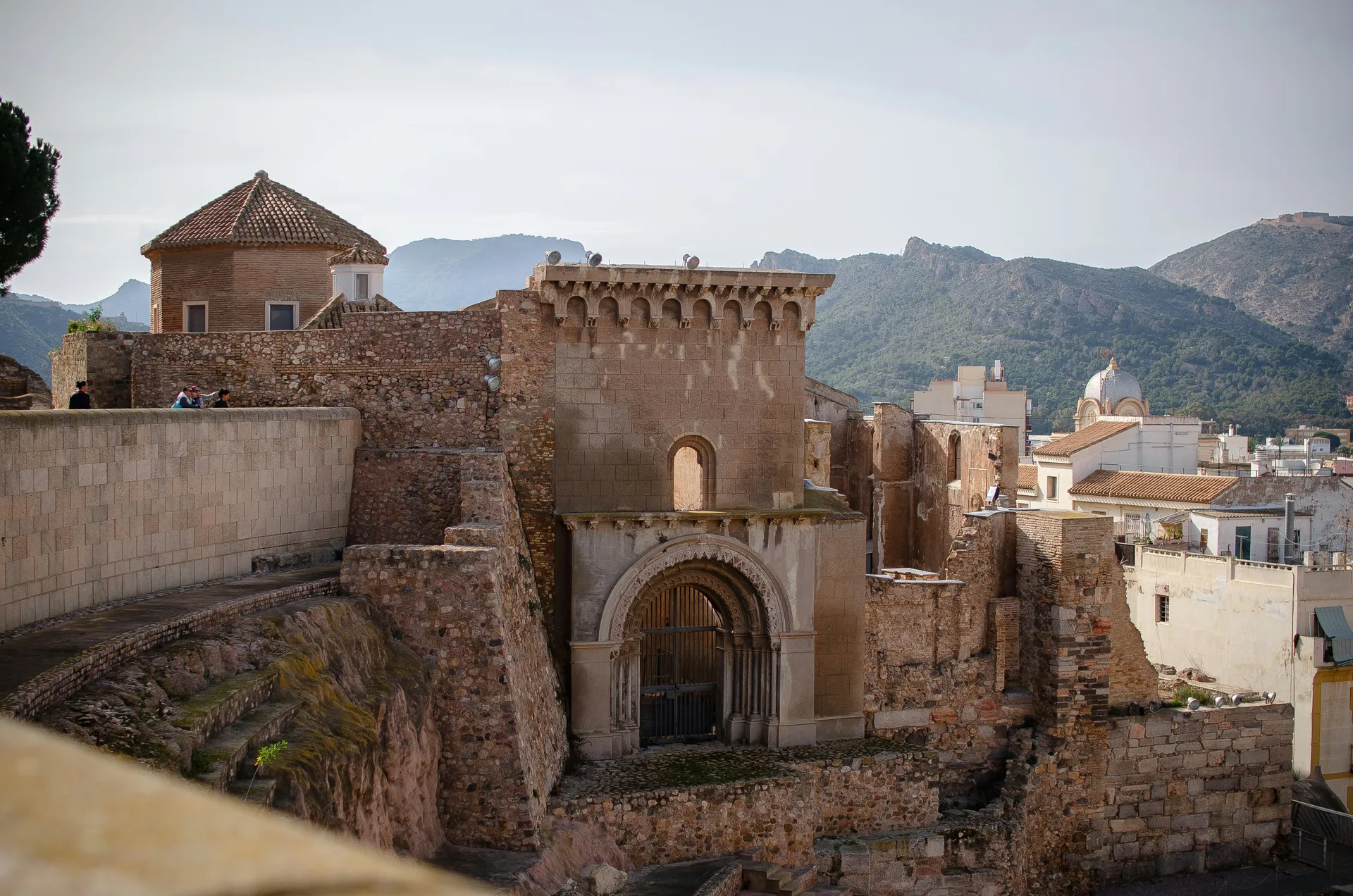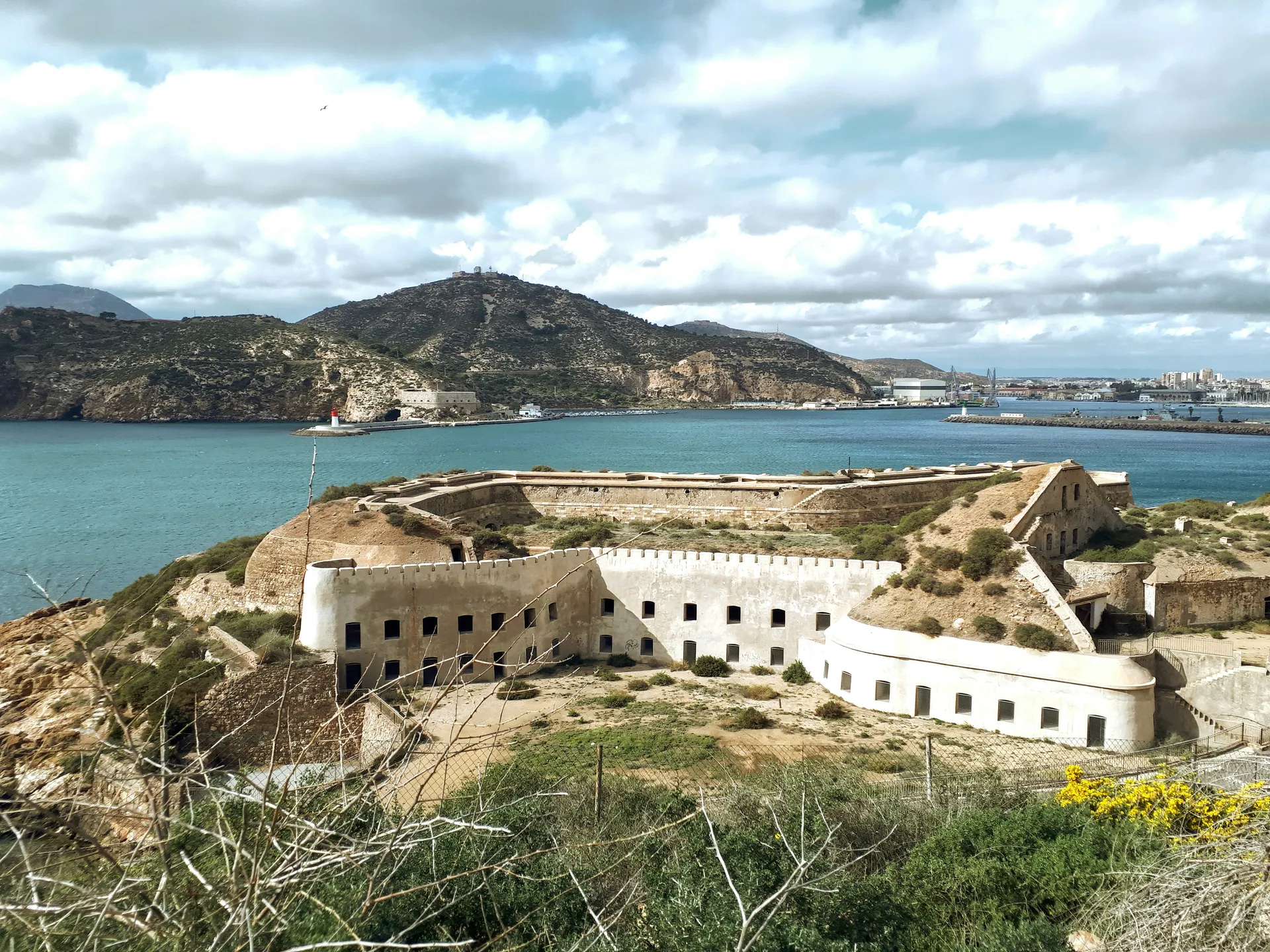
Founded in 227 BC by the Carthaginian general Hasdrubal the Fair as Qart Hadasht — "New City" — Cartagena has witnessed the rise and fall of empires with a quiet, sun-warmed composure that few Mediterranean ports can rival. The Romans renamed it Carthago Nova and transformed it into one of Hispania's most prosperous cities, mining the surrounding hills for silver and lead that would finance legions across the ancient world. Today, the remarkably preserved Roman Theatre, unearthed only in 1988 beneath centuries of urban layering, stands as one of Spain's most extraordinary archaeological revelations.
The city unfolds along a natural deep-water harbour so perfectly sheltered that every seafaring civilisation from Phoenicians to Byzantines recognised its strategic brilliance. Five hills encircle the old town like an amphitheatre turned toward the sea, their slopes crowned with crumbling fortifications — the Castillo de la Concepción, the Moorish-era remnants on Monte Sacro — each layer a palimpsest of conquest and reinvention. Modernista facades along Calle Mayor gleam in the unrelenting Murcian light, their ornamental ironwork and ceramic flourishes recalling the mining prosperity of the late nineteenth century. There is a particular quality to Cartagena's atmosphere: unhurried, deeply cultured, and entirely indifferent to the performative tourism that afflicts more famous Spanish ports.
The cuisine here belongs to the Mar Menor and the huerta, that fertile coastal plain where artichokes, broad beans, and peppers grow in almost embarrassing abundance. A proper Cartagena lunch begins with caldero, the fisherman's rice cooked in a dense stock of ñora peppers and rock fish — served, traditionally, in two courses: the rice first, then the fish with alioli. Seek out marinera, the local tapa of a Russian salad-topped breadstick crowned with an anchovy and an olive, deceptively simple and utterly addictive. At the Mercado de Santa Florentina, stallholders will press samples of Jumilla monastrell wine upon you, its dark-fruit intensity a perfect counterpoint to plates of pulpo al horno and salazones — the salt-cured tuna and roe that have sustained this coast since Phoenician traders first bartered here.
Cartagena's position in Spain's southeast corner makes it a compelling gateway to contrasting landscapes. The storied port of Cádiz, Europe's oldest continuously inhabited city, lies along the Andalusian coast — a natural pairing for those drawn to maritime heritage. Inland, Madrid awaits with its Prado and Reina Sofía, a high-speed rail journey that deposits travellers from the Murcian coast into the capital's cultural embrace. For the adventurous, the Picos de Europa near Cangas de Onís offer a dramatic counterpoint of alpine meadows and pre-Romanesque churches, while the Balearic island of Ibiza — beyond its nocturnal reputation — conceals a UNESCO-listed old town and pine-fringed calas of startling beauty.
Cartagena's deep harbour and modern cruise terminal welcome an impressive constellation of the world's finest ocean lines. Discerning voyagers arrive aboard Seabourn and Ponant, whose intimate vessels slip into the port with the ease of a private yacht, while Azamara and Oceania Cruises favour longer calls that allow proper exploration of the Roman Theatre and the Museo Nacional de Arqueología Subacuática. Celebrity Cruises and Cunard bring classical transatlantic elegance to these ancient quays, and Viking's culturally enriching itineraries make Cartagena a natural highlight. Windstar Cruises and Emerald Yacht Cruises offer the romance of smaller-ship sailing, while Scenic Ocean Cruises and Tauck deliver all-inclusive refinement. P&O Cruises and Marella Cruises connect British travellers directly to this undersung gem, and AIDA introduces the German market to a port that rewards curiosity with every cobblestoned turn. Few Mediterranean calls offer such depth of history within walking distance of the gangway.