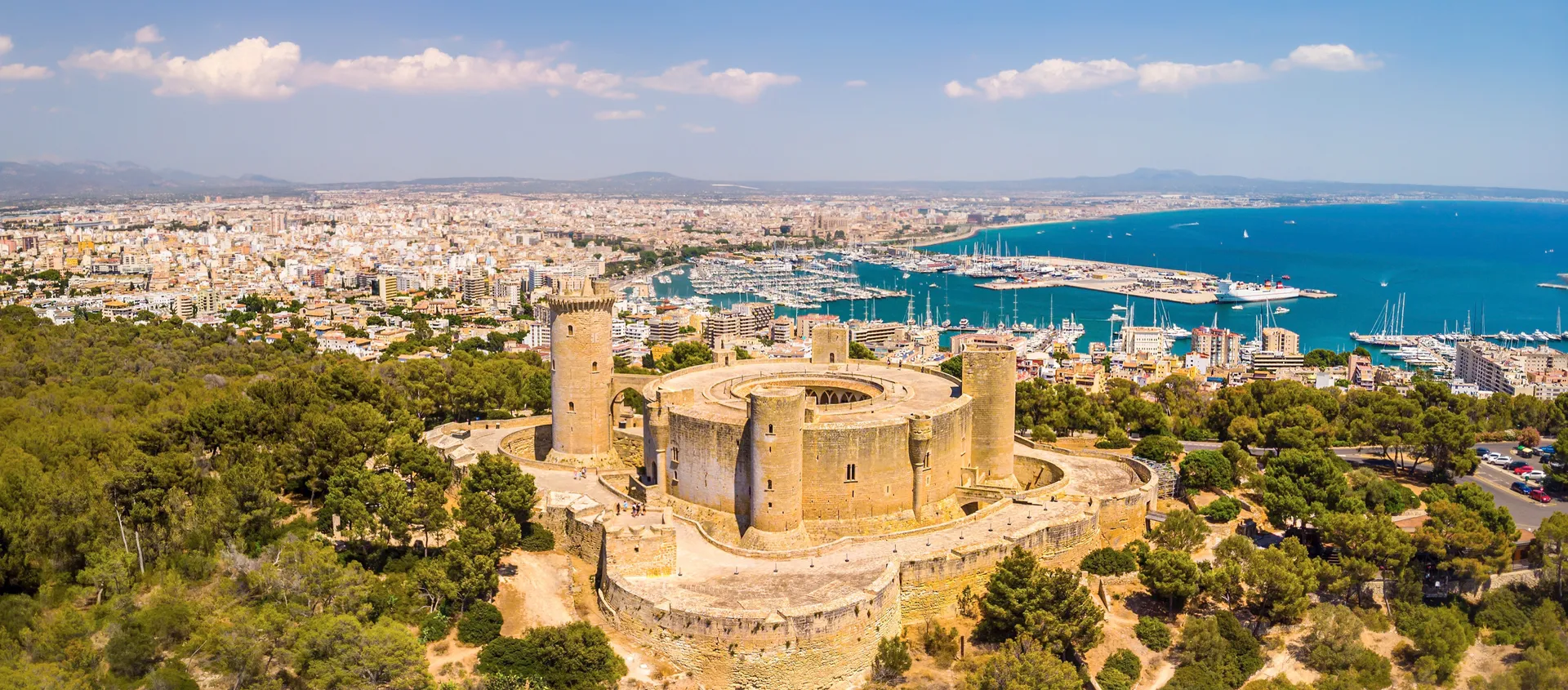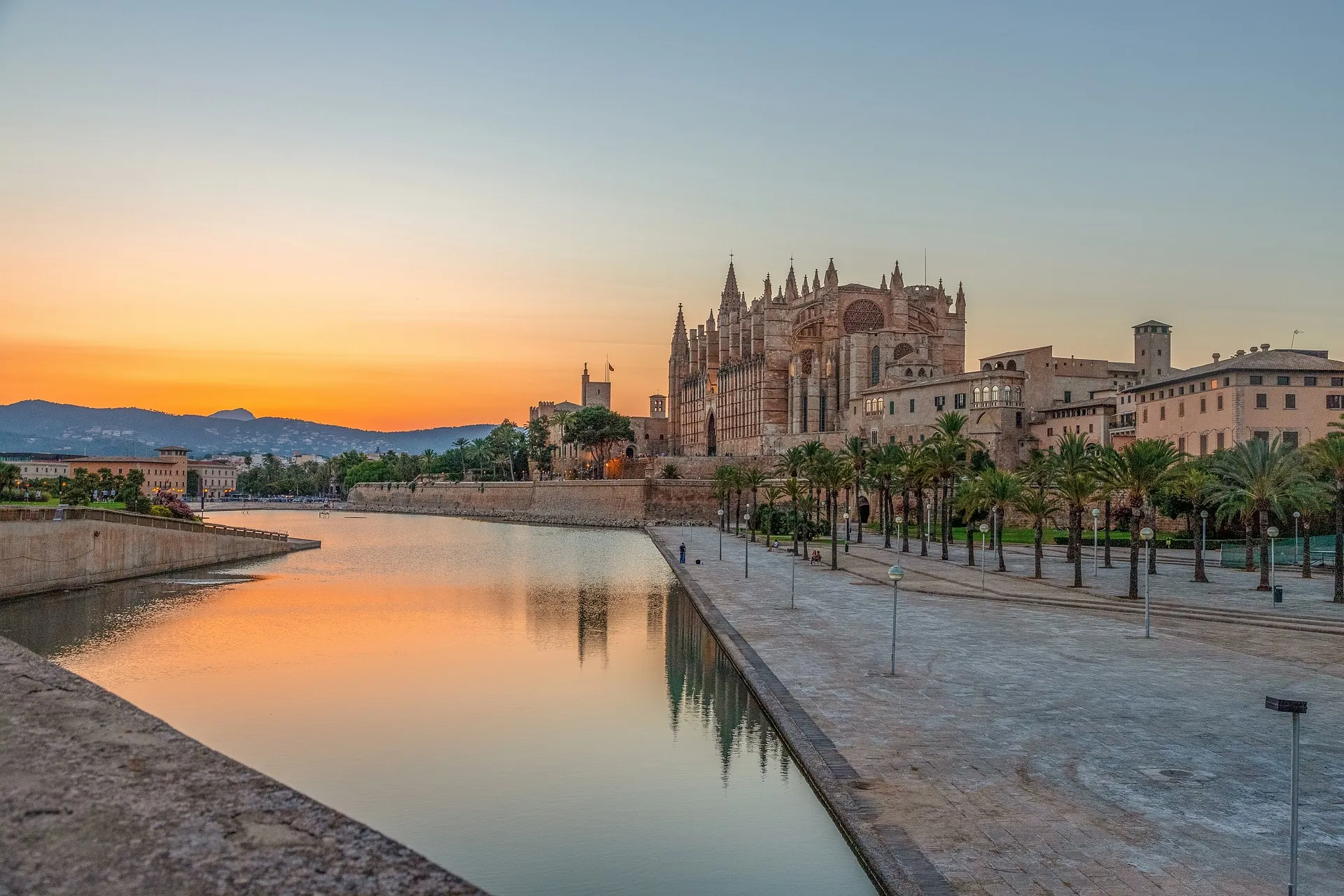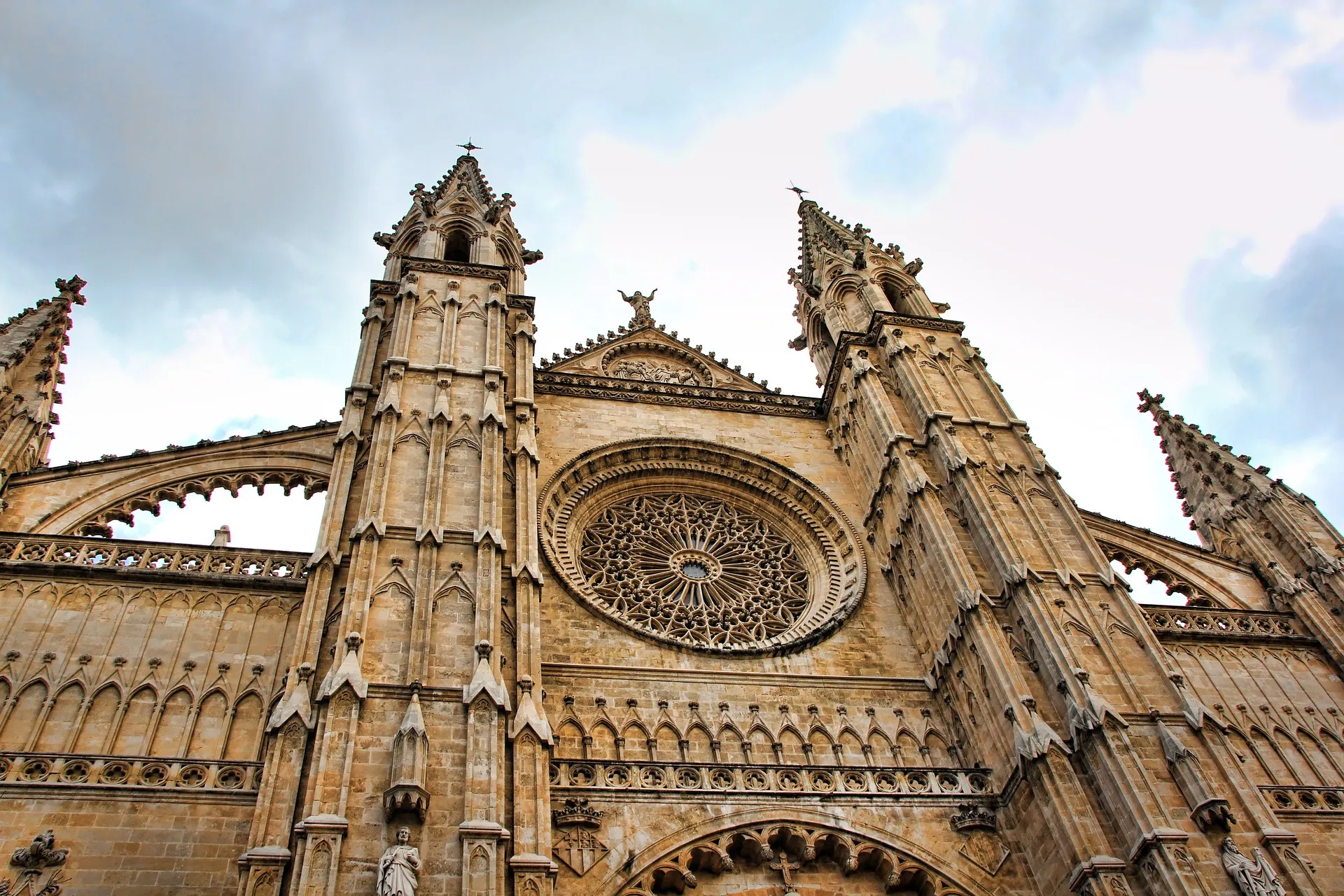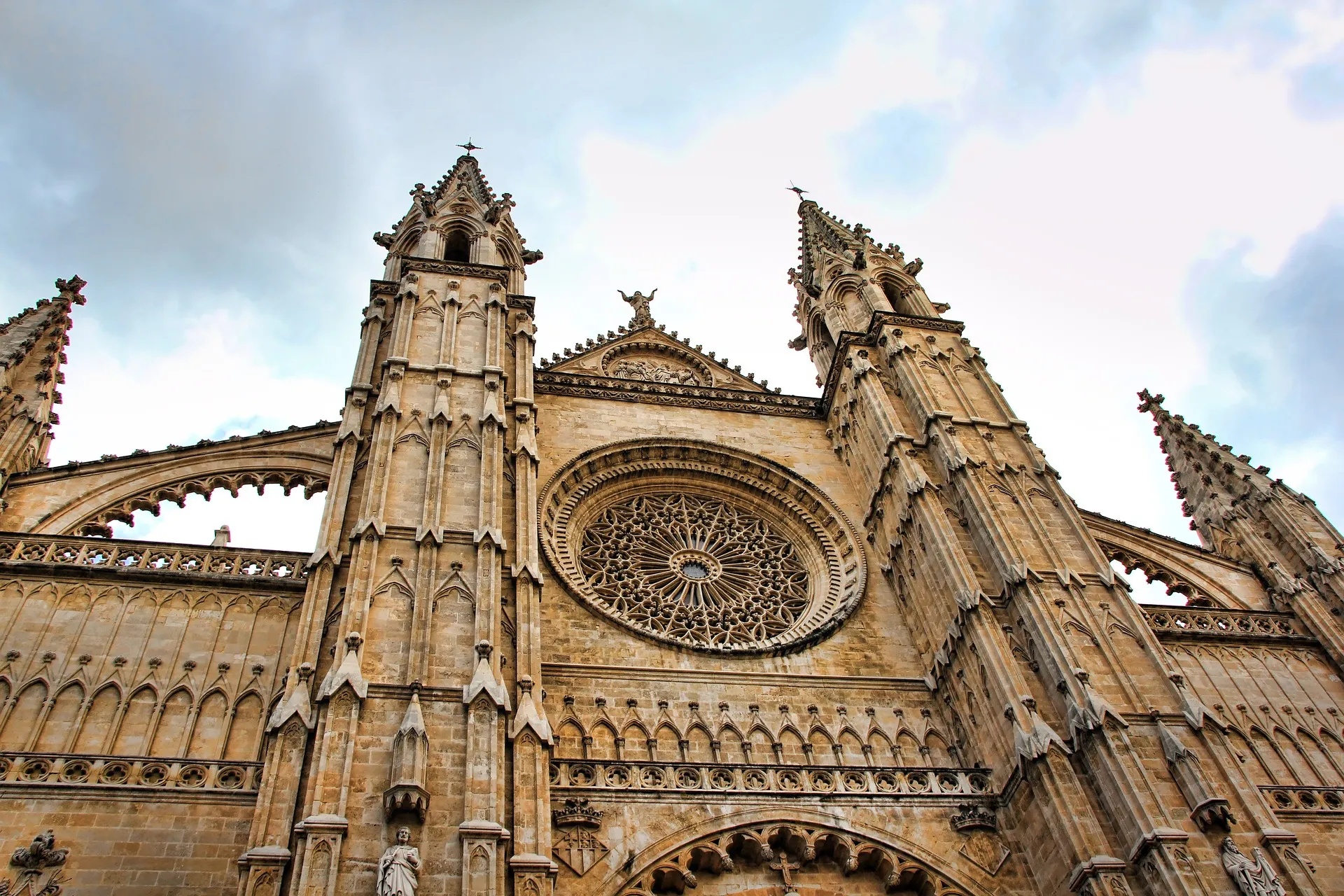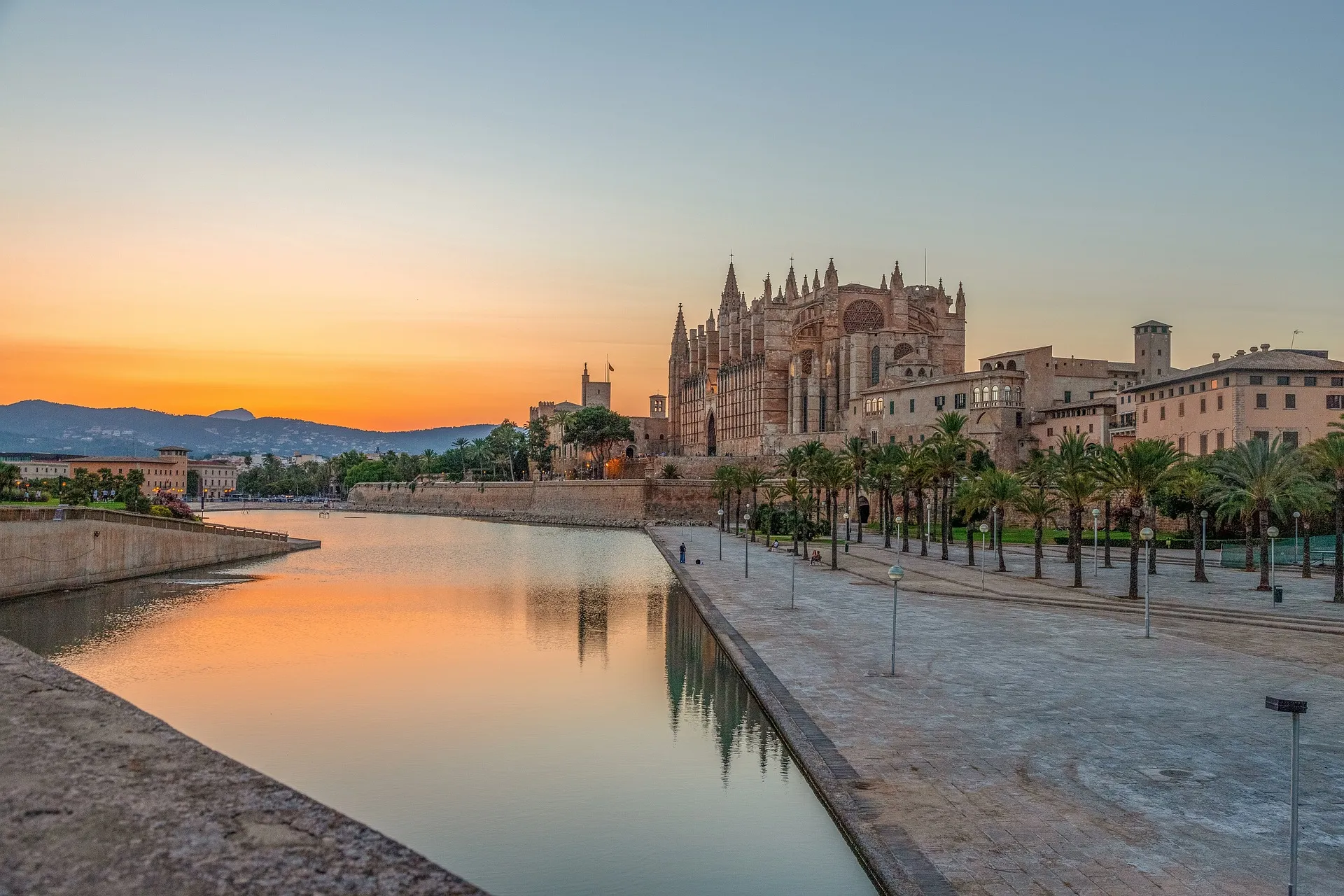
The great Gothic cathedral of Palma de Mallorca, known simply as La Seu, has presided over the Bay of Palma since 1229, when King Jaume I of Aragon vowed to build it after surviving a storm at sea during his campaign to wrest the island from Moorish control. Work continued for nearly four centuries, and the result is a masterpiece of Mediterranean Gothic — its flying buttresses catching the morning light, its south-facing rose window, one of the world's largest at nearly fourteen metres in diameter, casting kaleidoscopic colours across the nave. Antoni Gaudí was commissioned to renovate the interior in the early 1900s, and his wrought-iron baldachin above the altar remains a startling modernista intervention within the medieval space.
Palma has evolved from a sleepy winter retreat for northern Europeans into one of the Mediterranean's most sophisticated cities. The old town, a warren of honey-coloured limestone streets behind the cathedral, conceals aristocratic courtyards — called patis — visible through grand doorways, along with converted palaces now housing contemporary art galleries and boutique hotels. The Paseo del Borne, Palma's elegant boulevard, channels Parisian chic with its designer shops and pavement cafés beneath mature plane trees. Yet the city retains its Balearic soul: fishermen still mend nets at the Lonja fish market, built in the fifteenth century as a Gothic mercantile exchange, and elderly men play cards in neighbourhood bars untouched by the tourist tide.
Mallorcan cuisine is a celebration of island terroir. Pa amb oli — rustic bread rubbed with ripe tomato, drizzled with local olive oil, and topped with serrano ham and Mahón cheese — is the island's most beloved snack, elevated to an art form at simple country restaurants. Sobrasada, a spreadable cured sausage tinted orange by pimentón and hung to cure in mountain cellars, appears on every charcuterie board. The ensaimada, a spiral pastry of lard-enriched dough dusted with powdered sugar, is Palma's breakfast institution — buy one at a traditional pastisseria and pair it with a café con leche. For a more substantial meal, tumbet — layers of fried potato, aubergine, and pepper baked in tomato sauce — represents Mallorca's answer to ratatouille.
From Palma, the island unfolds with remarkable diversity. The Serra de Tramuntana, a UNESCO World Heritage mountain range running along the northwest coast, offers spectacular driving and hiking, with the stone village of Deià — where Robert Graves spent decades — perched above the sea. The Caves of Drach on the east coast shelter one of the world's largest underground lakes. The Cap de Formentor, Mallorca's dramatic northern tip, provides vertiginous cliff-top views. And the vineyards of Binissalem, the island's principal wine region, produce increasingly acclaimed reds from indigenous Manto Negro and Callet grapes.
Palma de Mallorca's cruise terminal ranks among the busiest in the Mediterranean, receiving AIDA, Ambassador Cruise Line, Aurora Expeditions, Azamara, Carnival Cruise Line, Celebrity Cruises, Costa Cruises, Crystal Cruises, Emerald Yacht Cruises, Explora Journeys, Fred Olsen Cruise Lines, Hapag-Lloyd Cruises, Holland America Line, Marella Cruises, MSC Cruises, Norwegian Cruise Line, Oceania Cruises, P&O Cruises, Ponant, Princess Cruises, Regent Seven Seas Cruises, Royal Caribbean, Scenic Ocean Cruises, Seabourn, Silversea, TUI Cruises Mein Schiff, Viking, Virgin Voyages, and Windstar Cruises. Nearby ports include Mahón on Menorca, Ibiza, and Valencia on the mainland. The season runs from April through November, with May, June, September, and October offering the ideal combination of warm weather and uncrowded streets.