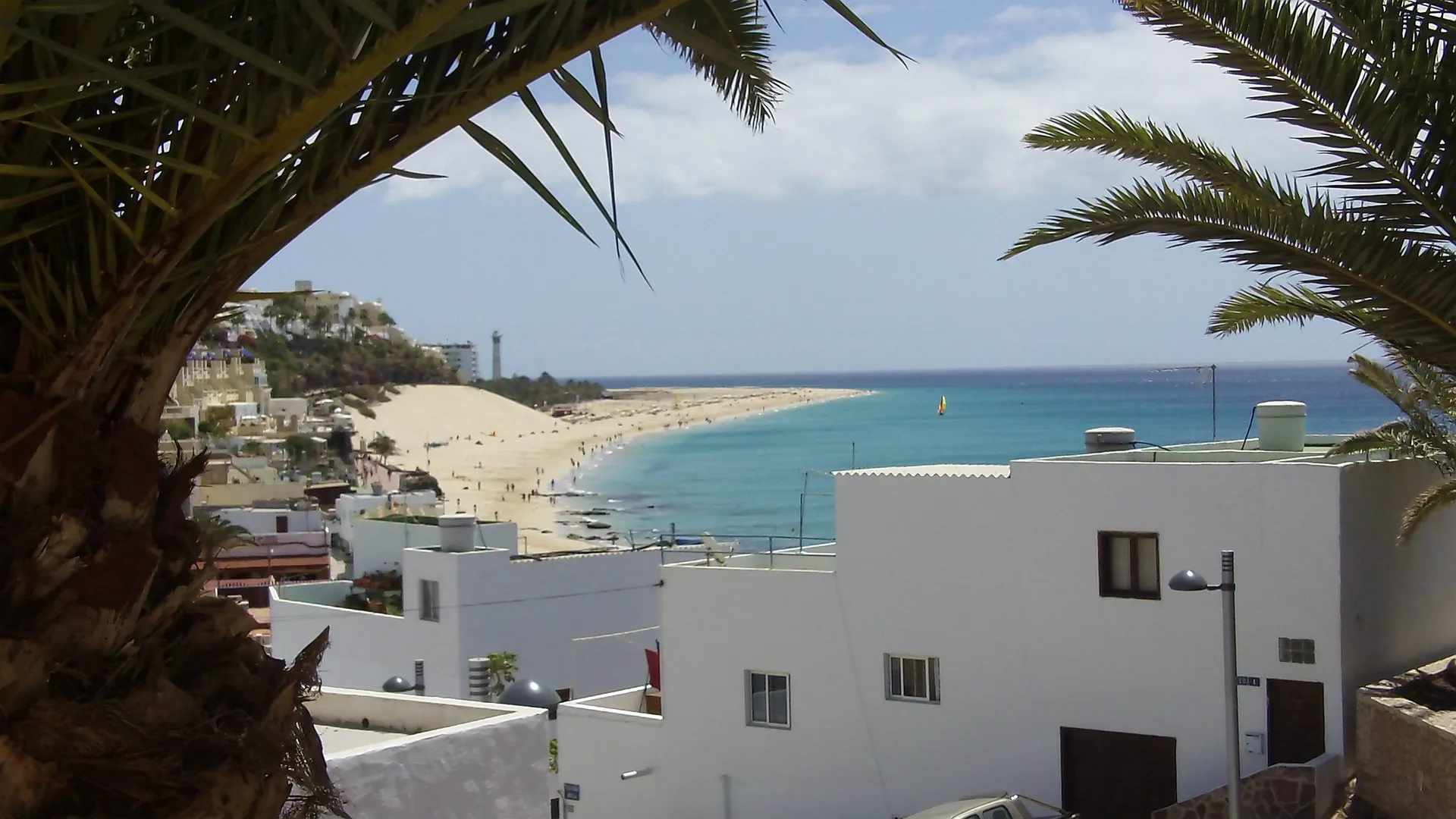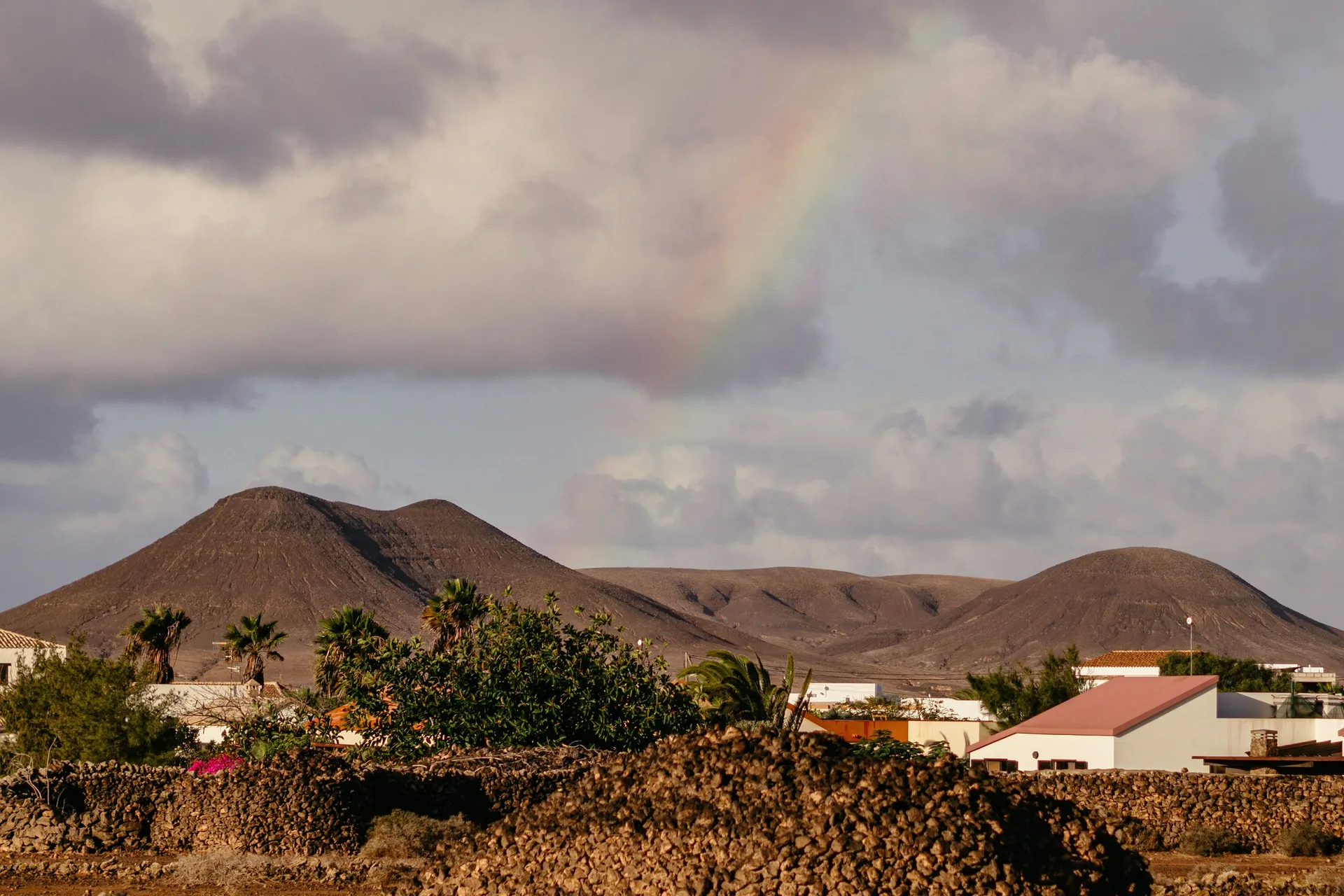
Puerto del Rosario owes its origins to the modest harbour settlement of Puerto de Cabras, founded in the early nineteenth century as a shipping point for the goat hides and barilla ash that sustained Fuerteventura's fragile economy. Renamed in 1956 to honour the chapel of Nuestra Señora del Rosario that had long anchored the community's spiritual life, the town ascended to the role of island capital in 1860, inheriting the title from the ancient inland seat of Betancuria. That colonial lineage still whispers through its low-slung architecture and unhurried plazas, a reminder that grandeur here has always been measured in light and silence rather than spectacle.
Today Puerto del Rosario carries itself with the quiet confidence of a place that exists for its own residents first and visitors second — a quality increasingly rare along the Atlantic seaboard. The port promenade unfolds in a leisurely arc of whitewashed buildings, open-air cafés with canvas awnings rippling in the trade winds, and an exceptional collection of over one hundred street sculptures scattered through the town like an open-air gallery curated by the Atlantic itself. Wander beyond the harbour and the grid of modest streets reveals independent boutiques, artisan leather workshops, and corners of genuine local life untouched by resort homogeneity. The Casa Museo Unamuno, where the philosopher Miguel de Unamuno lived during his political exile in 1924, offers a poignant window into both the intellectual's torment and the stark beauty that sustained him.
The culinary identity of Fuerteventura revolves around the island's volcanic terroir and centuries of pastoral tradition. Begin with *papas arrugadas* — small wrinkled potatoes salt-crusted in their skins and served with *mojo rojo*, a smoky red pepper sauce, and its green counterpart *mojo verde* made from fresh coriander and parsley. The island's celebrated *queso majorero*, a DOP-protected goat cheese rubbed with pimentón or gofio, is among the finest in all of Spain, its flavour sharpening beautifully with age. Seek out *carne de cabra* slow-braised in local wine, or freshly grilled *vieja* — a parrotfish prized in Canarian waters — at the family-run tascas along Calle León y Castillo, where the wine list leans toward volcanic Lanzarote malvasías that pair with astonishing precision.
From Puerto del Rosario, the broader geography of the Spanish world reveals itself in compelling layers. The ancient port of Cádiz, Europe's oldest continuously inhabited city, lies a relatively short Atlantic crossing to the northeast, its baroque watchtowers and fried-fish culture offering a mainland counterpoint to island serenity. The cosmopolitan energy of Madrid, with its Prado and Retiro, awaits those extending their journey inland, while Ibiza — far more than its nightlife reputation suggests — harbours a UNESCO-listed old town and pine-forested coves of extraordinary tranquility. For travellers drawn to Spain's northern mythology, Cangas de Onís in Asturias, gateway to the Picos de Europa and site of the sacred grotto of Covadonga, presents a landscape as dramatically green as Fuerteventura is golden.
Puerto del Rosario's modern cruise terminal, situated within walking distance of the town centre, has made the capital an increasingly favoured call for lines navigating the Canary Islands and West African repositioning routes. Costa Cruises and MSC Cruises regularly include the port on their Mediterranean-Atlantic itineraries, bringing a continental flair to the quayside. British travellers will find familiar comfort with P&O Cruises and Marella Cruises, both of which schedule autumn and winter calls when Fuerteventura's climate is at its most benevolent — warm days, cool evenings, and an almost supernatural clarity of light. TUI Cruises Mein Schiff, serving the German-speaking market, has likewise embraced Puerto del Rosario as a highlight of its Kanaren und Atlantik voyages, and the town's compact walkability makes it ideally suited to independent exploration between ship and shore.
What lingers after departure is not any single monument or meal but rather the quality of attention the island demands. Fuerteventura — and Puerto del Rosario as its unpretentious capital — rewards the traveller who slows down, who notices the way afternoon light gilds a limestone doorway or how the scent of roasting mojo drifts through a sidestreet. It is a destination that feels discovered rather than consumed, and in an era of over-tourism, that distinction is worth its weight in volcanic gold.