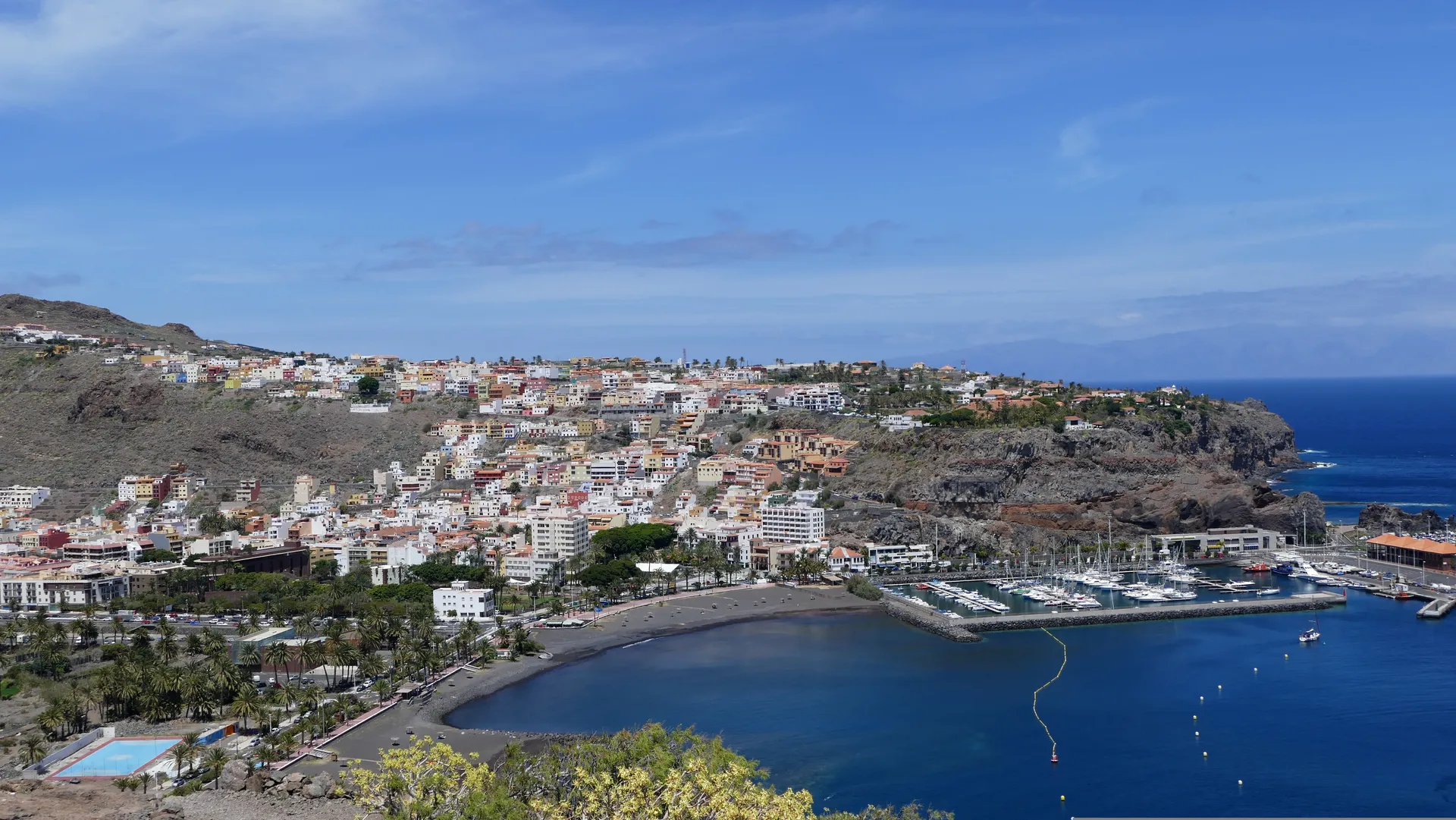
San Sebastian de la Gomera is the port from which Christopher Columbus set sail on his first voyage to the New World in September 1492 — a historical distinction that gives this small Canarian town a significance vastly disproportionate to its modest size. The Casa de la Aguada, a stone building near the harbour where Columbus is said to have drawn water for the Atlantic crossing, and the Iglesia de la Asuncion, where he reportedly prayed before departure, are preserved as monuments to the moment that connected two hemispheres. Whether Columbus also conducted a romance with Beatriz de Bobadilla, the island's aristocratic governor, as local tradition insists, is a matter of historical debate that San Sebastian resolves firmly in the affirmative.
La Gomera, the second-smallest of the Canary Islands at 370 square kilometres, is one of the most ecologically extraordinary islands in the Atlantic. The Garajonay National Park, a UNESCO World Heritage Site covering nearly a third of the island, preserves the largest surviving fragment of laurisilva — the subtropical laurel cloud forest that covered much of southern Europe and northern Africa before the last ice ages. Walking through Garajonay is walking through a relic of the Tertiary period: tree heathers and laurels draped in moss, ferns unfurling in perpetual mist, and an atmosphere of primeval stillness that transports visitors 15 million years into the past. The park's trails, well-maintained and varied in difficulty, penetrate a forest so dense that the canopy filters the sunlight into an undersea green.
La Gomera's most remarkable cultural heritage is Silbo Gomero — the whistled language of the island, a system of communication in which the Spanish language is transposed into whistled signals that carry across the deep barrancos (ravines) that divide the island's terrain. Silbo was developed by the indigenous Guanche population and adopted by the Spanish settlers, serving for centuries as a practical communication tool in a landscape where walking between neighbouring communities could take hours but a whistle could be heard two kilometres away. UNESCO recognized Silbo as an Intangible Cultural Heritage in 2009, and the language is now taught in all of La Gomera's schools — visitors can hear demonstrations at restaurants and cultural centres throughout the island.
The cuisine of La Gomera shares the Canarian pantry — papas arrugadas with mojo, gofio (toasted grain flour), and fresh seafood — but adds its own specialities. Almogrote, a paste of aged hard cheese, tomato, olive oil, and peppers, is La Gomera's signature spread, served on bread as a tapa with local wine. Palm honey (miel de palma), harvested from the sap of the Canarian date palm by guaraperos who climb the trunks at dawn, is drizzled over desserts, cheese, and gofio in a sweet tradition unique to La Gomera. The island's wines, produced from small volcanic-soil vineyards in the valleys, are rustic and characterful.
San Sebastian de la Gomera is served by Ponant on Canary Islands itineraries, with ships docking at the harbour. The island enjoys a mild climate year-round, with temperatures rarely dropping below 18 degrees Celsius or exceeding 28. The cloud forest of Garajonay is most atmospheric during the winter months when the trade winds push moisture against the peaks, but spring (March through May) offers the best hiking conditions with wildflowers and comfortable temperatures.

