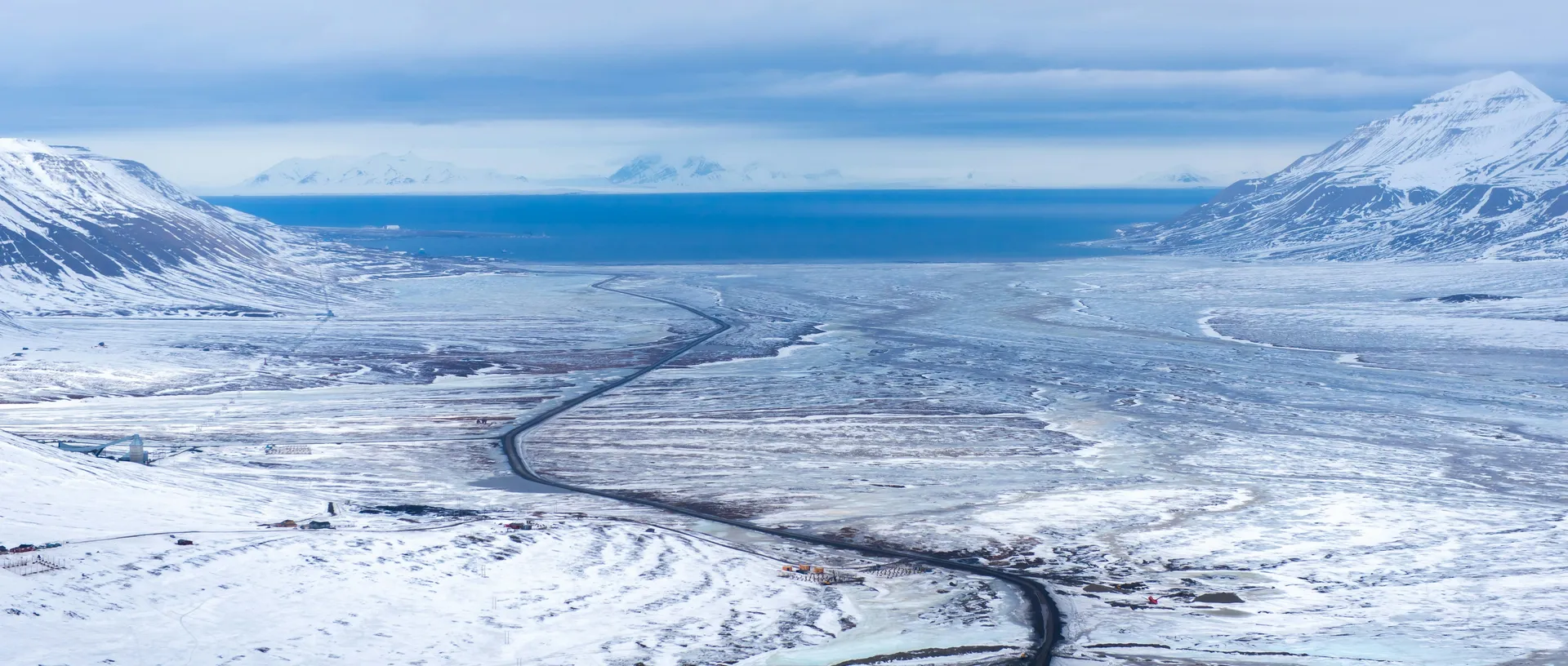
At 78°55' north, Ny-Ålesund holds the distinction of being one of the world's northernmost permanent settlements — a place where human ambition has repeatedly tested itself against the polar sublime. It was from here that Roald Amundsen departed in 1926 aboard the airship *Norge*, completing the first verified flight over the North Pole alongside Lincoln Ellsworth and Umberto Nobile. Two years later, Nobile returned with the ill-fated *Italia*, and the town's weathered mooring mast still stands as a silent monument to that era of Arctic aeronautics, when explorers traded the comforts of civilization for the terrible beauty of the unknown.
Today, Ny-Ålesund exists in a state of rarefied stillness that few places on Earth can replicate. The settlement, owned and operated by Kings Bay AS, functions primarily as an international research community — a village of perhaps thirty to forty summer residents where glaciologists, atmospheric scientists, and marine biologists from ten nations pursue their work beneath skies that never darken from April through August. There are no cars, no commerce in the conventional sense, and no permanent civilian population. The wooden buildings, painted in the deep reds and ochres characteristic of Norwegian Arctic architecture, sit against the vast amphitheatre of Kongsfjorden, where tidewater glaciers calve into waters of impossible cerulean. The silence here is not absence but presence — the kind of quiet that recalibrates one's understanding of scale.
Culinary experiences in Ny-Ålesund are intimate affairs shaped entirely by the Arctic environment, typically enjoyed aboard the expedition vessels that call here rather than ashore. Onboard galleys transform the region's offerings into refined plates: think *tørrfisk* — wind-dried stockfish that has sustained Norwegian Arctic communities for centuries — reimagined alongside foraged sea buckthorn and preserved cloudberries. Svalbard's waters yield sweet, cold-water prawns and Arctic char, often served with delicate preparations of *flatbrød*, the traditional Norwegian crispbread. The more adventurous palate may encounter reindeer carpaccio or smoked whale, dishes that speak to the uncompromising relationship between these latitudes and sustenance. Each meal becomes a meditation on provenance, on the extraordinary effort required to nourish life at the edge of the habitable world.
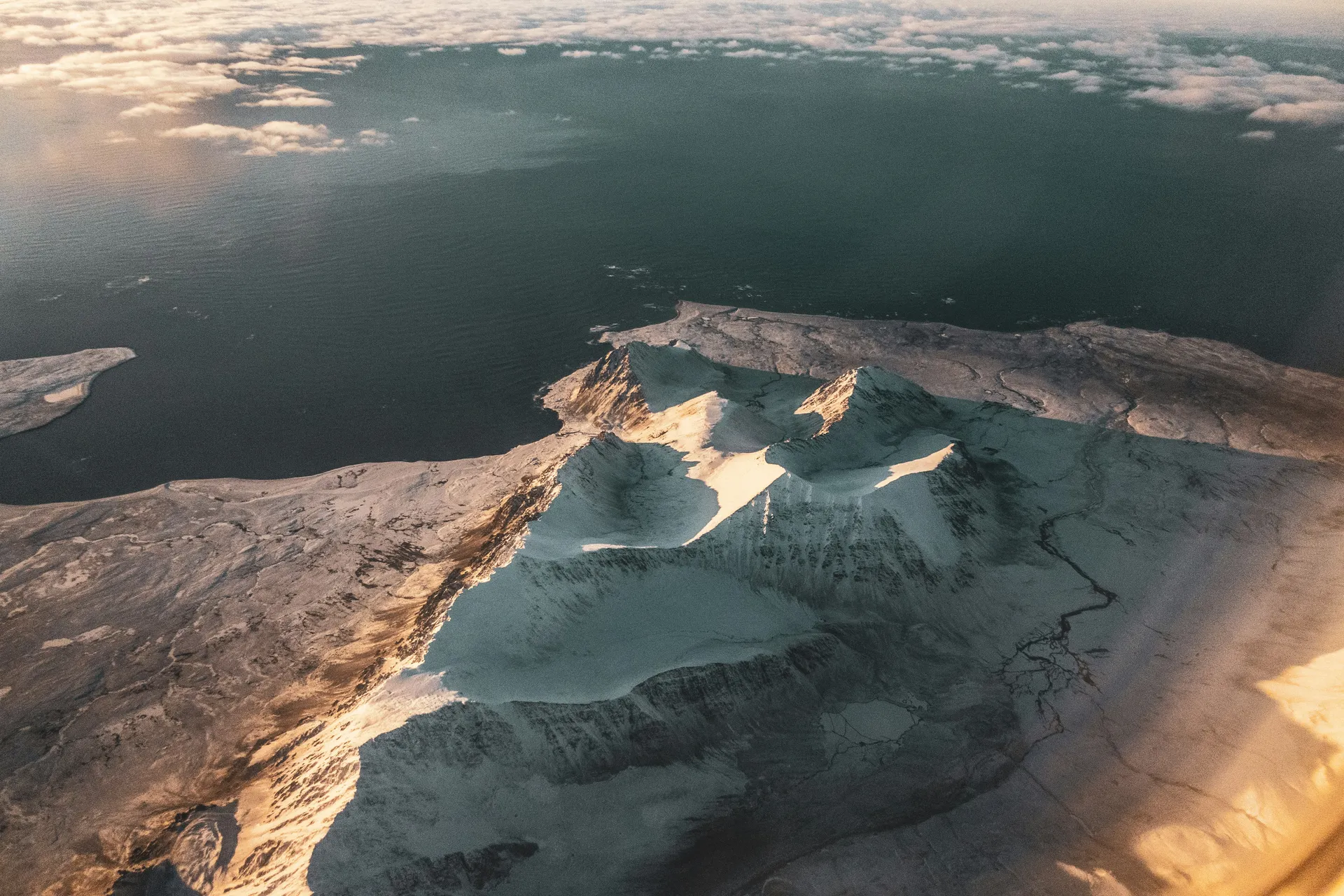
Beyond Ny-Ålesund, the broader canvas of Spitsbergen unfolds with staggering grandeur. Kongsfjorden itself offers Zodiac excursions past the Kronebreen glacier face, where the geological record of millennia stands exposed in striated blue ice. To the north, Raudfjord reveals its narrow, cliff-flanked waters where ringed seals haul out on floating ice and Arctic foxes patrol the shoreline in their summer brown. Liefdefjorden, further along the northwestern coast, presents the monumental Monaco Glacier — five kilometres of ice wall meeting the sea — while the surrounding tundra erupts in brief, fierce displays of purple saxifrage and Arctic poppy during the fleeting summer. Throughout Svalbard, polar bears move across the landscape with proprietary grace, and the possibility of encountering one transforms every shore landing into an exercise in heightened awareness.
Reaching Ny-Ålesund requires the specialized vessels of expedition cruise lines, and the port is served by some of the most distinguished names in polar travel. HX Expeditions and Hurtigruten, both rooted in Norwegian maritime heritage, offer itineraries that weave Ny-Ålesund into comprehensive circumnavigations of Spitsbergen, with onboard expedition teams providing scholarly context to every landing. Hapag-Lloyd Cruises brings Germanic precision and understated luxury to these waters aboard the *HANSEATIC* class, while Ponant delivers a distinctly French interpretation of polar exploration — think Champagne on the observation deck as the midnight sun traces its endless arc above the Kronebreen glacier. The sailing season runs from June through early September, with July and August offering the warmest conditions and the most reliable wildlife encounters.