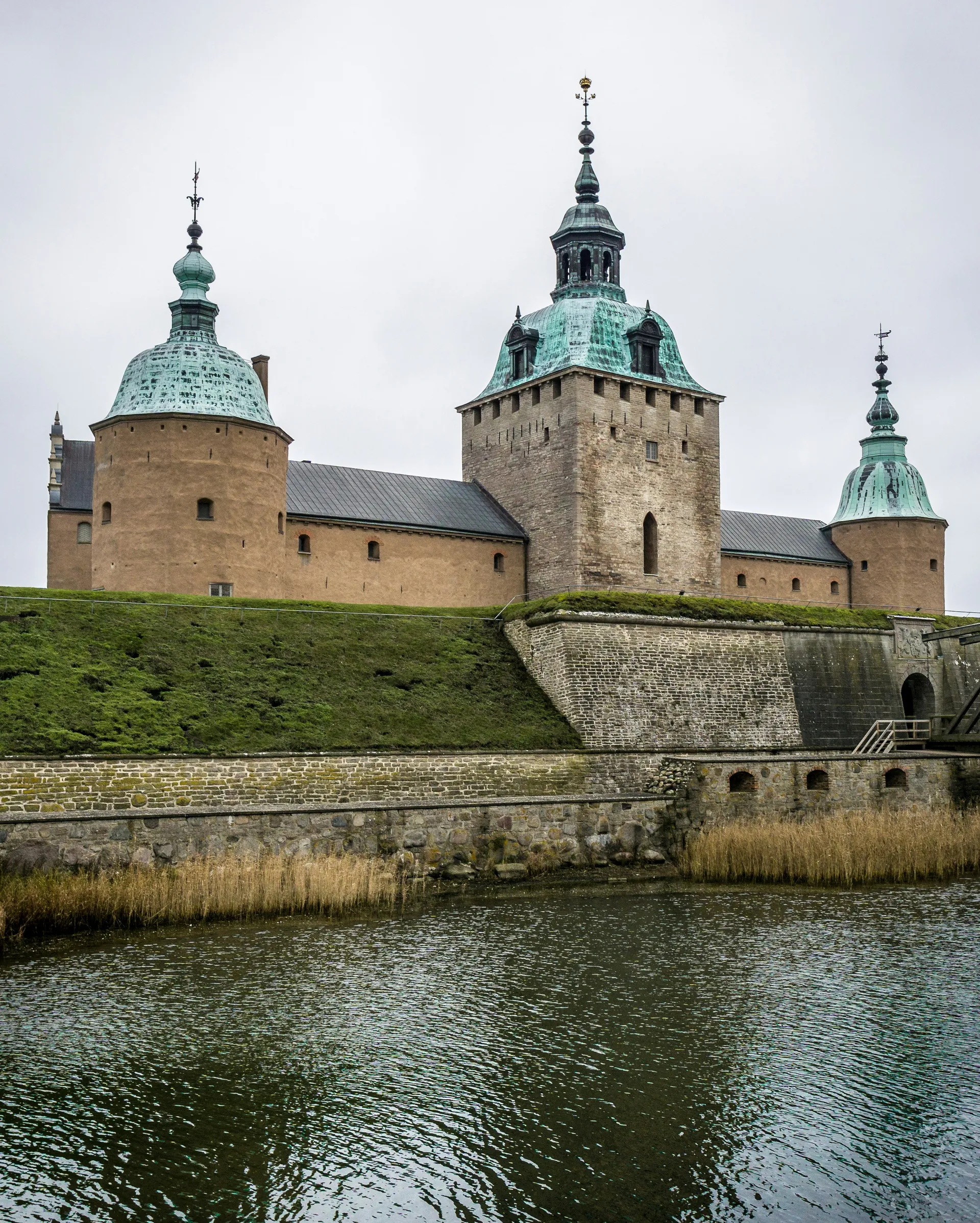
On the southeastern coast of Sweden, where the Baltic Sea washes against a shoreline of medieval stone and Renaissance grandeur, Kalmar has been guarding the strait that separates the Swedish mainland from the island of Öland for over eight hundred years. The city's magnificent castle — Kalmar Slott — is one of the best-preserved Renaissance castles in Scandinavia, and the site of the 1397 Kalmar Union, which united Sweden, Denmark, and Norway under a single crown in one of the most ambitious political projects in European medieval history.
The character of Kalmar is defined by its castle, its cathedral, and the elegant grid-planned Baroque city that surrounds them. The castle, originally built in the twelfth century and comprehensively rebuilt in the sixteenth century by the Vasa kings, presents a fairy-tale silhouette of towers, turrets, and a moat that reflects the structure in a wavering mirror of water. The interior preserves royal apartments of remarkable opulence, including the King's Chamber and the Golden Hall, whose coffered ceilings and painted panels represent the apotheosis of Scandinavian Renaissance decorative art.
Kalmar Domkyrka — the cathedral completed in 1703 — is one of Sweden's finest Baroque churches, designed by Nicodemus Tessin the Elder in a style of Italian-influenced grandeur that seems almost improbable in this quietly provincial Swedish city. The Kvarnholmen district, the Baroque new town built after the old medieval city was deemed indefensible, preserves its original grid layout and many of its seventeenth-century buildings, creating a remarkably coherent urban ensemble that rewards slow, attentive walking.
The cuisine of Kalmar and the surrounding Småland region reflects Sweden's eastern Baltic coast identity. Freshly smoked Baltic herring, prepared in the local fashion with juniper and allspice, is a regional speciality. Kroppkakor — potato dumplings stuffed with pork and onion — are a Småland classic of hearty, comforting character. The Öland island bridge, connecting the mainland to Sweden's second-largest island, provides access to Öland's distinctive limestone landscape, windmills, and the Stora Alvaret — a vast, treeless limestone plateau that is a UNESCO World Heritage Site.
Kalmar is accessible by rail from Stockholm (approximately four hours on the high-speed X2000 service) and by regional flights. The city's harbour can accommodate cruise vessels, and the Öland bridge connects directly to the island from the city centre. The best time to visit is May through September, when the longest days, mildest temperatures, and outdoor café culture bring the city to its most attractive. Midsummer celebrations in late June — with maypole dancing, flower wreaths, and herring-fuelled communal meals — are a quintessential Swedish experience.