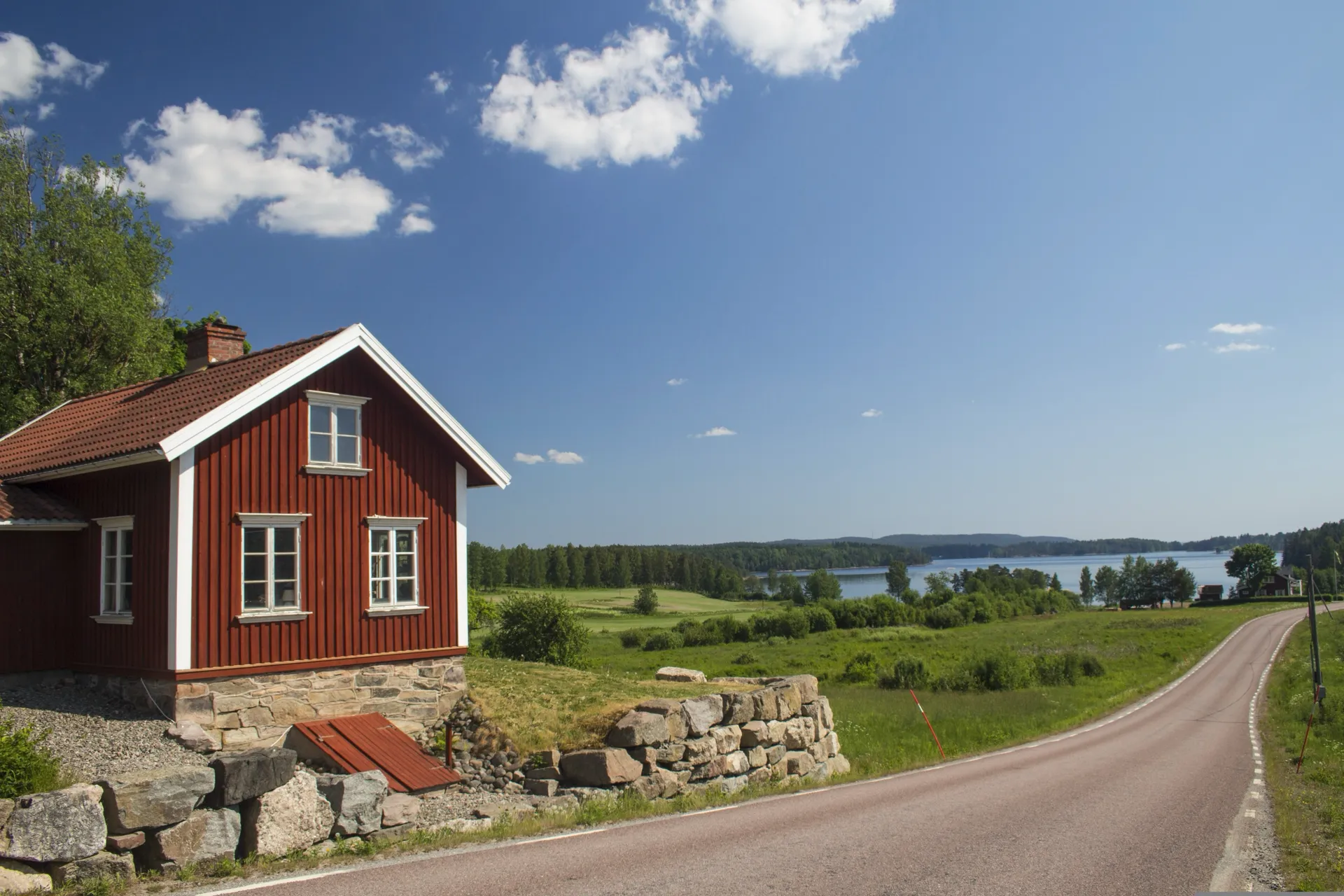
In the high latitudes where light becomes a protagonist in its own right—stretching across midsummer skies in luminous arcs or retreating to a blue twilight that lasts for months—Lysekil stands as a testament to the enduring bond between Nordic communities and the natural forces that have shaped their existence. The Norse understood something fundamental about these landscapes: that beauty and severity are not opposites but companions, and that both deserve reverence.
Historically, Lysekil was mainly known as a bathing location in Sweden in the 19th century, due to its popular bathing house dating from 1847. Once again, Lysekil is a popular summer resort located in Sweden's Bohuslän province and one of the sunniest places on the Scandinavian peninsula. Because of its favorable weather and picturesque archipelago dotted with small islands and protected fjord-like water ways it attracts many yachts and sun worshipers from the North who annually flock to their summer cottages in this area. Along with fishing, which is featured in its coat of arms, tourism has become important to Lysekil's economy.
The maritime approach to Lysekil deserves particular mention, as it provides a perspective unavailable to those who arrive by land. The gradual revelation of the coastline—first a suggestion on the horizon, then an increasingly detailed panorama of natural and human-made features—creates a sense of anticipation that air travel, for all its efficiency, cannot replicate. This is how travelers have arrived for centuries, and the emotional resonance of seeing a new port materialize from the sea remains one of cruising's most distinctive pleasures. The harbor itself tells a story: the configuration of the waterfront, the vessels at anchor, the activity on the quays—all provide an immediate reading of the community's relationship with the sea that informs everything that follows ashore.
Lysekil, Sweden, possesses a character forged by extremes. The landscape here alternates between the intimate and the monumental—sheltered harbors give way to vertical cliff faces, gentle pastures border glacial formations that speak of geological timescales, and the ever-present sea serves as both highway and horizon. In summer, the quality of the northern light is extraordinary: soft, persistent, and capable of rendering ordinary scenes in extraordinary clarity. The air carries the clean minerality of mountain water and the salt tang of the open Atlantic.
Nordic cuisine has undergone a revolution that honors rather than abandons tradition, and the local interpretation in Lysekil reflects this evolution beautifully. Expect seafood of remarkable purity—cod, salmon, and shellfish that travel mere hours from ocean to plate—alongside foraged ingredients from the surrounding wilderness: cloudberries, mushrooms, herbs that grow in the brief but intense northern summer. Smoked and preserved foods, once necessities of survival in these latitudes, have been elevated to art forms. Local bakeries and craft breweries add further texture to a culinary scene that rewards the adventurous palate.
Nearby destinations including Karlstad, Mariefred and Malmo provide rewarding extensions for those whose itineraries allow further exploration. The surrounding wilderness is the primary attraction for many visitors, and rightly so. Hiking trails thread through landscapes of staggering scale—fjords whose walls plunge hundreds of meters to dark water below, glacier tongues that calve into turquoise lakes, and alpine meadows that burst with wildflowers during the fleeting summer. Wildlife encounters are frequent and thrilling: sea eagles patrolling the coastline, reindeer grazing on high plateaus, and in the surrounding waters, the possibility of whale sightings that transform any voyage into something transcendent.
Crystal Cruises features this destination on its carefully curated itineraries, bringing discerning travelers to experience its singular character. The optimal period for visiting is June through September, when long northern days and mild temperatures make exploration a pleasure. Layered clothing is essential, as conditions can shift dramatically within hours. Travelers should bring quality waterproof gear, binoculars for wildlife observation, and the understanding that in the Nordic world, there is no such thing as bad weather—only inadequate preparation.

