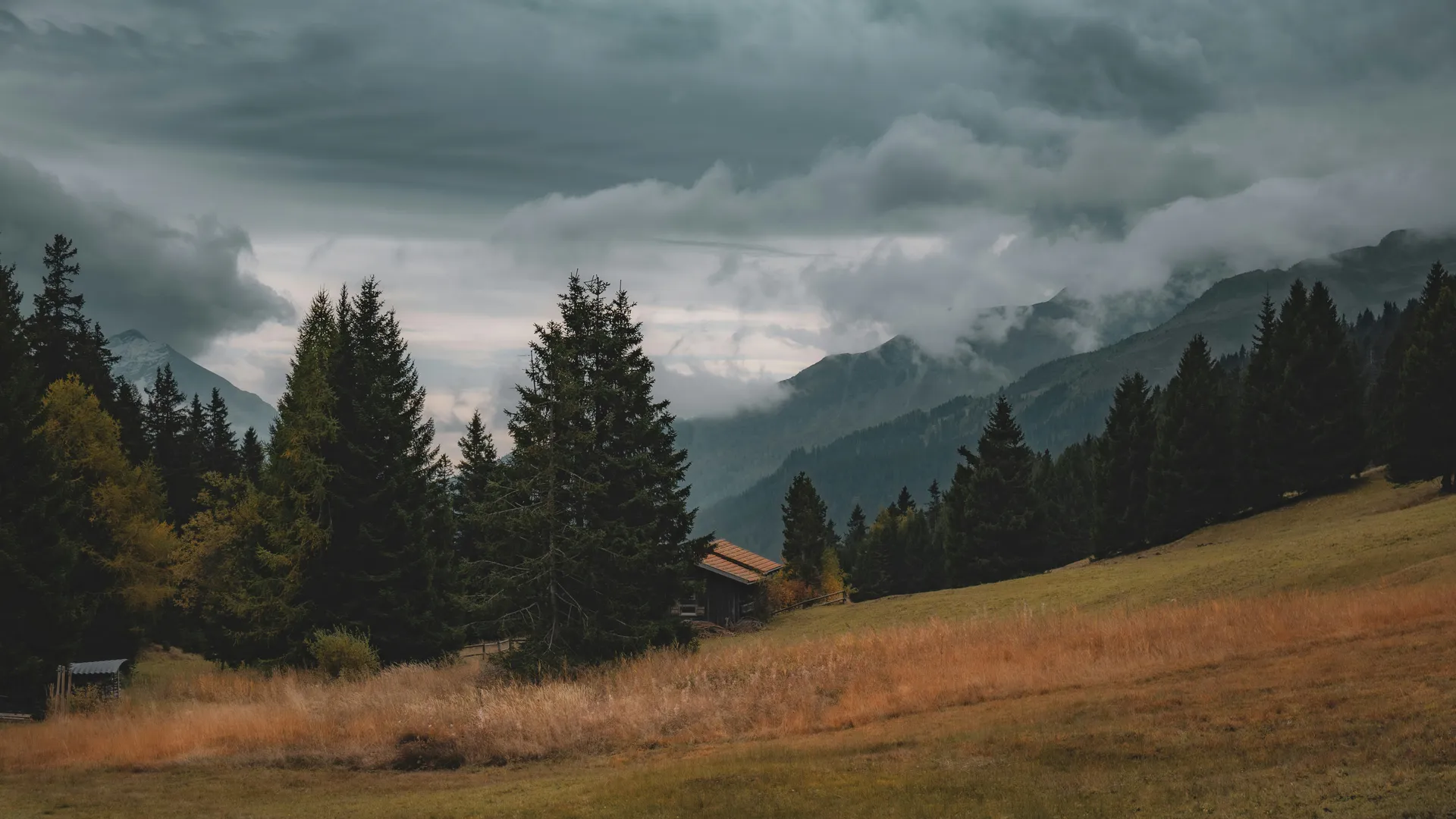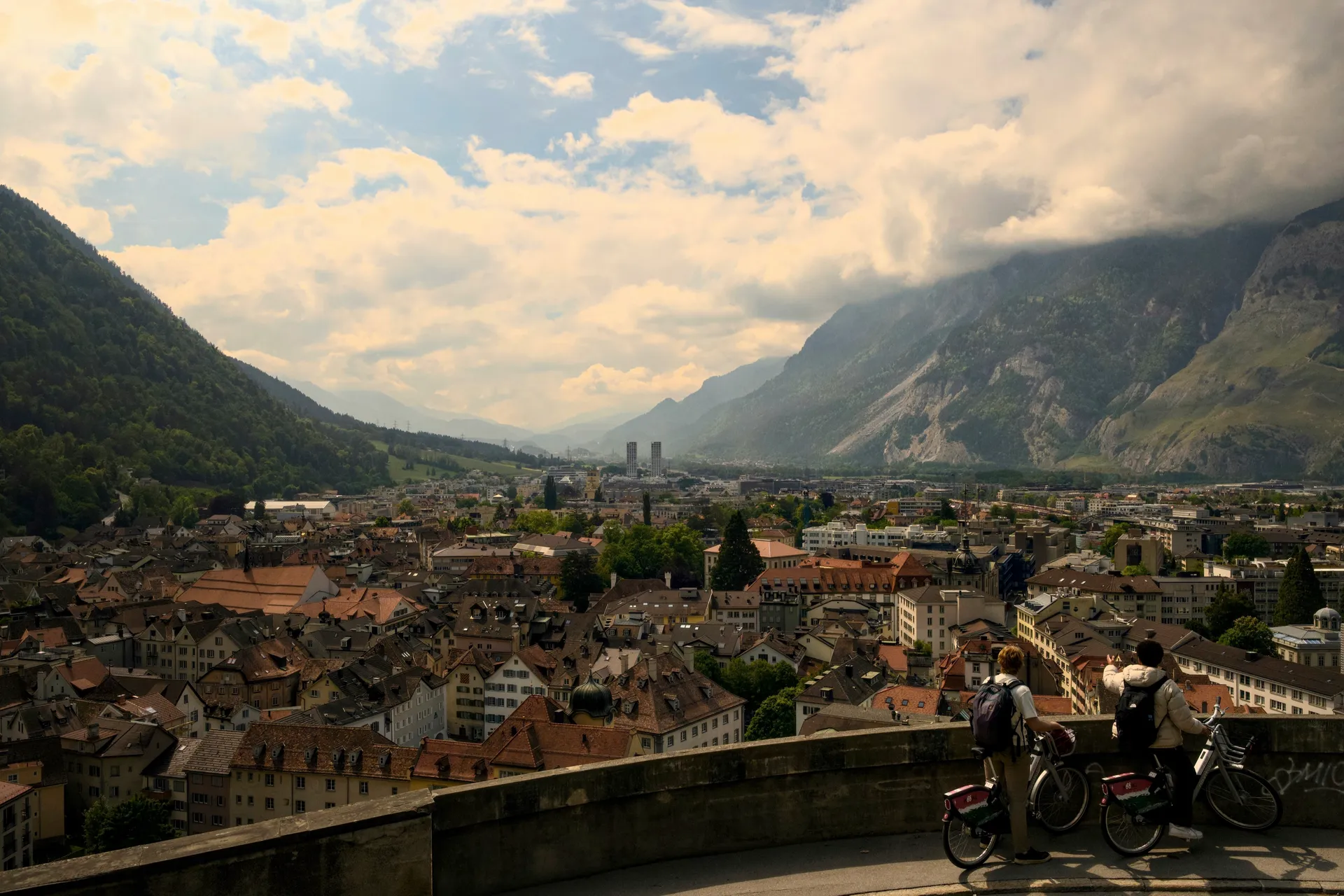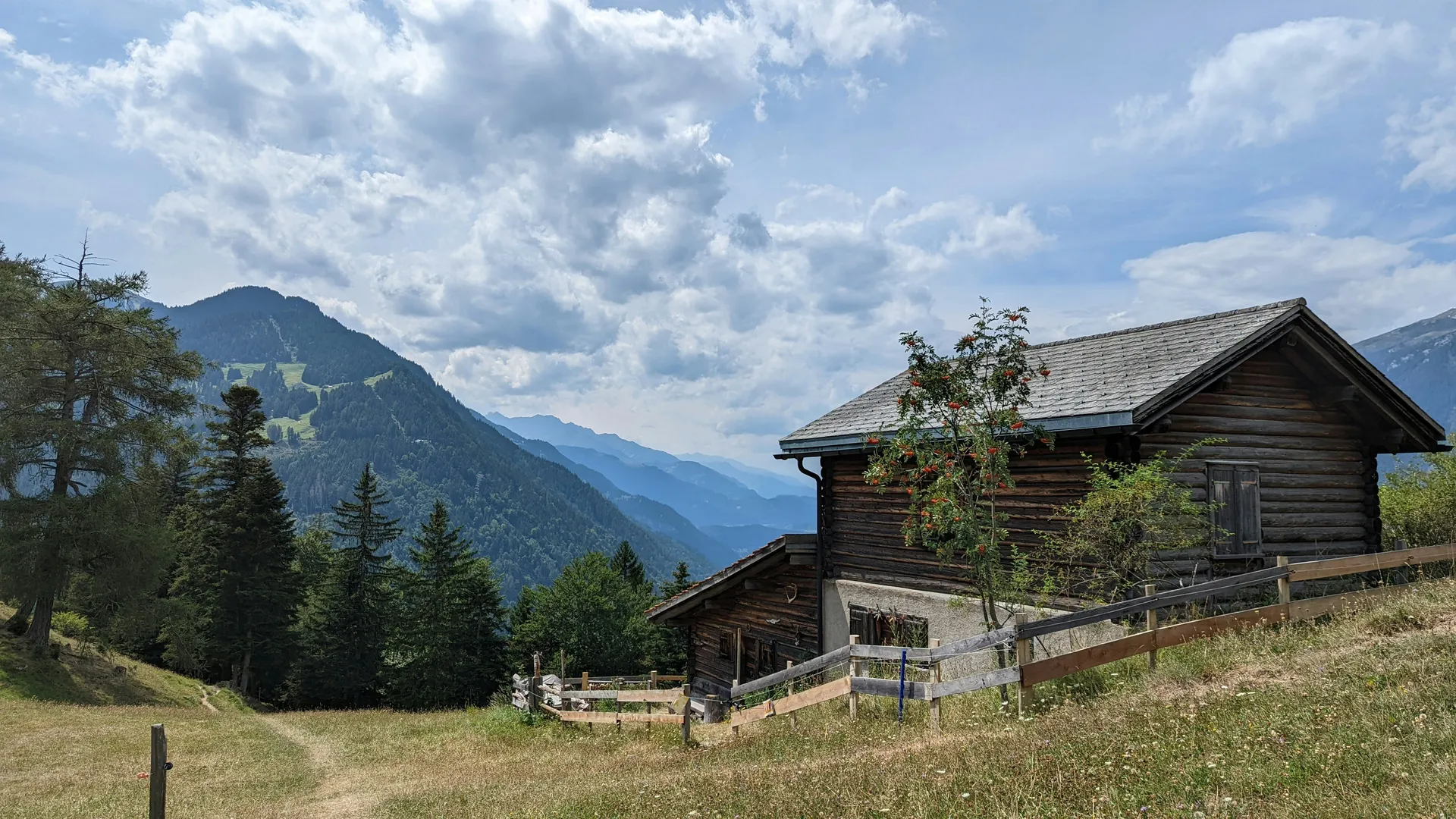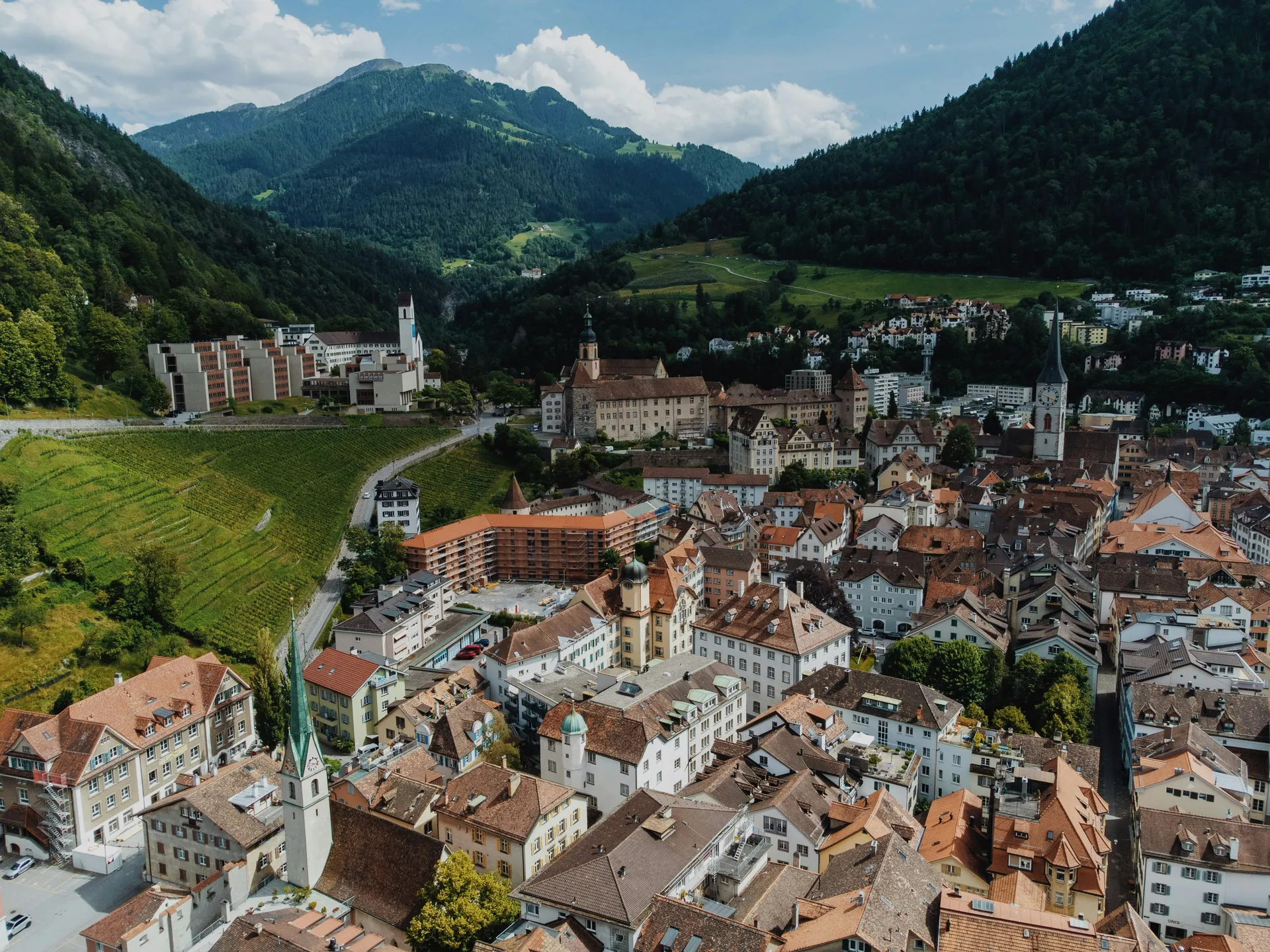
Chur claims the title of Switzerland's oldest city, and with evidence of settlement dating back over 5,000 years to the late Neolithic period, the claim is well-founded. Nestled in the upper Rhine Valley at the confluence of ancient Alpine trade routes, this compact city of 40,000 has served as a crossroads since long before the Romans established their outpost of Curia Raetorum here in the first century BC. Today, Chur is the capital of Graubunden, Switzerland's largest and most linguistically diverse canton — a region where German, Romansh, and Italian are all official languages and where the cultural currents of central and southern Europe mingle with distinctive Alpine traditions.
The Altstadt of Chur is a wonderfully atmospheric tangle of medieval lanes, Renaissance fountains, and baroque churches clustered beneath the hilltop Cathedral of the Assumption. The cathedral itself, begun in the eighth century and completed over the following five hundred years, is a treasure house of Romanesque and Gothic art: its carved capitals, medieval frescoes, and the magnificent fifteenth-century triptych altarpiece by Jakob Russ rank among the finest ecclesiastical artworks in Switzerland. The Bishop's Palace, perched on the same hilltop, has been the seat of the Diocese of Chur — one of the oldest north of the Alps — since the fifth century. Below, the car-free old town rewards aimless wandering with artisan shops, cafes, and the Bundner Kunstmuseum, which houses an impressive collection including works by the Graubunden-born artists Giovanni Giacometti and Angelika Kauffmann.
Graubunden cuisine is Alpine cooking at its most distinctive. Capuns — parcels of chard or lettuce leaf wrapped around a filling of spatzle dough, dried meat, and cheese, then baked in cream — are the canton's signature dish, hearty and deeply comforting. Bundnerfleisch, air-dried beef cured in the mountain air for months until it achieves a concentrated, silky intensity, is Graubunden's gift to the charcuterie world and appears on every restaurant menu, sliced paper-thin and served with pickled onions and dark bread. Pizzoccheri, buckwheat pasta baked with potatoes, cabbage, and Valtellina cheese, reflects the Italian influence that seeps across the passes from the south. The local wines — Pinot Noir and Completer from the Bundner Herrschaft, the warm, foehn-blessed vineyards around Malans and Flasch — are among Switzerland's best-kept secrets.
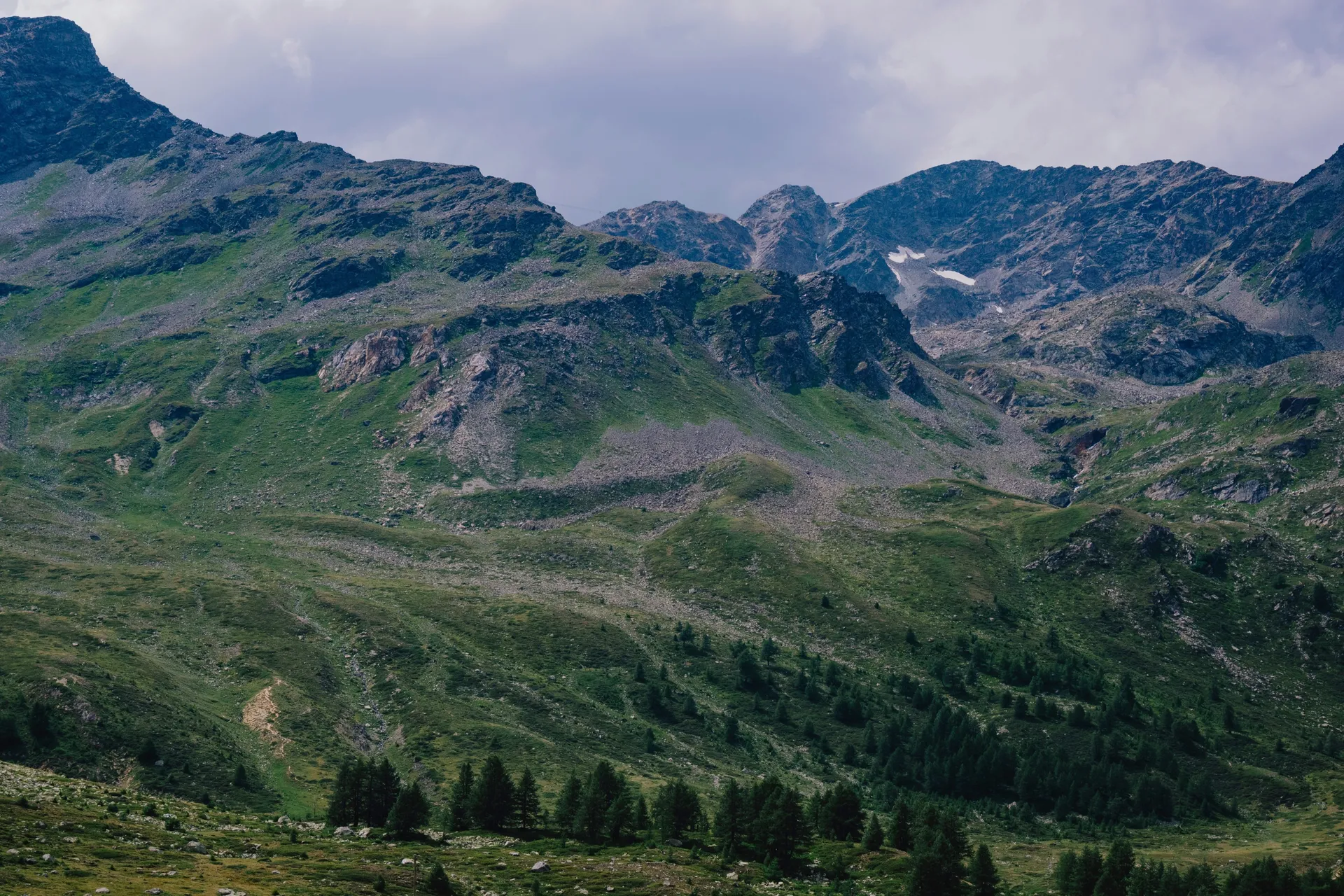
Chur's most famous claim in the world of travel is its role as the starting point of the Glacier Express and the Bernina Express — two of the world's most celebrated scenic rail journeys. The Glacier Express traces a sinuous, eight-hour route across 291 bridges and through 91 tunnels to reach Zermatt, offering a constantly shifting panorama of gorges, Alpine meadows, and snow-capped peaks. The Bernina Express climbs from Chur over the Bernina Pass at 2,253 metres before descending through spectacular spiral viaducts to the palm-fringed Italian lakeside town of Tirano — a UNESCO World Heritage railway route.
Chur is accessible as an excursion on Avalon Waterways river cruise itineraries, typically via scenic rail connections from the Rhine Valley. The city's compact Altstadt is entirely walkable, with the cathedral, museums, and restaurants all within a few hundred metres. The best time to visit is May through October for the most pleasant weather and access to mountain excursions, though the winter panorama of snow-covered peaks and the festive atmosphere of Christmas markets have their own considerable appeal.