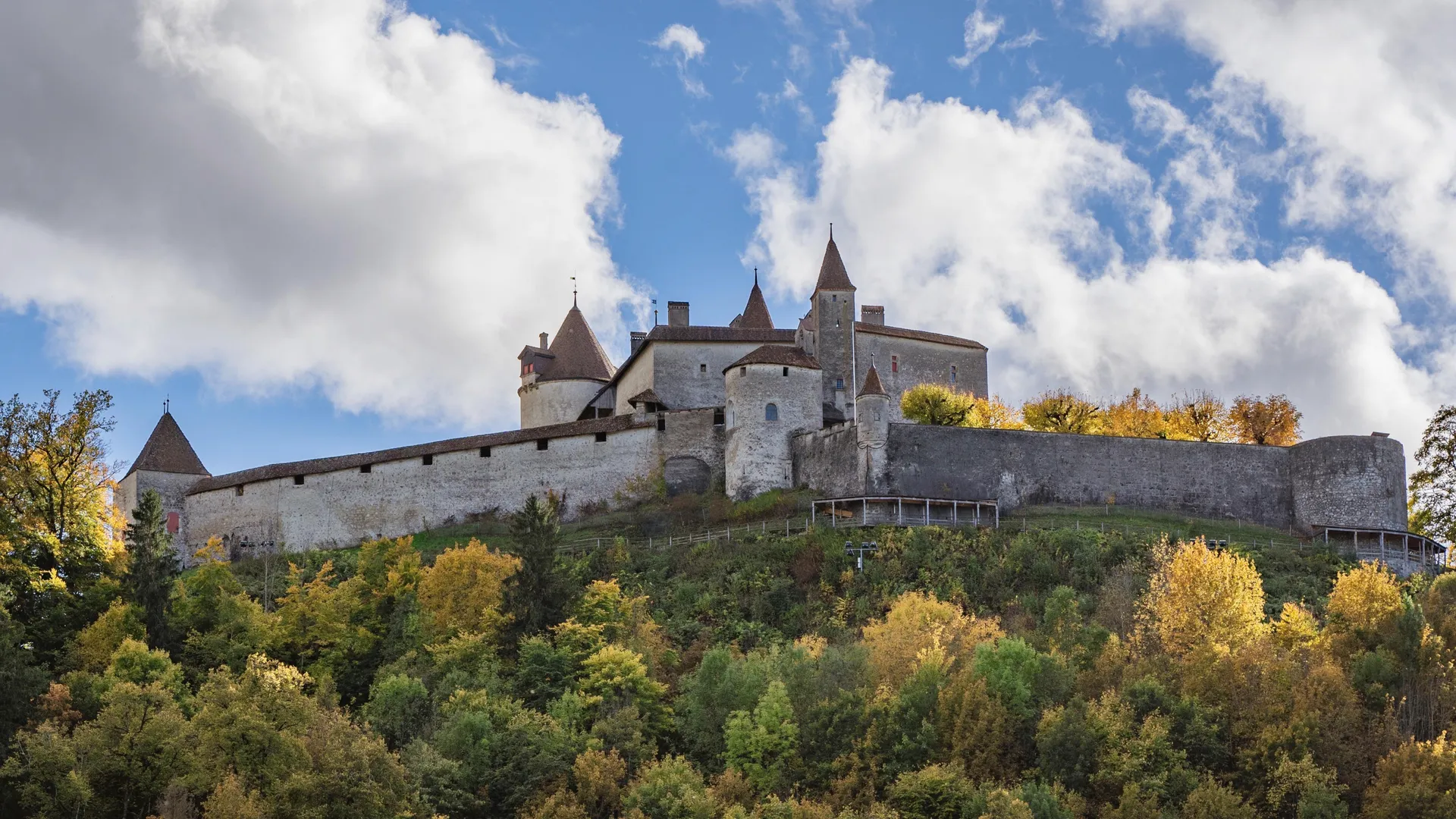
Perched upon a verdant hilltop in the canton of Fribourg, the medieval town of Gruyères has presided over the Swiss Pre-Alps since the twelfth century, when the Counts of Gruyère erected their formidable château — a fortress that would witness five centuries of dynastic rule before the last count declared bankruptcy in 1554. The castle passed through the hands of Fribourg and Bern patricians before finding an unlikely second life in the nineteenth century as an artists' colony, attracting the likes of Corot and the Romantic landscape painters who recognized what discerning travellers still discover today: that few places in Europe compress so much beauty into so compact a stage.
To walk the single cobblestoned main street of Gruyères is to step into a Switzerland that existed long before the watch boutiques and ski resorts claimed the national imagination. Geranium-laden balconies overhang centuries-old façades painted in warm ochres and faded creams, while the turreted château commands the hilltop like a crown jewel, its ramparts offering unobstructed panoramas across the Moléson massif and the emerald patchwork of the Gruyère valley below. The air carries a faint sweetness — part alpine meadow, part something richer, more cultured — and the village moves at a tempo that rewards those who linger rather than rush. On a clear morning, when mist lifts from the Saane valley and the peaks sharpen against an impossibly blue sky, Gruyères achieves a perfection that feels almost theatrical in its beauty.
This is, of course, the spiritual homeland of one of the world's most revered cheeses, and no visit is complete without witnessing the craft firsthand at La Maison du Gruyère, the modern fromagerie at the foot of the hill where master cheesemakers transform four hundred litres of raw alpine milk into a single wheel of AOP Gruyère. Taste it at every stage of its journey — from the supple, nutty young rounds to the deeply crystalline vieux aged thirty-six months — then sit down to a fondue moitié-moitié at the Chalet de Gruyères, where the blend of Gruyère and Vacherin fribourgeois bubbles in a caquelon over an open flame. Do not overlook the double cream of Gruyères, a legendarily rich confection spooned over fresh meringues from nearby Boulangerie de la Grand-Rue — a dessert so elemental and so extraordinary that it has earned near-sacred status among the Swiss. Pair it with a glass of Bénichon mustard-spiced vin cuit, and you have tasted something no Michelin-starred laboratory could ever replicate.
The surrounding region reveals itself generously to those willing to explore beyond the hilltop. A scenic drive south through the Simmental leads to Grindelwald, where the Eiger's infamous north face looms with silent authority, while the Glacier Express route connects onward to Saint Moritz and its rarefied Engadine light — a journey that ranks among the continent's most spectacular rail passages. Closer at hand, Martigny offers the Pierre Gianadda Foundation, a world-class museum hosting rotating exhibitions from Monet to Giacometti in an unexpected Rhône valley setting. And to the west, cosmopolitan Geneva — with its lakeside promenades, haute horlogerie salons, and the vast collection of the Musée d'Art et d'Histoire — provides the urbane counterpoint to Gruyères' pastoral refinement.
River cruise guests arriving with Avalon Waterways will find Gruyères offered as one of Switzerland's most enchanting shore excursions, typically accessed via the Rhine or Rhône itineraries that thread through the country's western corridor. The town's compact footprint makes it ideally suited to a half-day visit — time enough for the château, the fromagerie, and a leisurely fondue — while longer independent explorations might include the surreal HR Giger Museum, the Oscar-winning artist's permanent collection housed in a medieval château that could not be more at odds with the biomechanical darkness within. Whether arriving by river or by rail, travellers will discover that Gruyères requires no embellishment; the village has been perfecting the art of quiet magnificence for the better part of a millennium.

