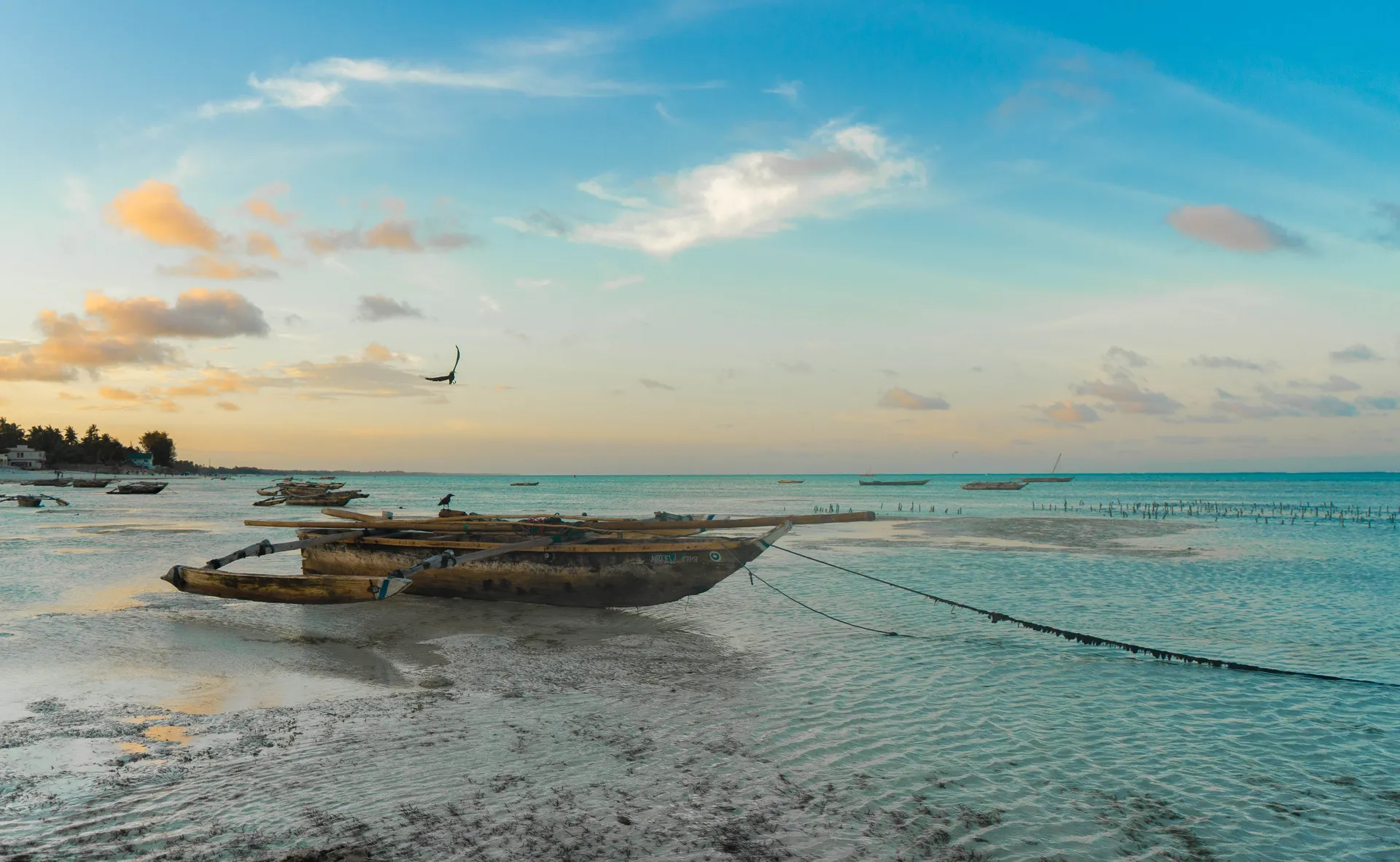
Kilwa Kisiwani is one of the most significant and least-visited archaeological sites in sub-Saharan Africa — a coral island off the southern coast of Tanzania that was, between the 11th and 15th centuries, the wealthiest and most powerful city on the East African coast, controlling the gold trade from the Zimbabwe Plateau to the markets of Arabia, India, and China. The Swahili traders of Kilwa minted their own coins, built coral-stone palaces and mosques of sophisticated architecture, and maintained commercial relationships that stretched from Sofala in Mozambique to the ports of the Persian Gulf and the Malabar Coast — a maritime network that predated Portuguese exploration by centuries.
The ruins of Kilwa Kisiwani, designated a UNESCO World Heritage Site in 1981, spread across the northern end of the island in a complex of coral-stone buildings whose architectural ambition still impresses. The Great Mosque, originally built in the 11th century and expanded in the 15th, features a vaulted prayer hall with coral columns and a domed roof of remarkable engineering — one of the earliest domed structures in sub-Saharan Africa. The Husuni Kubwa palace, perched on a cliff above the harbour, was the largest pre-colonial structure in sub-Saharan Africa — a sprawling complex of over 100 rooms, courtyards, and a swimming pool that testifies to the extraordinary wealth and cosmopolitan sophistication of Kilwa's ruling merchant class.
The island today is home to a small fishing community whose daily life — dhow sailing, octopus fishing at low tide, and the cultivation of coconut and cassava — maintains continuities with the pre-colonial past even as the grand ruins slowly succumb to tropical erosion. The community manages visitor access to the ruins, and the guides — drawn from local families — narrate the history of Kilwa with a personal connection that academic archaeology cannot replicate. The mosque remains in use for Friday prayers, connecting the contemporary community directly to the medieval Swahili civilization that built it.
The marine environment surrounding Kilwa Kisiwani is characterised by warm, clear Indian Ocean waters, coral reefs, and the mangrove systems that fringe the mainland coast. The Kilwa archipelago — including Kilwa Kisiwani, Songo Mnara (another UNESCO-listed Swahili ruin site), and several smaller islands — offers snorkelling and diving opportunities on reefs that see virtually no tourist traffic. Whale sharks appear seasonally in the waters off the southern Tanzanian coast, and the Mafia Island Marine Park, accessible from the broader Kilwa region, provides some of the best diving in East Africa.
Kilwa Kisiwani is visited by Emerald Yacht Cruises on East African and Indian Ocean itineraries, with passengers arriving by Zodiac or local boat. The dry season from June through October offers the most comfortable conditions for exploring the ruins, while the short rains in November and the longer rains from March through May bring lush vegetation that contrasts dramatically with the pale coral stone of the medieval buildings.

