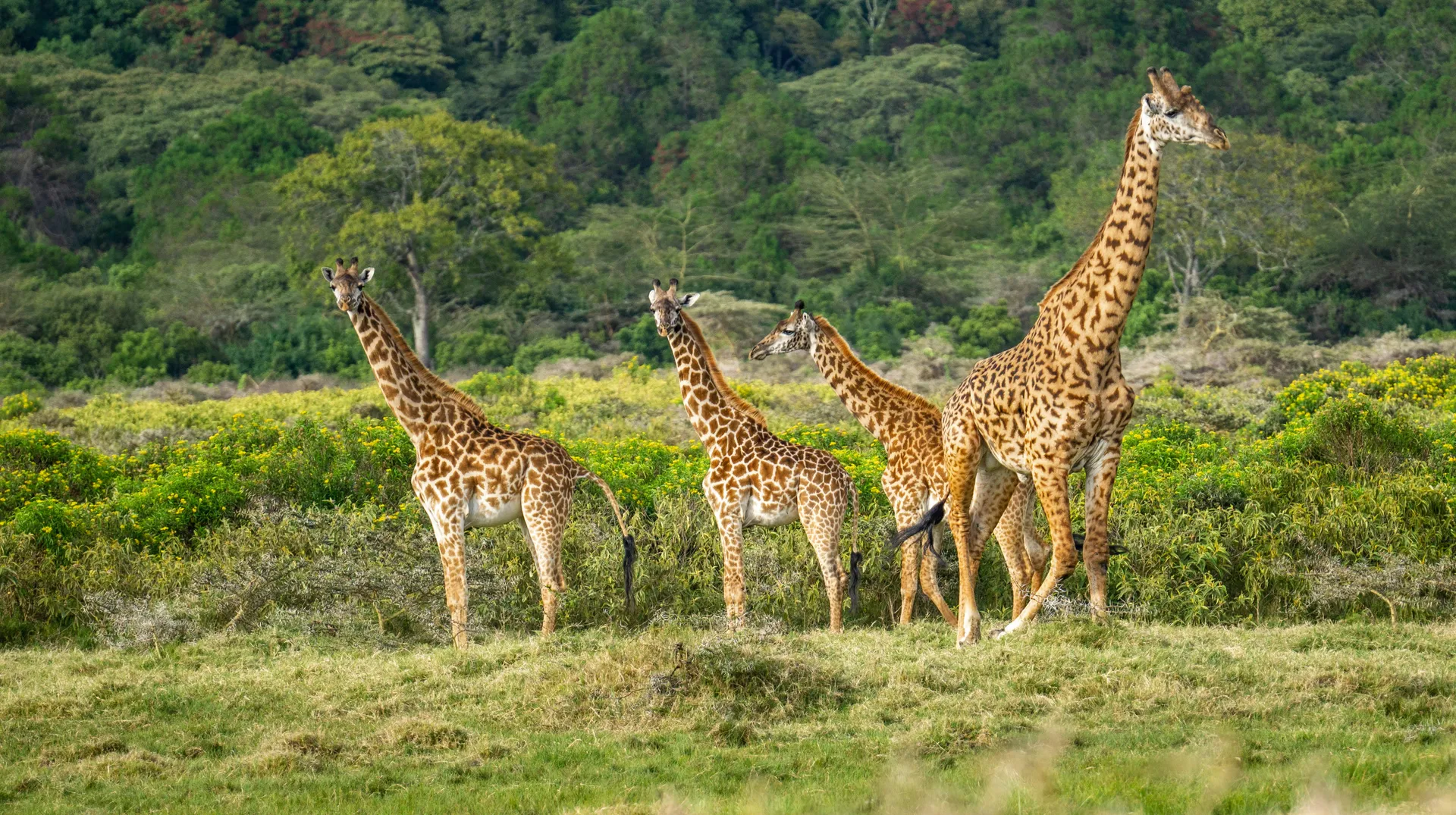
Three million years ago, a volcano the size of Kilimanjaro stood on this spot in northern Tanzania. When it collapsed in on itself — slowly, catastrophically, over millennia — it left behind a caldera twenty kilometers wide and six hundred meters deep: the Ngorongoro Crater, one of the most extraordinary natural amphitheaters on Earth. Within its unbroken walls, a self-contained ecosystem thrives with a density of wildlife found almost nowhere else on the African continent. Lions patrol the golden grasslands, black rhinos browse the Lerai Forest, elephants with tusks that nearly touch the ground move between the soda lakes, and flamingos paint Lake Magadi in shifting ribbons of pink. It is, quite simply, the closest thing to Eden that exists.
The Ngorongoro Conservation Area extends far beyond the crater itself, encompassing 8,292 square kilometers of highland forest, savanna, and the Olduvai Gorge — the “Cradle of Mankind” — where Louis and Mary Leakey unearthed fossils that rewrote the story of human evolution. Standing at the gorge’s rim, looking down at the exposed geological strata where Homo habilis walked nearly two million years ago, you are confronted with a vertigo that is more temporal than physical. The nearby Laetoli footprints — preserved in volcanic ash 3.6 million years ago — are the oldest known evidence of upright bipedal walking, a moment frozen in stone that connects every human alive today to this precise corner of Tanzania.
The Maasai people have grazed their cattle across these highlands for centuries, and the Ngorongoro Conservation Area is unique among East African protected zones in allowing indigenous pastoralists to coexist with wildlife. Maasai bomas (homesteads) dot the crater rim and surrounding plains, their circular enclosures of thorn-branch fencing enclosing dome-shaped houses of mud, cow dung, and grass. Visitors are often welcomed with traditional songs and the chance to purchase intricately beaded jewelry — a vital source of income for communities that maintain a semi-nomadic lifestyle increasingly challenged by the pressures of modernity and conservation.
The cuisine available in the Ngorongoro region reflects its highland setting and safari lodge culture. Lodges perched on the crater rim serve multicourse dinners that draw on both Tanzanian and international influences — grilled game meats, fresh vegetables from highland gardens, and East African coffee that rivals anything produced in Ethiopia or Kenya. Sundowner cocktails on the crater rim, with the caldera floor spread out below in the golden hour light, rank among safari travel’s most iconic rituals. Local markets in nearby Karatu offer ripe avocados, tropical fruit, and the chance to sample ugali with sukuma wiki in a setting far removed from the luxury of the lodges.
AmaWaterways and Scenic River Cruises include Ngorongoro on their Tanzania safari extensions, combining crater game drives with visits to the Serengeti, Lake Manyara, and Olduvai Gorge. The crater’s microclimate means that mornings can be surprisingly cold — mist often fills the caldera until mid-morning — while afternoons warm to comfortable safari temperatures. The best time for game viewing is June through October, the dry season, when the crater floor’s grasses are short and animals congregate around the permanent water sources. January through March brings the calving season to the wider Serengeti ecosystem, making it an equally compelling time for the broader region.

