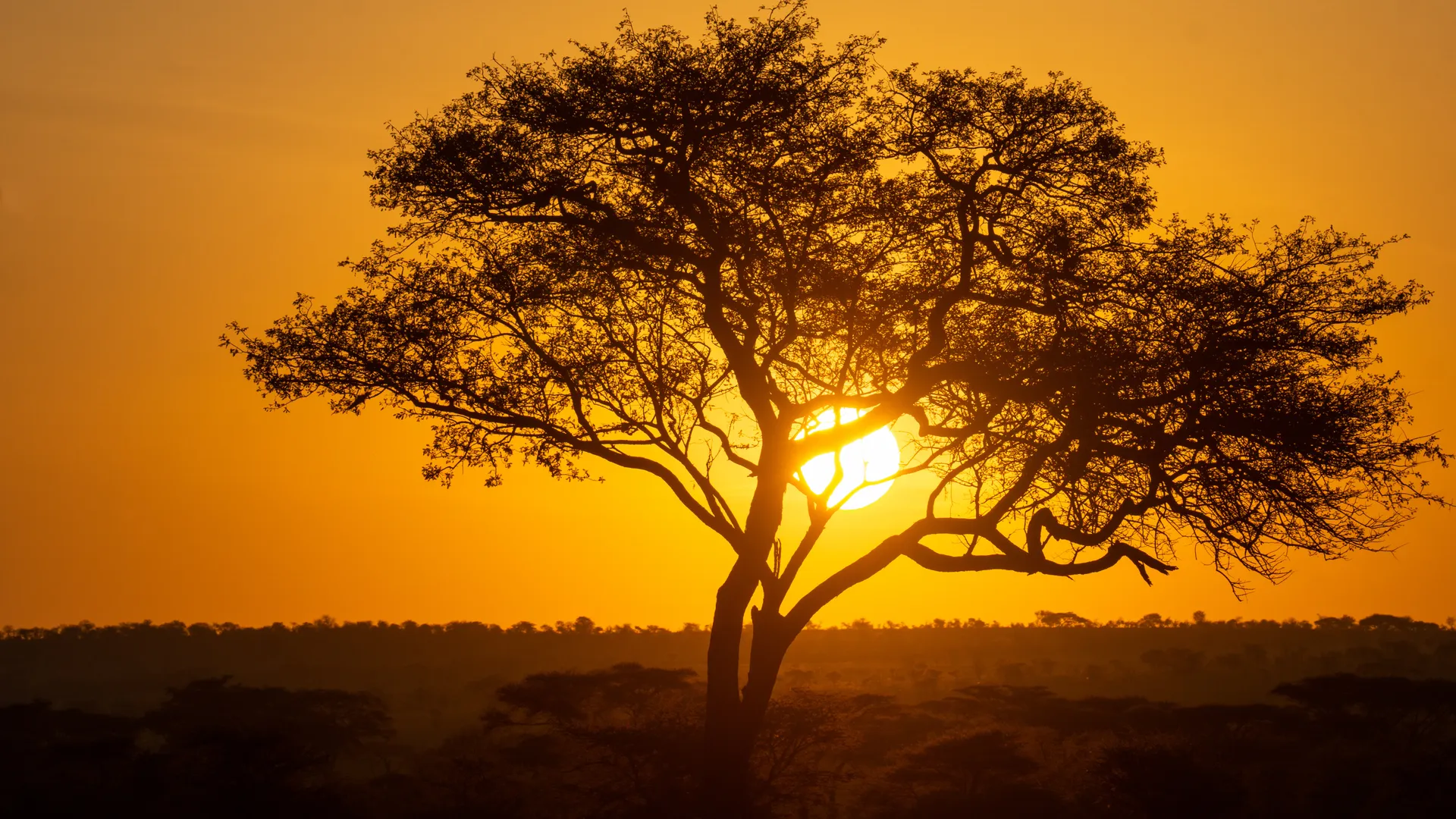
There are places on Earth that transcend geography to become mythology, and the Serengeti is foremost among them. This 14,750-square-kilometer expanse of grassland, savanna, and riverine forest in northern Tanzania hosts the greatest wildlife spectacle remaining on the planet: the Great Migration, in which over two million wildebeest, zebra, and gazelle trace an ancient circular path dictated by rainfall and the eternal promise of fresh grazing. The name itself comes from the Maasai word "siringet"—endless plains—and standing on the Serengeti’s central grasslands, watching the horizon bend unbroken in every direction, the name feels less like poetry and more like understatement.
The Great Migration defies the static notion of a seasonal event. It is a continuous, year-round movement—a living river of animals that flows clockwise through the Serengeti ecosystem. In January and February, the southern plains around Ndutu host the calving season, when approximately 8,000 wildebeest are born daily, attracting predators in concentrations found nowhere else. By June, the herds push northward toward the Western Corridor, and from July through October, they face the Mara River’s crocodile-infested crossings—scenes of raw, unscripted drama that have defined wildlife filmmaking for generations. The Serengeti’s resident populations are equally impressive: over 3,000 lions (the continent’s largest population), leopards draped in sausage trees, cheetahs on the open plains, and the endangered African wild dog.
The Serengeti’s landscapes are more varied than the name suggests. The Seronera Valley, in the park’s heart, is prime big-cat territory—rocky kopjes (granite outcrops) serve as lion lookouts and leopard dens. The Western Corridor narrows toward Lake Victoria through wooded hills and the Grumeti River, where massive Nile crocodiles await the migration’s river crossings. The north, bordering Kenya’s Masai Mara, offers rolling hills and the dramatic Mara River crossings. The Ngorongoro Conservation Area to the southeast adds the collapsed caldera of Ngorongoro Crater—a natural amphitheater harboring 25,000 large animals, including the densest population of black rhinos in East Africa.
Safari accommodations in the Serengeti range from mobile camps that follow the migration’s rhythm to permanent luxury lodges with infinity pools overlooking the plains. Hot-air balloon safaris at dawn, floating silently above herds as the sun paints the savanna gold, offer a perspective that redefines the concept of scenic. Maasai cultural visits provide encounters with one of Africa’s most iconic pastoral peoples, whose coexistence with wildlife across the greater ecosystem has shaped the landscape for centuries.
AmaWaterways features the Serengeti in its East African extensions, understanding that no amount of nature documentary footage can prepare a visitor for the sensory immersion of being present as the plains come alive at dawn. The Serengeti is accessible year-round, but each season offers distinct rewards: the January calving, the June western migration, the dramatic August–October river crossings. Whatever the timing, the Serengeti delivers what few places still can—an encounter with the wild world at its most magnificent and undiminished.

