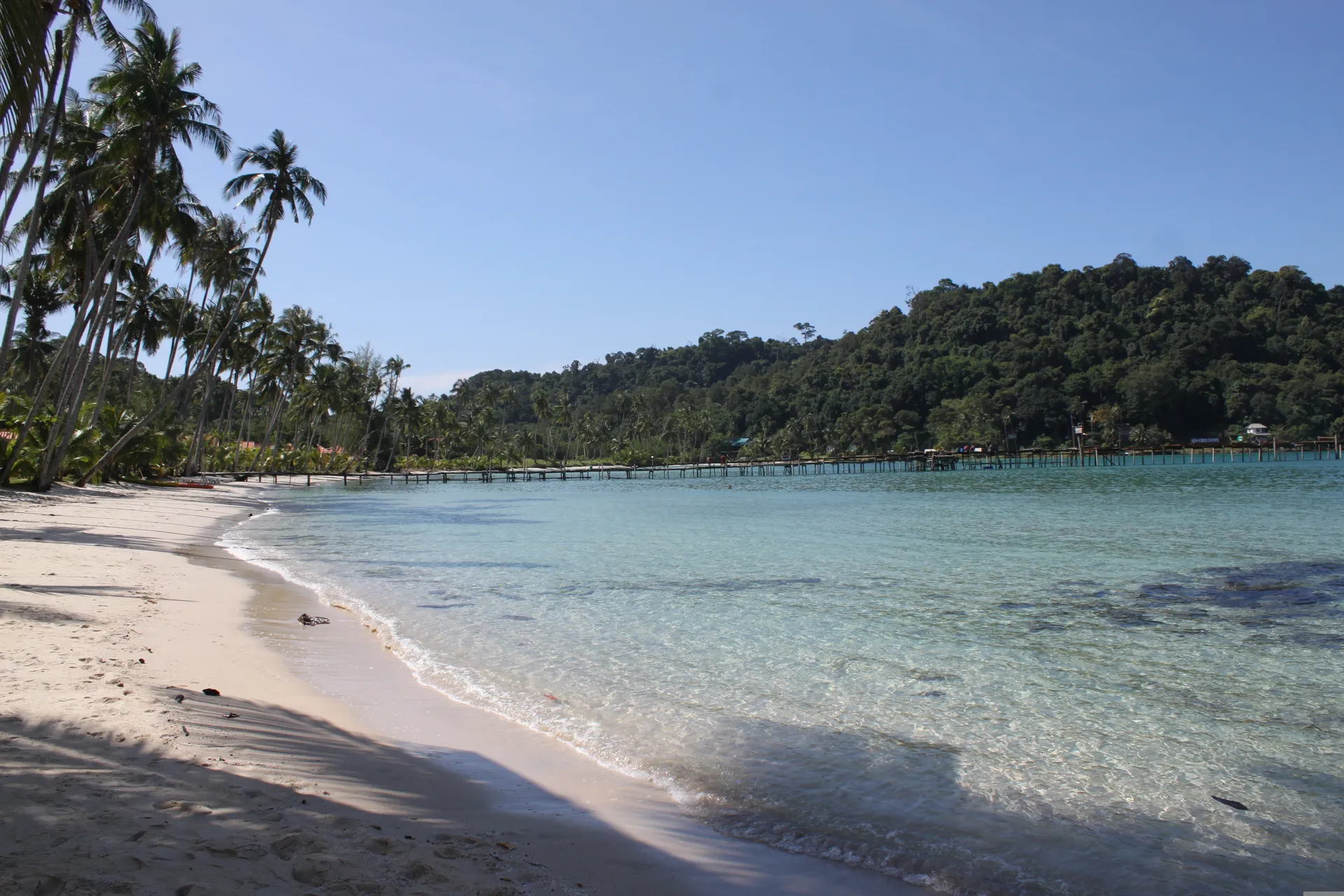
In the far eastern reaches of the Gulf of Thailand, near the Cambodian border, Ko Kood (also spelled Koh Kut) remains one of Southeast Asia's most pristine island retreats—Thailand's fourth-largest island and yet one of its least developed. While neighboring Ko Chang has embraced mass tourism and Ko Samet draws Bangkok weekenders, Ko Kood has quietly preserved its rain-forested interior, crystal-clear waters, and fishing village character, creating an island experience that feels like Thailand before the crowds discovered it.
Ko Kood's character is defined by what it lacks as much as what it possesses. There are no 7-Elevens on every corner, no all-night party beaches, no concrete sprawl. Instead, the island's small population—perhaps two thousand permanent residents—lives primarily from fishing and coconut farming, with tourism developing at a pace that respects the island's carrying capacity. The main settlements, Ban Khlong Phrao and Ao Salat, are fishing villages of wooden houses on stilts where the daily catch is the main event and conversations happen at the rhythm of swaying hammocks. A handful of boutique resorts blend into the jungle canopy, prioritizing harmony with nature over architectural spectacle.
Seafood on Ko Kood is as fresh as geography allows. The fishing villages serve the morning's catch directly—grilled squid, steamed crab with nam jim seafood sauce, and tom yam packed with prawns pulled from the surrounding waters hours earlier. The island's coconut plantations contribute to every meal, from rich curries to freshly pressed coconut water served in the shell. Small beach restaurants, their tables set directly on the sand beneath casuarina trees, offer Thai classics—pad krapao, som tam, massaman curry—prepared with an authenticity that more touristic islands struggle to maintain.
Ko Kood's natural beauty centers on water of almost supernatural clarity. Klong Chao Beach, the island's most accessible, offers white sand beneath coconut palms with snorkeling directly from shore. The Klong Chao Waterfall, reached by a jungle trail through the island's interior, cascades into a natural swimming pool surrounded by dipterocarp forest. The island's western coast, accessible by longtail boat, reveals hidden coves and coral reefs teeming with colorful reef fish, sea turtles, and occasional whale sharks in season. The mangrove forests on the eastern shore, navigable by kayak, harbor a different kind of beauty—mudskippers, fiddler crabs, and the intricate root architecture of the mangrove ecosystem.
Seabourn brings its ultra-luxury guests to Ko Kood, recognizing that true exclusivity lies not in gilded excess but in access to places that remain genuinely unspoiled. The island's lack of deep-water port means tender operations deliver guests to beaches rather than terminals—an arrival that sets the tone for a day defined by natural beauty rather than commercial infrastructure. For travelers who measure a destination's value by what it has resisted rather than what it has built, Ko Kood represents Thailand at its most quietly magnificent.

