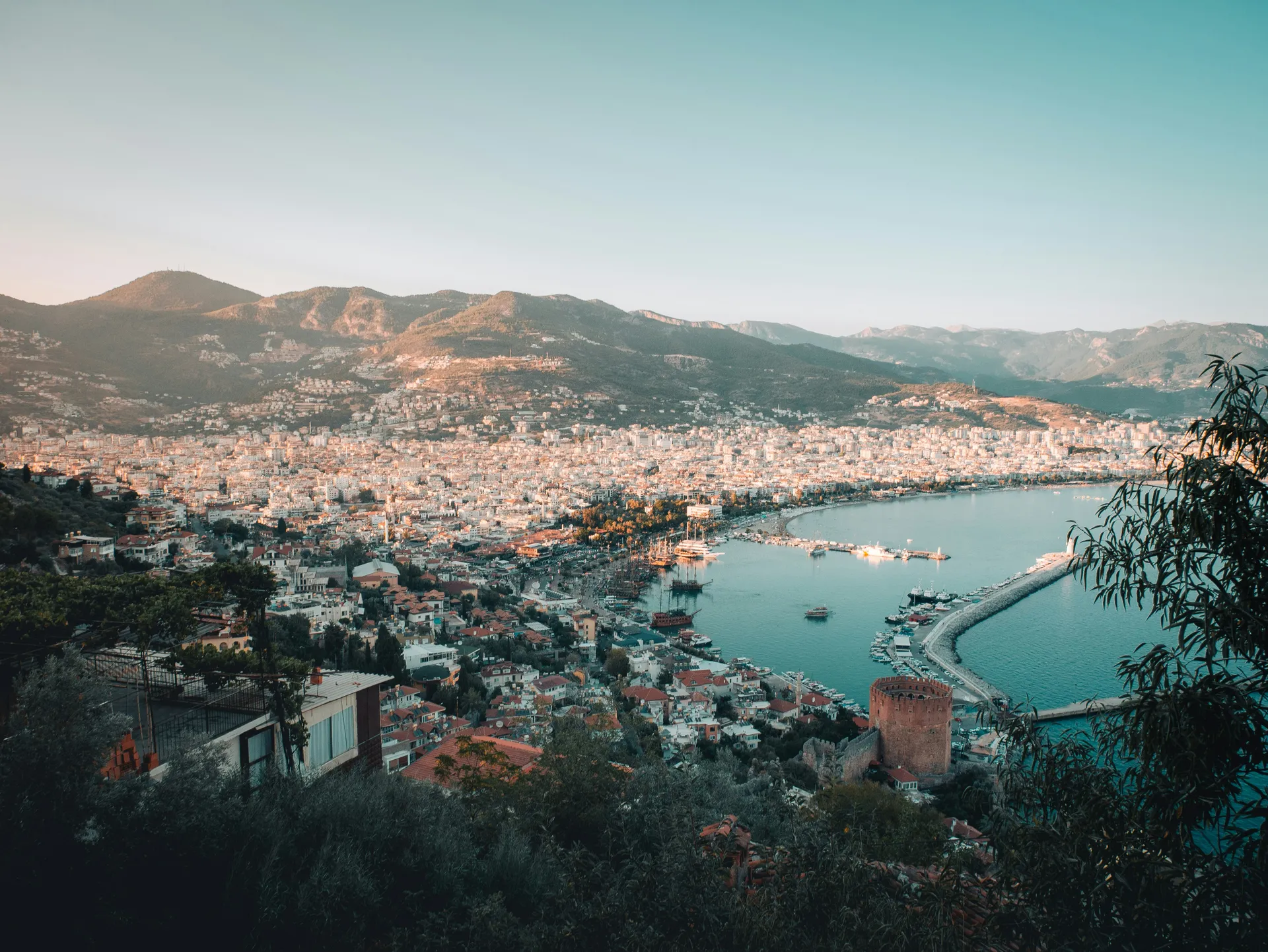
Alanya clings to a dramatic rocky peninsula that juts into the Mediterranean like the prow of an ancient ship, its thirteenth-century Seljuk fortress crowning the promontory three hundred meters above the turquoise waters below. This stretch of the Turkish Riviera has been coveted since antiquity—Cleopatra reportedly received the city as a gift from Mark Antony, and the beach below the castle still bears her name. But it was the Seljuk Sultan Alaeddin Keykubat I who gave Alanya its defining character in the 1220s, constructing the massive fortifications, the iconic Red Tower (Kızıl Kule), and the shipyard (Tersane) that transformed a pirate haven into a winter capital of one of the medieval world's most sophisticated empires.
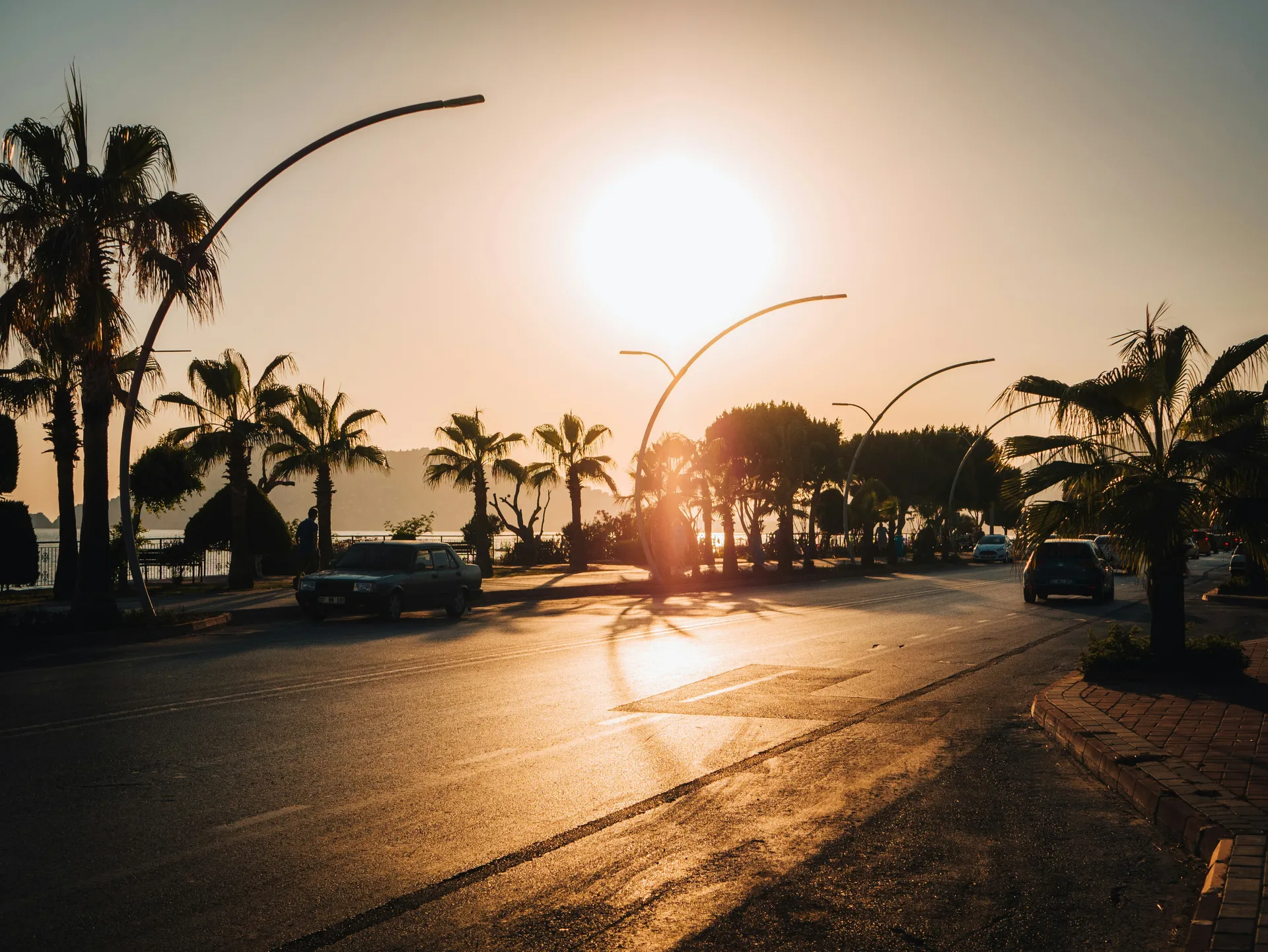
The city cascades down from the castle in layers of history and daily life. The old quarter, within the fortress walls, is a labyrinth of Ottoman-era wooden houses draped in bougainvillea, their latticed balconies overhanging narrow lanes that wind past Byzantine churches and Seljuk-era cisterns. Below, the modern city stretches along the coast in both directions, its seaside promenade lined with palm trees, cafés, and the endless Mediterranean horizon. Damlataş Cave, discovered in 1948 at the western base of the peninsula, offers a cool, cathedral-like interior of stalactites and stalagmites, and its humid air is reputed to benefit respiratory conditions—making it one of the few caves in the world with a medical reputation.
Turkish Mediterranean cuisine reaches a refined expression in Alanya. The day begins with a traditional kahvaltı—an expansive breakfast spread of cheeses, olives, honey, clotted cream (kaymak), eggs, and freshly baked simit bread—served at clifftop restaurants overlooking the sea. Grilled sea bass and sea bream, caught that morning from the waters below, are lunchtime staples. In the evening, the meyhane (tavern) tradition takes over: meze plates of hummus, muhammara (pepper-walnut paste), and octopus salad precede grilled lamb chops and kebabs. The local pide (Turkish flatbread pizza) rivals that of the Black Sea region. Fresh-squeezed pomegranate and orange juice, available at street stalls throughout the city, is the unofficial drink of the Turkish Riviera.
The Alanya Castle complex itself is a destination requiring half a day to explore properly. The outer walls run for six kilometers along the ridge, enclosing 140 towers, a Byzantine church with frescoed walls, and the Ehmedek citadel—the inner fortress where the last defenders would retreat. The view from the summit encompasses the entire coast from Antalya to Anamur on clear days. Below, the Red Tower—an octagonal masterpiece of Seljuk military architecture—now houses an ethnographic museum. The ancient shipyard, carved into the rock at the base of the peninsula, is one of the few surviving medieval naval facilities in the world. Boat tours departing from the harbor circle the peninsula, visiting sea caves, the phosphorescent cave, and the lovers' cave—and offering a perspective on the castle walls that no land-based visit can match.
Alanya serves as a port of call on Eastern Mediterranean and Turkish Riviera cruise itineraries. The cruise port is located in the harbor at the base of the peninsula, within walking distance of both the old town and the modern promenade. The best time to visit is April through June and September through November, when temperatures are warm but not oppressive and the summer crowds have yet to arrive or have departed. Summer (July–August) brings intense heat and peak tourism, while winter offers mild temperatures, empty beaches, and a glimpse of authentic Turkish daily life.