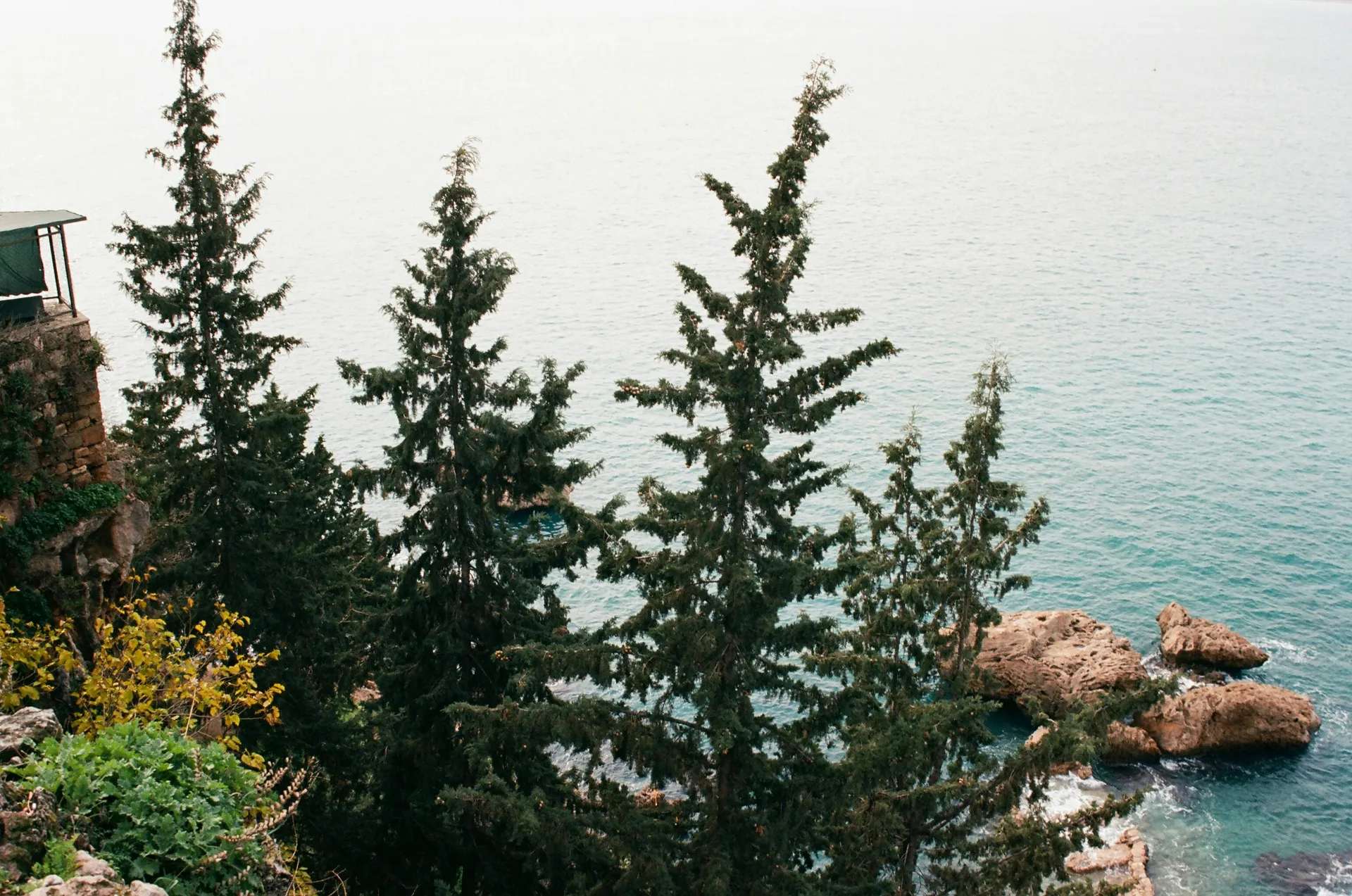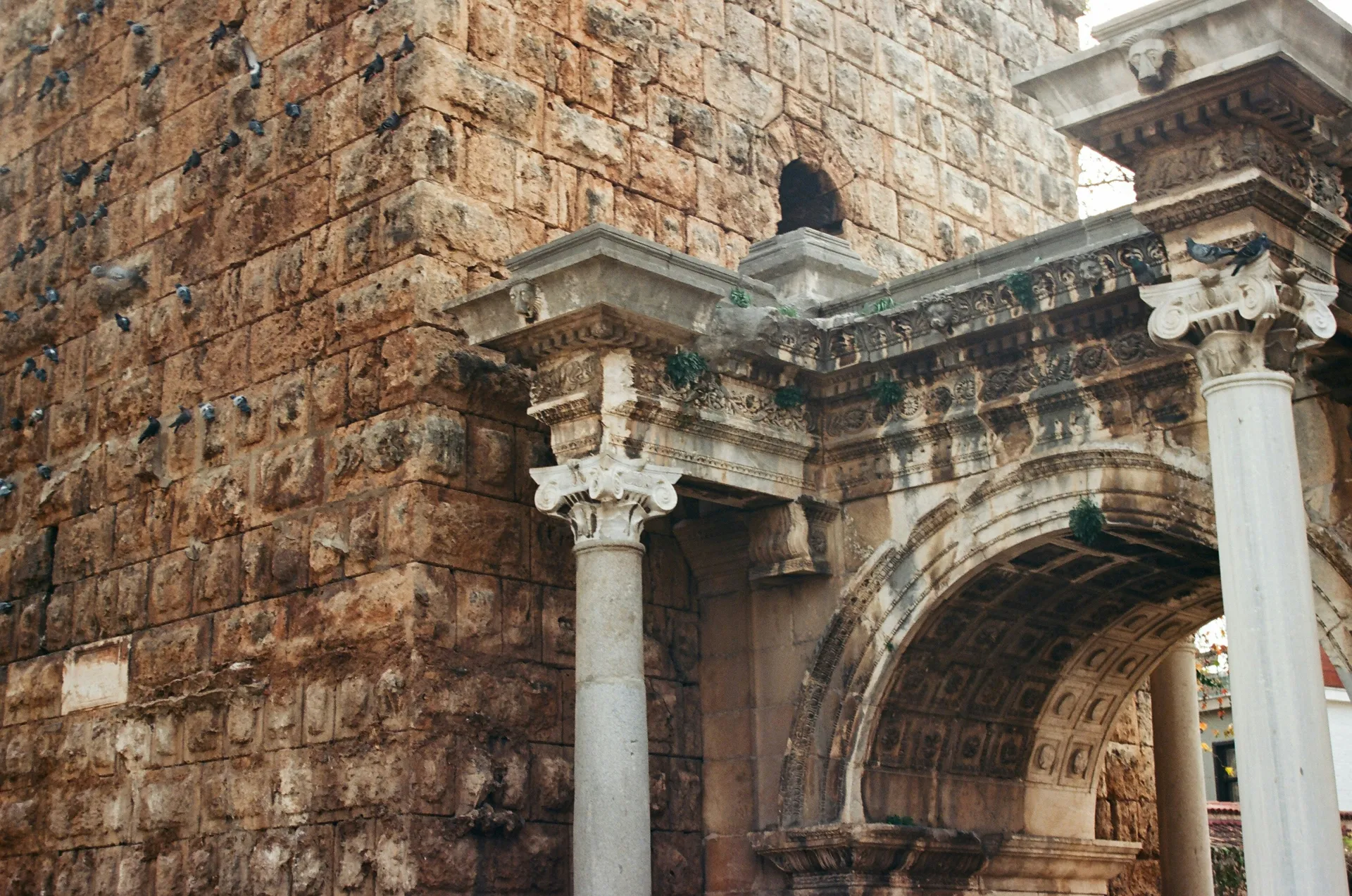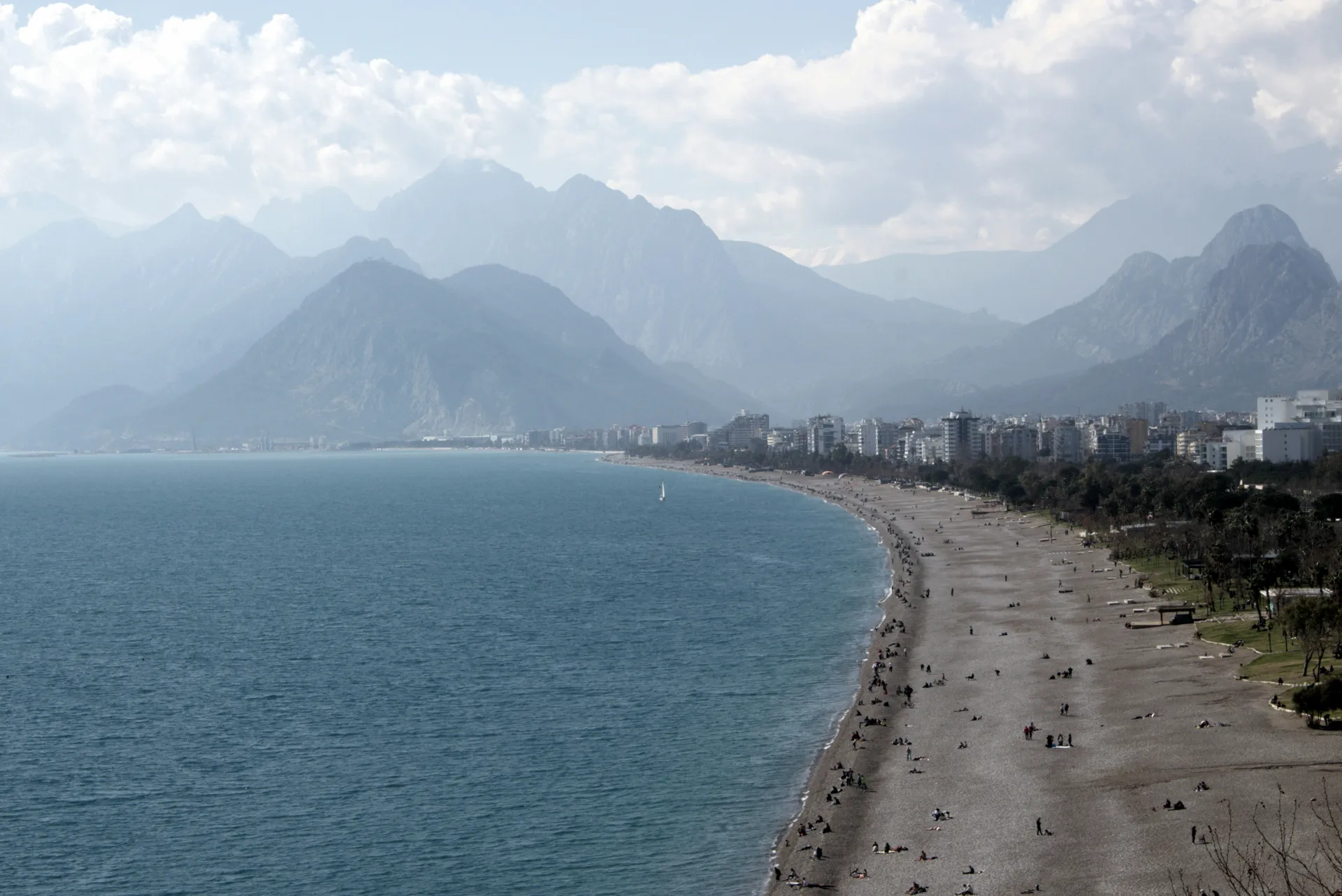
Antalya is the jewel of the Turkish Riviera, a city of two million that manages to combine ancient Roman ruins, a beautifully preserved Ottoman old town, and a modern resort infrastructure without any of the three overwhelming the others. Founded as Attaleia by Attalus II of Pergamon in the second century BC, the city has been continuously inhabited for over two thousand years—a layered history visible in the Hadrian's Gate, built to commemorate the Roman emperor's visit in 130 AD, through which visitors still enter the old town. The setting is spectacular: a high cliff above the Mediterranean, with the Taurus Mountains rising behind and the turquoise coast stretching in both directions to the horizon.
Kaleiçi, the old town, is Antalya's heart and soul. This compact quarter of Ottoman-era wooden houses, narrow cobblestoned lanes, and hidden courtyards occupies the slopes above the ancient Roman harbor, which has been converted into a picturesque marina filled with traditional gulet sailing vessels. The restored mansions, many now operating as boutique hotels, display the characteristic overhanging upper floors, carved wooden facades, and interior gardens that define Ottoman domestic architecture at its finest. The Yivli Minare (Fluted Minaret), a thirteenth-century Seljuk landmark, rises above the old town as Antalya's most recognizable silhouette. The Kesik Minaret Mosque, built on the ruins of a Roman temple that was later a Byzantine church, embodies in a single structure the city's extraordinary cultural stratification.
Antalya's cuisine showcases the best of Mediterranean Turkish cooking. The city's location between the sea and the mountains means that menus draw on both coastal seafood and highland pastoral traditions. Breakfast here is an event: a sprawling spread of local cheeses, olives cured in a dozen styles, tahini-molasses, fresh herbs, börek (savory pastries), and eggs prepared to order—all best enjoyed at a cliffside café overlooking the Mediterranean. For lunch, the piyaz of Antalya is locally famous—a white bean salad with tahini sauce, olive oil, and hard-boiled eggs that is deceptively simple and deeply satisfying. Evening dining along the harbor offers grilled sea bass, octopus salads, and meze spreads accompanied by rakı—the anise-flavored spirit that is Turkey's national drink.
The region surrounding Antalya is an open-air museum of ancient civilizations. Perge, fifteen kilometers east, preserves a remarkably complete Greco-Roman city with a stadium seating 12,000, a colonnaded main street, and elaborate baths. Aspendos, forty-nine kilometers east, contains the best-preserved Roman theater in the world—a 15,000-seat venue that still hosts performances and whose acoustics remain flawless after two millennia. The ancient Lycian cities of Termessos (dramatically set in a mountain pass at 1,050 meters) and Phaselis (its three harbors lapped by crystal-clear water) offer more intimate archaeological experiences. The Düden Waterfalls, where a river plunges directly into the Mediterranean from a cliff face, provide a natural spectacle unique to this coast.
Antalya is a major cruise port on Eastern Mediterranean itineraries, with a modern terminal capable of handling the largest vessels. The city is also served by a busy international airport with direct flights from across Europe. The best time to visit is April through June and September through November, when temperatures are warm but comfortable and the archaeological sites are not overwhelmed by summer heat. Summer (July–August) brings temperatures above 35°C and peak tourism, while winter is mild and quiet—daytime temperatures rarely drop below 15°C, making Antalya a viable year-round destination.