Izmir: Turkey's Aegean Jewel with Three Thousand Years of History
Izmir — known as Smyrna for most of its three-thousand-year history — is Turkey's third-largest city and the cultural capital of the Aegean coast, a cosmopolitan port that has been a centre of commerce, learning, and interfaith coexistence since the ancient Greeks established a trading colony here in the eleventh century BC. Homer is traditionally believed to have been born in Smyrna, and the city's subsequent history reads as a chronicle of the eastern Mediterranean's greatest civilisations: Greek, Roman, Byzantine, Ottoman, and modern Turkish. The Great Fire of 1922, which destroyed much of the old Greek and Armenian quarters during the Turkish War of Independence, marked a rupture that the city has spent a century absorbing, and modern Izmir is a forward-looking, secular, and culturally progressive city that takes pride in its diversity.
The character of Izmir is defined by its waterfront kordon — a sweeping promenade along the Gulf of Izmir that is the city's social centre, where families stroll, couples watch the sunset, and street vendors sell roasted chestnuts and fresh-squeezed pomegranate juice. The Kemeraltı bazaar, one of the oldest and largest covered markets in Turkey, extends for kilometres through a labyrinth of Ottoman-era hans (caravanserais), mosque courtyards, and narrow lanes where gold merchants, spice sellers, and leather craftsmen continue trades that have occupied these same spaces for centuries. The Agora — the ancient Roman forum, partially excavated and beautifully maintained — sits incongruously in the middle of the modern city, its Corinthian columns and underground galleries providing a window into the Smyrna that Marcus Aurelius helped rebuild after a devastating earthquake in 178 AD.
Izmir's culinary culture is among the finest in Turkey. The city's küçük (small) restaurants along the waterfront in Alsancak serve the Aegean mezze tradition at its finest: gavurdağı salata (a pungent tomato and walnut salad), enginar (artichoke hearts in olive oil), midye dolma (stuffed mussels sold from street carts), and the fresh herbs and wild greens that the Aegean coast produces in abundance. The boyoz — a spiral pastry of Sephardic Jewish origin, eaten for breakfast with a hard-boiled egg and a glass of tea — is Izmir's unique culinary contribution, available from bakeries throughout the city and found nowhere else in Turkey. The fish restaurants of Kordon and the Pasaport area serve the Aegean's daily catch — sea bass, sea bream, octopus, and the prized barbunya (red mullet) — grilled simply and served with rocket salad and lemon.
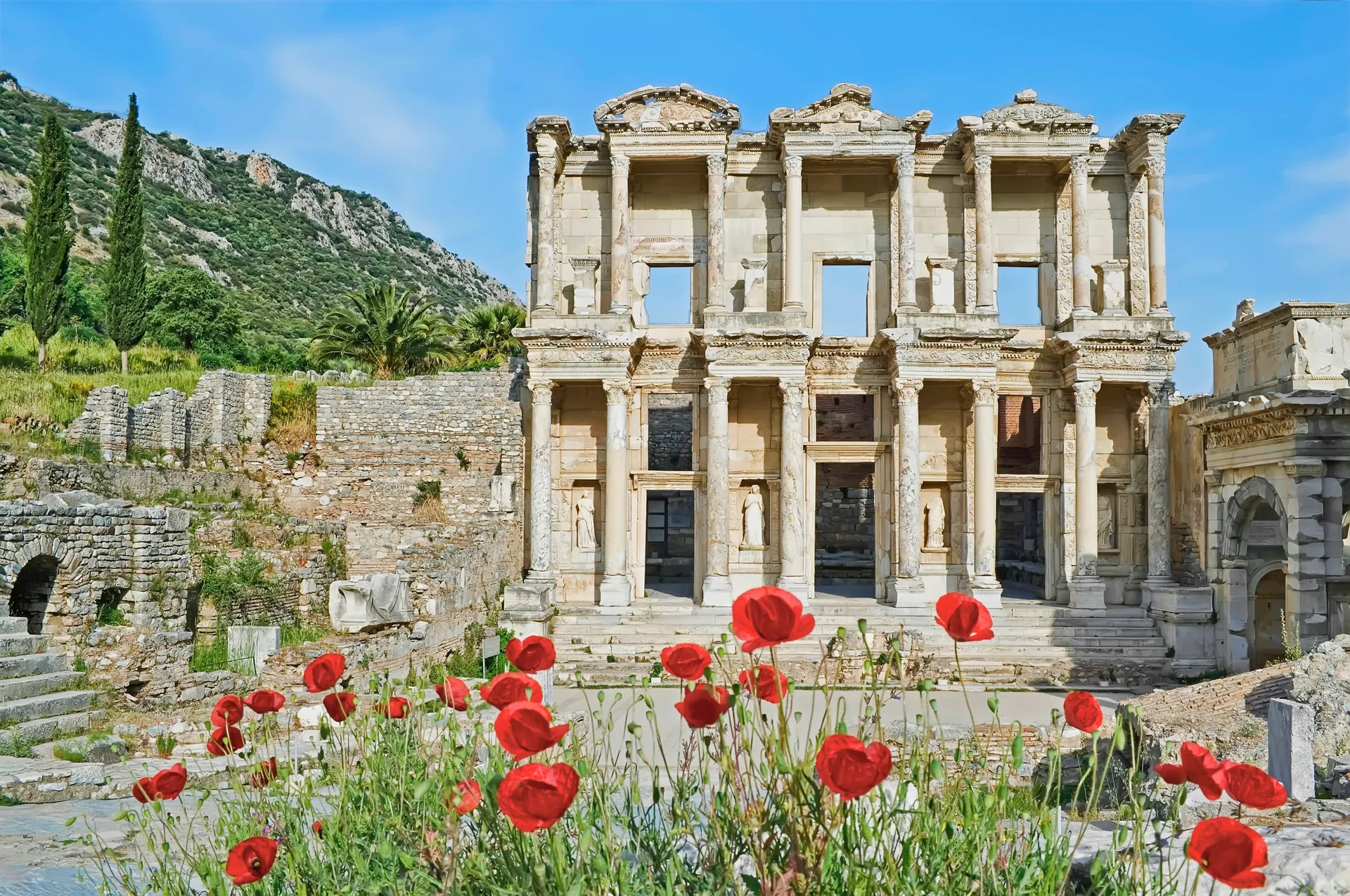
The excursion possibilities from Izmir are among the most compelling of any cruise port in the eastern Mediterranean. Ephesus, one of the best-preserved ancient cities in the world, lies just eighty kilometres south — its Library of Celsus, Great Theatre, and Terrace Houses offering an immersive experience of Roman urban life that rivals Pompeii. The House of the Virgin Mary, a small chapel on a forested hillside above Ephesus, is venerated by both Christians and Muslims as the final residence of Jesus's mother. The ancient healing centre of Asklepion at Pergamon, seventy kilometres north, preserves the medical practices of the ancient world in a setting of remarkable beauty. Closer to the city, the thermal springs of Balçova and the Aegean beaches of Çeşme and Alaçatı provide relaxation and the kind of turquoise-water swimming that rivals the Greek islands.
MSC Cruises calls at Izmir, using the port facilities that sit within the city centre. Izmir's position on Turkey's Aegean coast makes it an ideal base for exploring the ancient Greek and Roman heritage of western Anatolia, while the city itself offers a sophisticated, modern Turkish experience that challenges the stereotypes many travellers bring to Turkey. For those who have visited Istanbul but seek a different dimension of Turkish culture — more Aegean, more secular, more relaxed — Izmir delivers a city that has been welcoming strangers for three thousand years and shows no signs of stopping. April through June and September through November offer the most pleasant temperatures, with spring bringing wildflowers to the ancient sites.