Al Fujairah — or simply Fujairah — is the only emirate of the United Arab Emirates situated entirely on the Gulf of Oman coast, its territory defined by the rugged Hajar Mountains that separate the eastern seaboard from the desert interior. This geographical distinction is not merely administrative; it produces a fundamentally different landscape, climate, and character from the Gulf-facing emirates. Where Dubai and Abu Dhabi are cities of flat desert and engineered spectacle, Fujairah is a land of mountain wadis, ancient forts, and a coastline where the Indian Ocean delivers genuine surf and marine biodiversity that the hyper-saline Persian Gulf cannot match. The emirate's history stretches back five thousand years — Bronze Age settlements and Iron Age fortifications dot the mountains, predating the oil wealth that transformed the western Emirates by millennia.
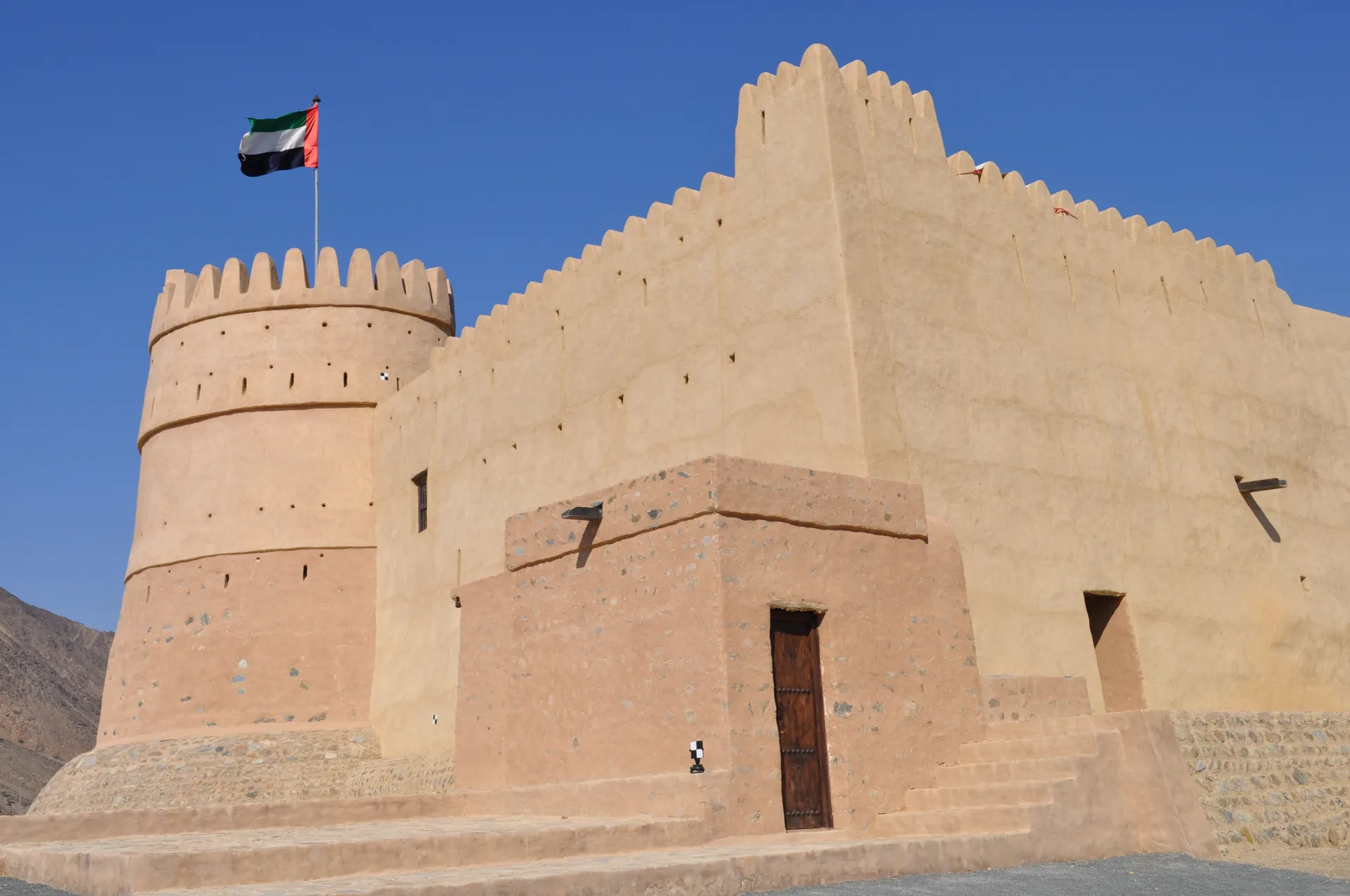
Fujairah Fort, a commanding structure of stone and mud-brick dating to at least the seventeenth century (with foundations possibly much older), sits at the heart of the old town, its restored walls and towers offering views across the modern city to the mountains beyond. The Heritage Village at the fort's base recreates traditional Emirati life — falaj irrigation channels, barasti palm-frond houses, and demonstrations of pottery, weaving, and date processing. The Al Bidyah Mosque, thirty-five kilometers north, is the oldest mosque in the UAE, its four small domes rising from a hillside above the sea in a composition of austere beauty. The nearby watchtowers on the ridge above the mosque date to the same period and provide panoramic views of the coastline — a landscape that has been a crossroads of Indian Ocean trade since the Sumerian era.
The cuisine of Fujairah shares the broader Emirati palate — fragrant rice dishes with lamb or chicken, grilled fish, and the ubiquitous Arabic coffee with dates — but benefits from the Gulf of Oman's superior fishery. The Friday fish market on the corniche is a lively spectacle, with the morning catch auctioned in rapid-fire Arabic: kingfish, tuna, hammour, barracuda, and the small sardines that are deep-fried whole and eaten like crisps. Harees — a porridge of wheat and slow-cooked meat — is a staple of Ramadan and festive occasions. For contemporary dining, the beachfront hotels that line the coast north and south of the city offer international restaurants, but the genuine culinary experience is in the local cafeterias where Emirati, South Asian, and East African food cultures blend in the unselfconscious way that defines Gulf port towns.
The underwater world off Fujairah's coast is the emirate's greatest natural asset. The rocky reefs and artificial reef structures (including deliberately sunk ships) support coral growth and attract a remarkable diversity of marine life — hawksbill turtles, blacktip reef sharks, moray eels, and schools of barracuda. Snoopy Island, a rocky islet off Sandy Beach, is the UAE's most popular snorkeling site, its shallow waters accessible to beginners and rich enough to engage experienced divers. Between October and May, whale sharks — the world's largest fish — pass through these waters, and dedicated boat trips offer swimming encounters with these gentle giants. Onshore, the Hajar Mountains provide dramatic wadi excursions: Wadi Wurayah, a UNESCO-recognized biosphere reserve, harbors the UAE's only year-round waterfall and a population of the endangered Arabian tahr.
Fujairah is 130 kilometers from Dubai (approximately ninety minutes by road through the mountains) and receives cruise ships at its deepwater port. The climate follows the pattern of the eastern UAE — hot summers (June–September) with high humidity, and mild, pleasant winters (October–May) ideal for outdoor activities. Diving and snorkeling conditions peak between October and April when water visibility is best. Fujairah offers a compelling alternative narrative of the UAE — one rooted in mountains, sea, and five thousand years of human settlement rather than the gilded novelties of the Gulf coast.

