Holyhead: Wales's Ancient Island Gateway
Holyhead sits on Holy Island, itself connected by causeway to the larger island of Anglesey off the northwest coast of Wales — a geographical layering that gives this port town a maritime character stretching back to the Roman era, when the legions built a fortification here to protect the western approaches to Britannia. The town's primary function for the past two centuries has been as the principal ferry port for Ireland, and it was this role that brought the railway — Thomas Telford's magnificent A5 road and Robert Stephenson's Britannia Bridge across the Menai Strait were both built specifically to connect London to the Holyhead packet boats. Yet beyond the ferry terminal, Holyhead and Anglesey offer a wealth of prehistoric sites, coastal scenery, and Welsh cultural heritage that rewards exploration far more than most cruise passengers expect.
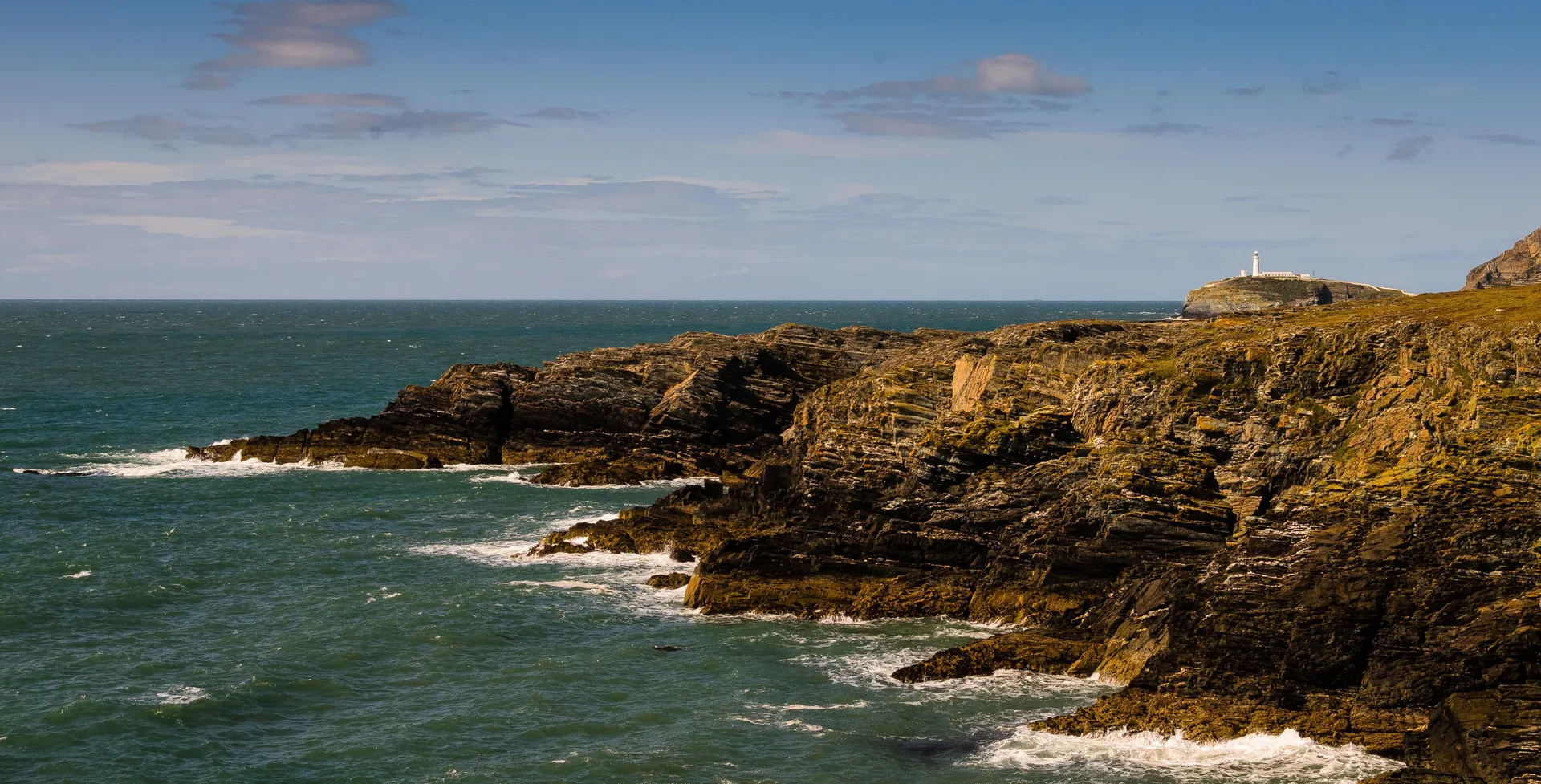
The character of Holyhead is shaped by its position at the edge of Wales and its long relationship with the sea. The Breakwater Country Park, built on the massive Victorian breakwater that created the harbour of refuge, offers cliff-top walks with views across the Irish Sea to the Wicklow Mountains on clear days. South Stack Lighthouse, perched on a rocky islet connected to Holy Island by a vertiginous flight of four hundred steps, is one of the most dramatically sited lighthouses in Britain, and the RSPB reserve at its base hosts breeding colonies of puffins, guillemots, and razorbills during the summer months. The town itself retains its working port character — fishing boats, chandleries, and the kind of no-nonsense pubs where the conversation switches between Welsh and English without pause.
Anglesey's culinary identity has sharpened considerably in recent years. The island holds a designation as the "Mon Mam Cymru" — the Mother of Wales — a medieval title reflecting its agricultural fertility that has been repurposed as a food brand. Halen Môn sea salt, harvested from the Menai Strait using a method inspired by Roman techniques, has become one of Wales's most celebrated artisan products, used by restaurants from London to New York. The island produces excellent farmhouse cheeses, lamb raised on salt marshes, and Anglesey eggs that are prized throughout North Wales. Dylan's Restaurant in Menai Bridge serves the island's produce in a waterfront setting overlooking the strait, while the Lobster Pot in Church Bay offers the simplest and most satisfying seafood on the island — crab sandwiches, lobster rolls, and fish soup in a cottage on the cliff edge.
Beyond Holyhead, Anglesey is an island of remarkable archaeological and natural significance. The island was the last stronghold of the Druids in Britain — the Romans crossed the Menai Strait in AD 60 to destroy their sacred groves on the opposite shore, an event recorded with vivid horror by Tacitus. The prehistoric burial chamber of Bryn Celli Ddu, aligned to capture the midsummer sunrise within its passage, is one of the finest Neolithic monuments in Britain. Beaumaris Castle, built by Edward I as the last and most technically perfect of his ring of Welsh castles, stands at the entrance to the Menai Strait as a masterpiece of symmetrical military architecture — a UNESCO World Heritage Site that never fired a shot in anger.
Cunard, Oceania Cruises, Silversea, and Viking all call at Holyhead on their British Isles itineraries. The port is well-positioned for excursions to Anglesey's highlights, Snowdonia National Park on the mainland, or the university city of Bangor across the Menai Strait. For travellers who associate Wales with rugby and rain, Holyhead and Anglesey reveal a different country — one of ancient sites, dramatic coastline, and a living Welsh-language culture that is among the oldest in Europe. May through September offers the most reliable weather, with June and July providing the longest days and the best chance of seeing puffins at South Stack.

