Jedburgh: Scotland's Royal Border Abbey Town
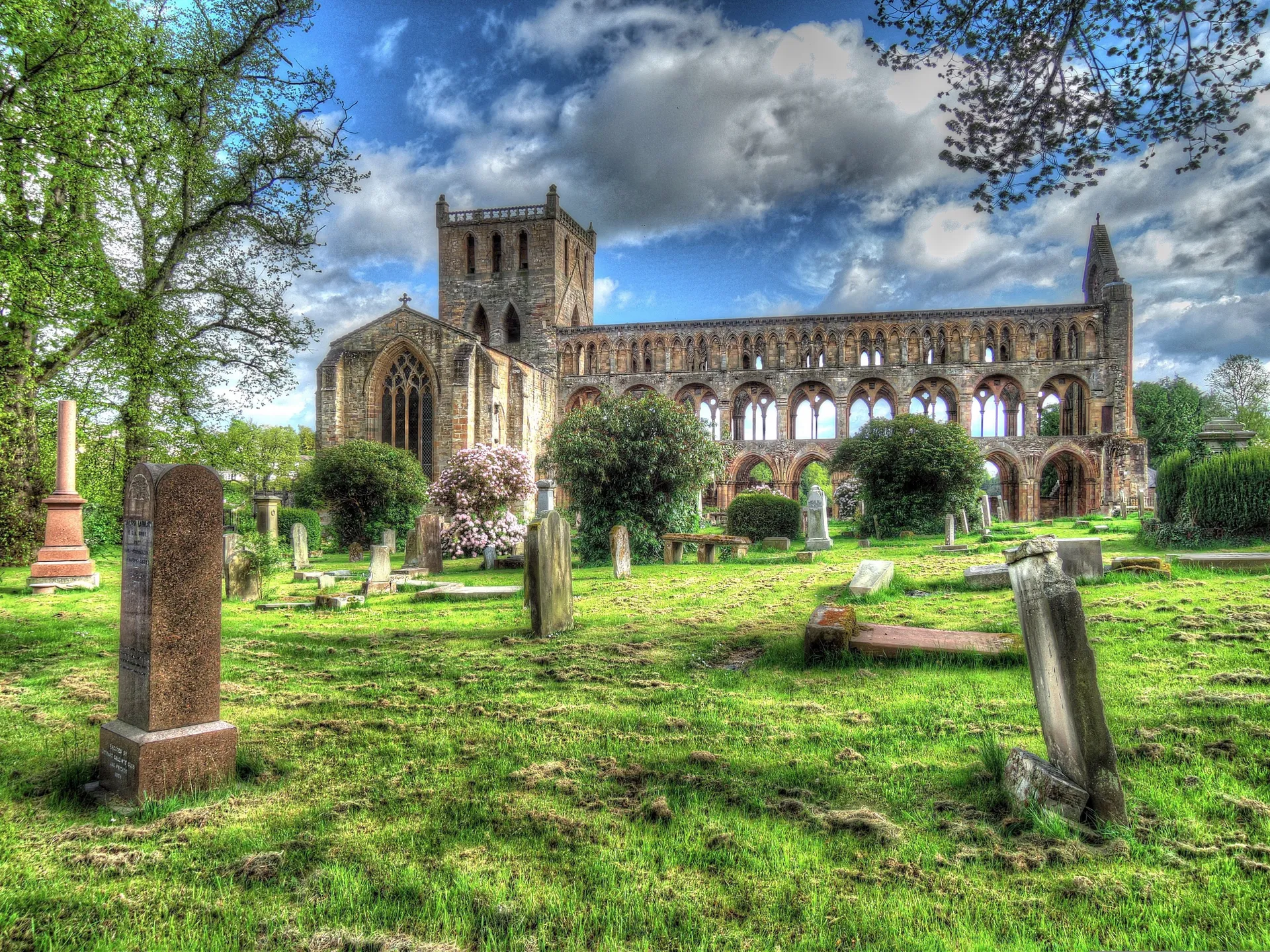
Jedburgh occupies a strategic position in the Scottish Borders that has made it a place of consequence — and conflict — for over a thousand years. The town sits in the valley of the Jed Water, just ten miles from the English border, and its history reads as a chronicle of the Anglo-Scottish wars that convulsed the region from the twelfth to the sixteenth centuries. Jedburgh Abbey, founded by King David I in 1138 for the Augustinian order, is the town's defining monument — its ruined nave, with its three tiers of Romanesque and early Gothic arches still standing almost to their original height, is one of the most architecturally significant medieval buildings in Scotland. The abbey was attacked and damaged by English forces at least eight times, yet the resilience of its construction has ensured that its ruins remain magnificent eight centuries after the first stones were laid.
The character of Jedburgh is that of a compact, well-preserved Scottish market town with an extraordinary concentration of historical significance. The main street — the Canongate — climbs steeply from the Jed Water past stone-built houses and coaching inns to the hilltop castle site, now occupied by the Castle Jail and Museum, a fascinating nineteenth-century reform prison whose exhibits reveal the evolution of the Scottish penal system. Mary Queen of Scots House, a sixteenth-century fortified dwelling, commemorates the queen's near-fatal illness during a visit in 1566 — she rode thirty miles across the boggy moorland to visit the wounded Earl of Bothwell at Hermitage Castle and returned so ill that she later said she wished she had died there. The house now contains a museum of her turbulent life and reign.
The food culture of the Scottish Borders is hearty, seasonal, and rooted in the agricultural traditions of a region renowned for its livestock. The Borders are lamb country — the blackface sheep that graze the surrounding hills produce meat of exceptional flavour, and roast Border lamb with rosemary and redcurrant jelly is the region's signature dish. Jedburgh's own contribution to Scottish cuisine is the Jethart Snail — a dark, intensely flavoured boiled sweet with a peppermint centre, shaped like a snail and produced in the town since the early nineteenth century. The Cross Keys Hotel on the High Street serves traditional Scottish fare with local game, salmon, and seasonal vegetables, while the weekly market provides local cheeses, preserves, and freshly baked goods.
Beyond the town, the Scottish Borders landscape rewards exploration. The Borders Abbeys Way, a long-distance walking route, connects Jedburgh to the three other great Border abbeys — Kelso, Melrose, and Dryburgh — each in its own state of romantic ruin and each speaking to the cultural and spiritual ambitions of medieval Scotland. Hermitage Castle, the grim fortress that lured Mary Queen of Scots on her fateful ride, stands in splendid isolation on a moorland hillside and is one of the most atmospheric castles in Britain. The River Tweed, Scotland's finest salmon river, flows through the region, and the riverside walks between Kelso and Coldstream offer gentle, beautiful rambling through pastoral countryside.
Avalon Waterways includes Jedburgh on its Scottish itineraries, typically as an excursion that combines the abbey and town with broader Border exploration. The town is compact enough to explore on foot in half a day, but the wealth of historical sites in the surrounding region easily justifies a longer visit. For travellers who know Edinburgh but have yet to explore the Borders, Jedburgh offers a quieter, deeper Scotland — one where the stones themselves carry the weight of centuries of faith, conflict, and resilience. May through September offers the most pleasant weather, with June and July providing the longest days for walking and exploration.

