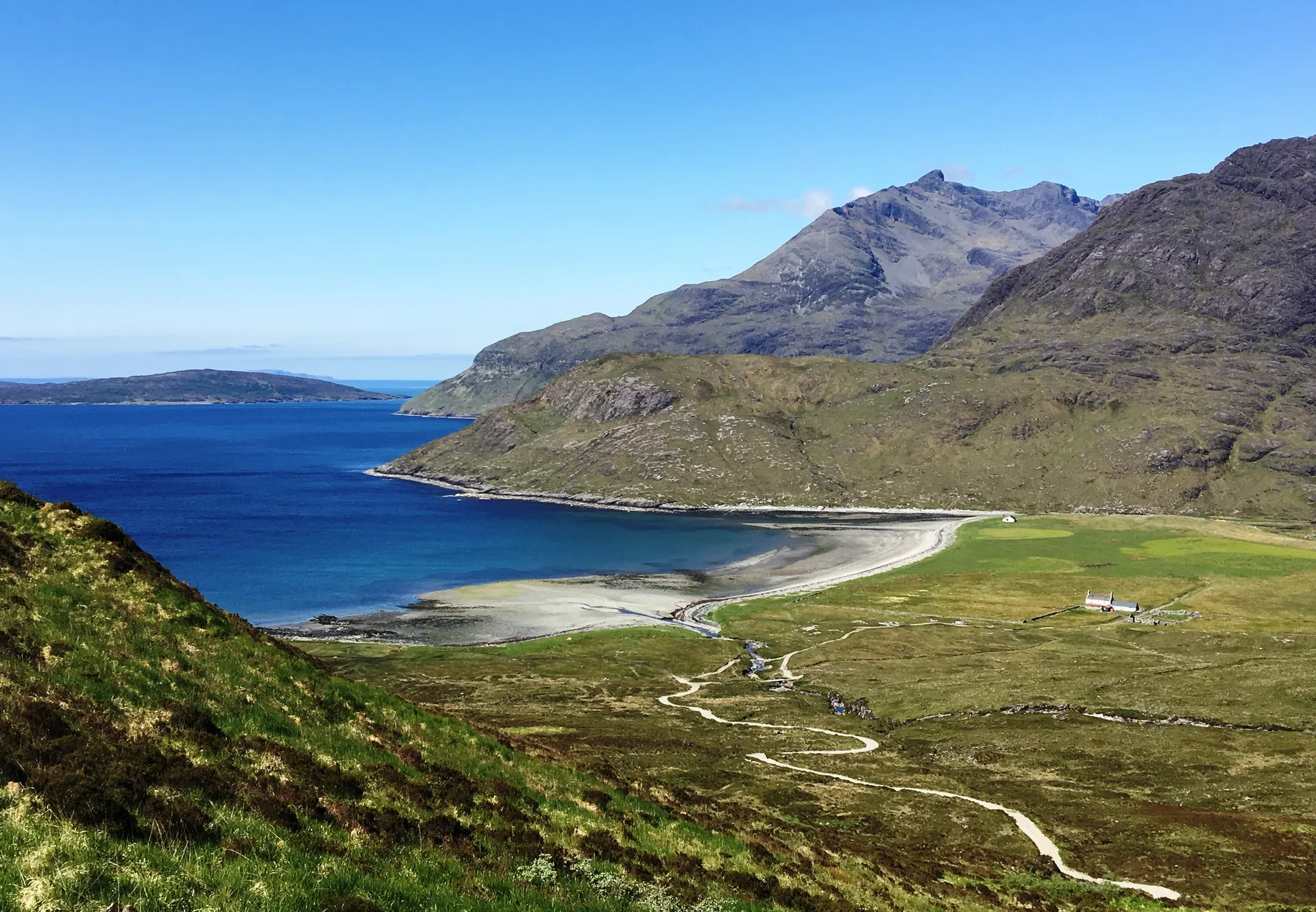
Off the western coast of Mull, where the Inner Hebrides scatter into the Atlantic like stepping stones toward the open ocean, the Treshnish Isles rise from the sea in a chain of low, dark silhouettes that seem to belong more to geology than to human geography. Lunga, the largest and most accessible of these uninhabited islands, is a place of such concentrated wildlife spectacle that it has earned comparison with the Galápagos — a comparison that, while generous in scale, is remarkably apt in character. Here, seabirds in their tens of thousands nest on cliff ledges, burrow into turf, and wheel overhead in such density that the air itself seems alive.
The Treshnish Isles have been uninhabited since the nineteenth century, when the last human residents departed and left these volcanic remnants to the birds, the seals, and the weather. This absence of human disturbance is precisely what makes Lunga extraordinary. The island's western cliffs host one of Scotland's most accessible Atlantic puffin colonies, where between April and August these improbably charming birds — with their painted bills, orange feet, and expression of perpetual mild astonishment — nest in burrows just meters from the cliff path. Visitors who sit quietly on the turf find puffins landing beside them, apparently unbothered by human presence, their beaks stuffed with silver chains of sand eels destined for chicks waiting underground.
Beyond puffins, Lunga's cliffs support thriving colonies of razorbills and guillemots that pack the narrow ledges in dense, noisy ranks — a vertical city of seabirds whose constant traffic creates a spectacle of flight and sound that is overwhelming in its intensity. Kittiwakes nest on the most precarious outcrops, their mewing calls providing a continuous soundtrack, while great skuas — the pirates of the seabird world — patrol overhead, occasionally stooping to harass other birds into surrendering their catch. On the rocky beaches below the cliffs, grey seals haul out in groups of twenty or thirty, their mournful, liquid eyes regarding visitors with an expression that hovers between curiosity and magnificent indifference.
The other islands in the Treshnish chain add geological drama to the wildlife experience. The Dutchman's Cap (Bac Mòr), the most distinctive silhouette in the group, is a volcanic remnant whose flat summit and steep sides create a profile that has guided mariners through these waters for centuries. Cairn na Burgh Mòr and Cairn na Burgh Beag, at the chain's eastern end, preserve the ruins of medieval fortifications that controlled the seaways between Mull and the outer isles — a reminder that these now-deserted rocks were once strategically vital in the power struggles between Norse, Scottish, and Clan MacDougall interests.
Expedition cruise ships and small tour vessels anchor off Lunga and land passengers by Zodiac on a rocky shore, from which a well-worn path climbs to the puffin colony in approximately fifteen minutes. There are no facilities on the island — no shelter, no toilets, no refreshments — and visitors should come prepared for weather that can shift from sunshine to horizontal rain in minutes. The seabird season runs from late April through early August, with June and July offering the peak puffin experience when adults are most actively feeding chicks. The crossing from Mull can be rough, but the reward is an encounter with wild nature so intimate and unmediated that it recalibrates one's understanding of what it means to visit a place on its own terms.

