From its magnificent natural harbor on England's Devon coast, Plymouth has launched some of history's most consequential voyages—the Mayflower departed from here in 1620 carrying Pilgrims to the New World, Sir Francis Drake sailed from these waters to defeat the Spanish Armada in 1588, and Captain Cook's voyages of Pacific discovery were provisioned at this dockyard. This maritime heritage, combined with a dramatic waterfront setting where the rivers Plym and Tamar meet Plymouth Sound, gives England's largest ocean-facing city a character shaped equally by naval grandeur and the everyday resilience of a community that has rebuilt itself from wartime devastation.
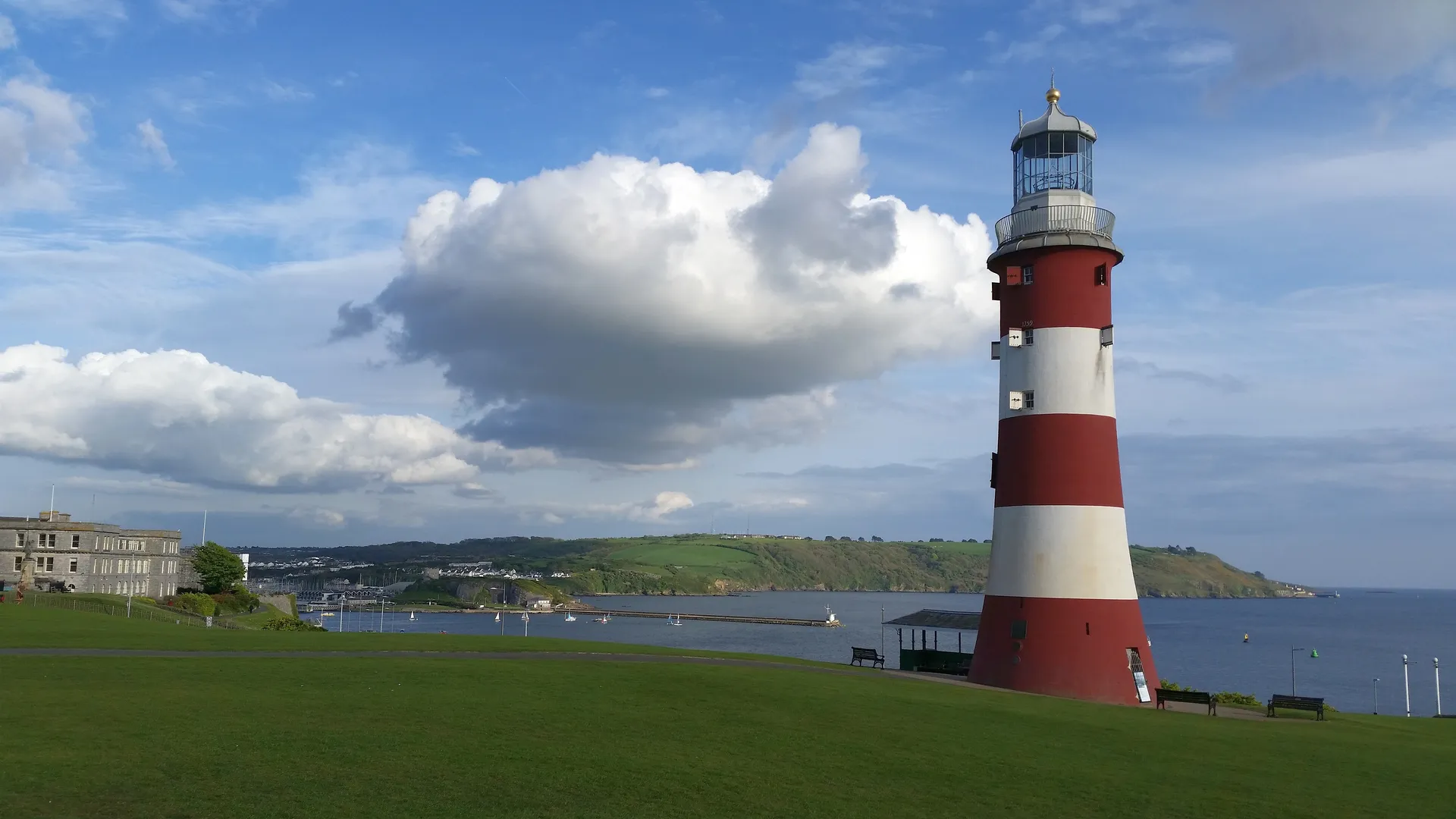
Plymouth's cityscape reflects its dramatic twentieth-century history. The Luftwaffe's sustained Blitz of 1941 destroyed much of the historic center, and the post-war reconstruction—planned by Patrick Abercrombie—created the broad avenues and modernist architecture that characterize today's city center. Yet fragments of the older Plymouth survive: the Barbican quarter, the ancient harbor district, preserves Elizabethan buildings, narrow lanes, and the Mayflower Steps where the Pilgrims embarked. Plymouth Hoe, the iconic limestone headland where Drake legendarily finished his game of bowls before engaging the Armada, provides sweeping views across the Sound to the breakwater and, on clear days, to the Eddystone Lighthouse.
Devon's culinary traditions provide Plymouth with a rich local food identity. The Barbican's restaurants and fish market serve the day's catch—Dover sole, monkfish, hand-dived scallops, and the celebrated Plymouth gin, distilled at the historic Black Friars Distillery since 1793 in what is claimed to be the oldest working gin distillery in England. Cream teas—scones served with clotted cream and strawberry jam in the Devon style (cream first, an important regional distinction)—provide essential afternoon sustenance. The nearby South Hams countryside supplies artisan cheeses, cider from heritage orchards, and the rich Devonshire cream that makes this region's dairy produce famous throughout Britain.
Plymouth's cultural and natural attractions extend well beyond the waterfront. The National Marine Aquarium, the UK's largest, showcases ocean life from Plymouth Sound to the deep Atlantic. The Royal William Yard, a magnificent former naval victualing depot converted into restaurants, galleries, and apartments, represents one of England's finest examples of heritage regeneration. Beyond the city, Dartmoor National Park—a brooding landscape of granite tors, ancient forests, and wild ponies—rises just fifteen minutes from the center, while the South West Coast Path provides cliff-top walking of spectacular beauty along the Devon coast in both directions.
Ambassador Cruise Line and Azamara call at Plymouth, and the port's deep-water facilities in the Sound provide straightforward access to the city. The Hoe, Barbican, and waterfront attractions are all within walking distance of the tender operations. For travelers who appreciate cities where maritime history is not merely displayed but palpable—where you can stand on the same headland where Drake watched the Armada's approach and look out across waters that carried the Mayflower toward an unknown continent—Plymouth delivers an English experience of stirring historical resonance.

