Rising from the Atlantic like a cathedral hewn by the gods themselves, Staffa Island remains one of Scotland's most astonishing natural monuments. This uninhabited volcanic isle in the Inner Hebrides was formed some sixty million years ago, when ancient lava flows cooled into the extraordinary hexagonal basalt columns that have captivated visitors since the eighteenth century. It was here, in 1772, that Sir Joseph Banks arrived and declared Fingal's Cave a wonder to rival anything crafted by human hands — a sentiment that would later inspire Felix Mendelssohn to compose his celebrated Hebrides Overture after his own visit in 1829.
Staffa's character is defined entirely by geology and wildness. The island stretches barely half a mile in length, yet every inch pulses with dramatic energy. The columnar basalt formations create an almost architectural illusion — rows of dark, perfectly symmetrical pillars rising from the sea as though placed by some meticulous ancient builder. Fingal's Cave, the island's crowning glory, plunges seventy-two feet into the cliff face, its vaulted ceiling echoing with the rhythmic percussion of Atlantic swells. On calmer days, visitors can walk along a natural causeway into the cave's mouth, where the interplay of light, stone, and water produces acoustics unlike anything found in the natural world.
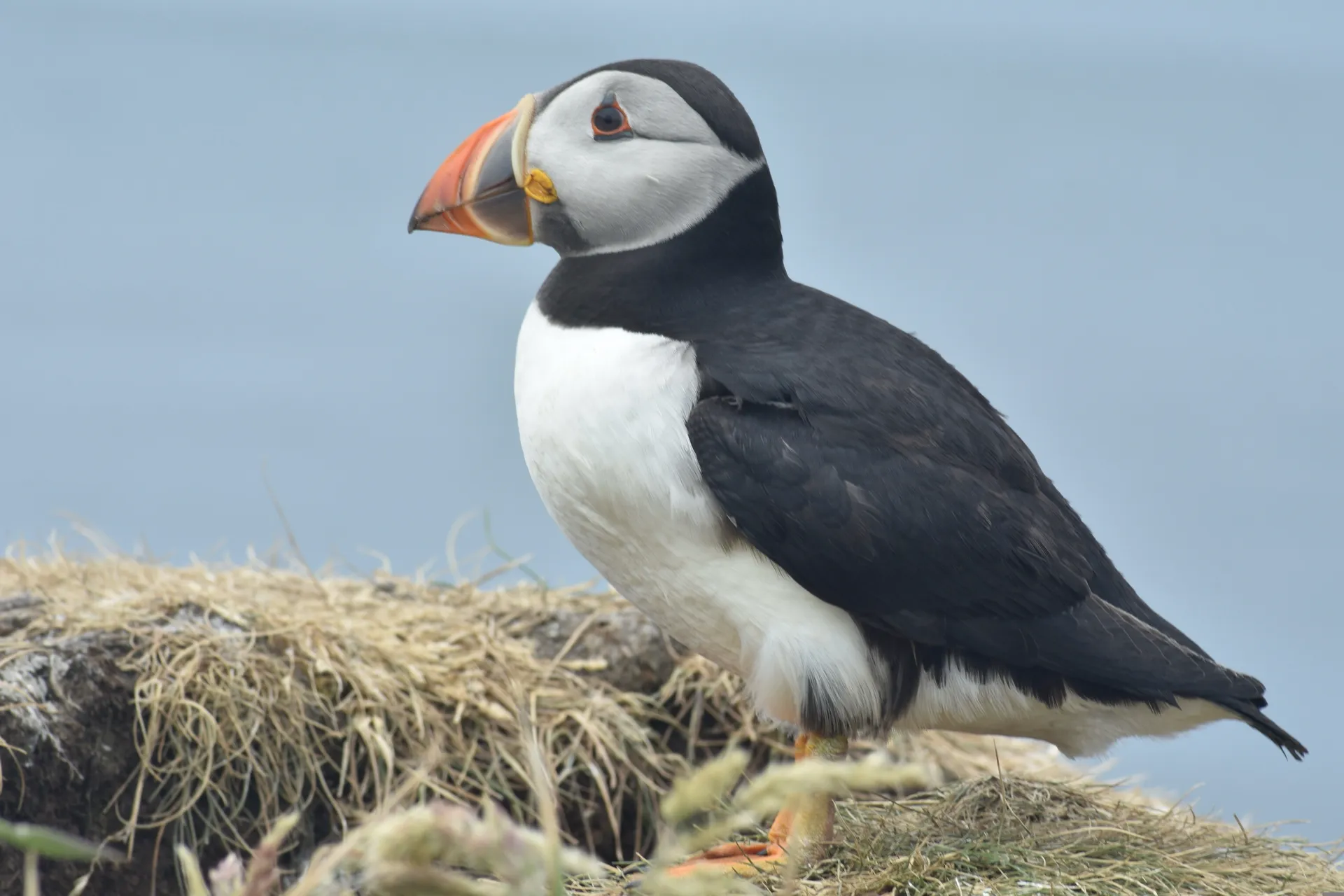
While Staffa offers no restaurants or settlements, the island delivers an experience that transcends conventional tourism. Between April and August, the grassy plateau above the cliffs becomes home to one of Scotland's most accessible Atlantic puffin colonies. These charismatic seabirds nest in burrows just feet from the walking path, seemingly unbothered by the presence of admirers. Razorbills, guillemots, and kittiwakes also colonize the cliff faces, transforming Staffa into a vertical city of seabird life. The short circular walk across the island's crown rewards visitors with panoramic views stretching from Mull to the Treshnish Isles, the horizon painted in ever-shifting shades of grey and silver.
Staffa sits within easy reach of several other remarkable Hebridean destinations. The neighbouring Isle of Iona, birthplace of Scottish Christianity, lies just a short sail south. The Treshnish Isles, another important wildlife sanctuary, arc to the northwest. The Isle of Mull, from whose harbours most Staffa excursions depart, offers its own tapestry of castles, eagles, and single-track roads winding through landscapes of moor and mountain. Together, these islands form one of Britain's most compelling maritime wilderness corridors.
Access to Staffa is by boat only, with regular excursions departing from Fionnphort and Tobermory on Mull, as well as from Iona during the summer season. The sailing typically takes around an hour, and landings are weather-dependent — the Atlantic makes no promises. The season runs from April through October, with June through August offering the best combination of puffin activity and favourable seas. Visitors should come prepared for changeable conditions: waterproof layers, sturdy footwear for the sometimes slippery basalt, and a willingness to surrender to whatever the Scottish weather decides to offer.

