Where the Columbia River surrenders to the Pacific, Astoria stands as the oldest American settlement west of the Rockies — a city whose story began in 1811 when John Jacob Astor's Pacific Fur Company established a trading post on these misty shores. Lewis and Clark wintered just south of here in 1805, and the echoes of that expedition still ripple through the landscape, preserved at Fort Clatsop where rangers in period dress recount tales of the Corps of Discovery. The city's Victorian homes, perched on steep hillsides above the waterfront, speak to the salmon-canning fortunes of the late nineteenth century, when Astoria was the undisputed capital of the Columbia River fishing industry.
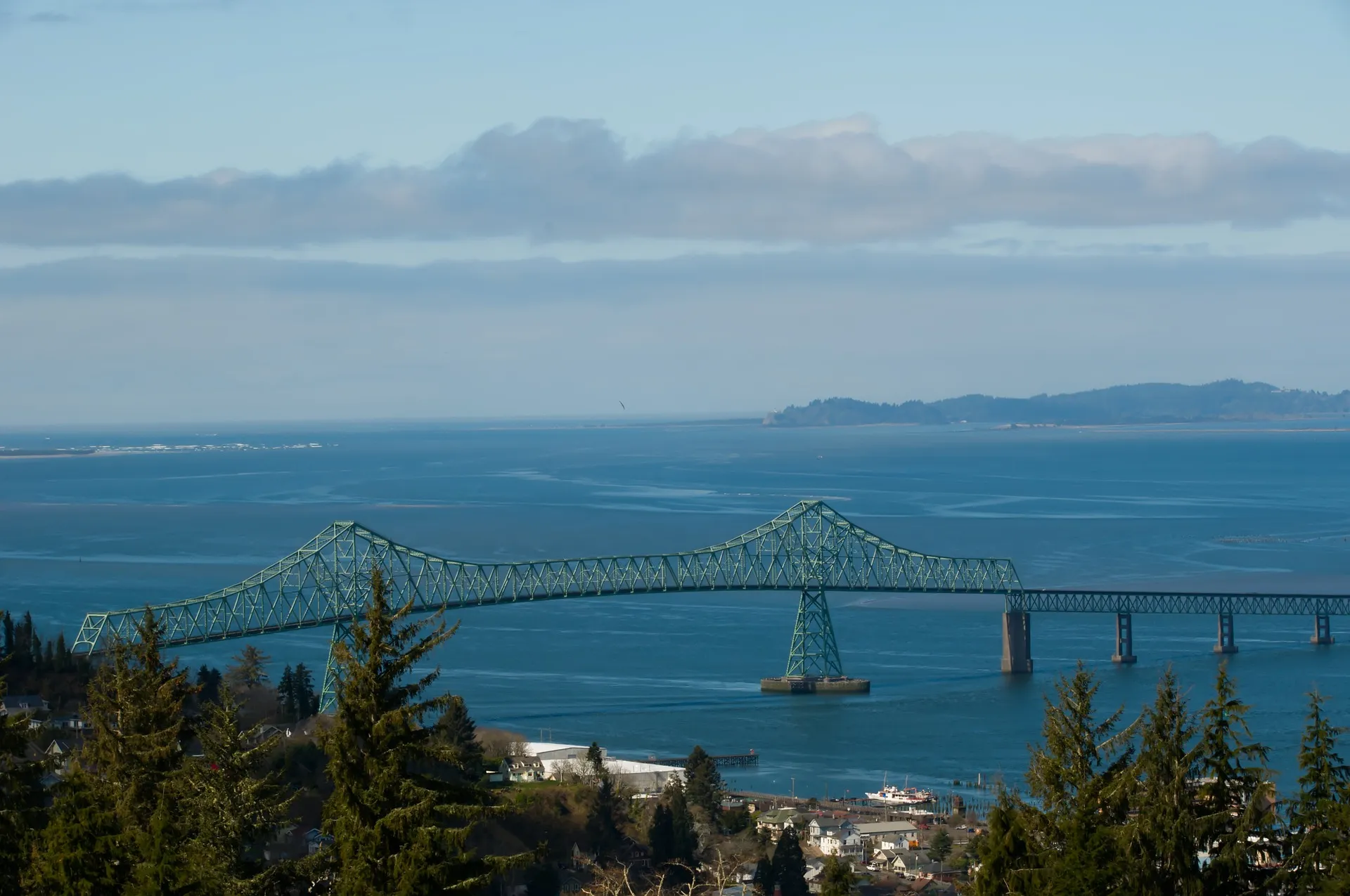
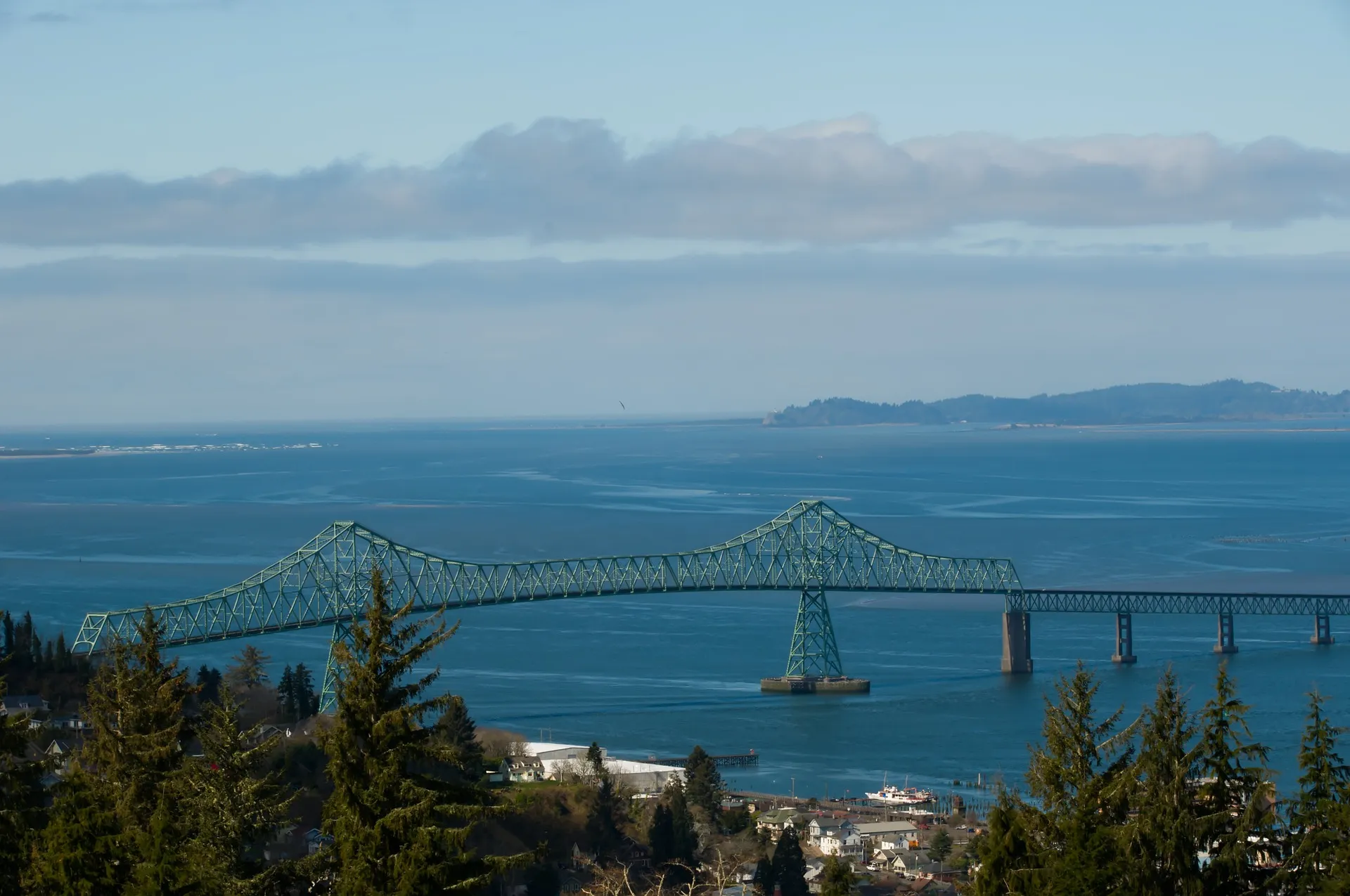
There is something ineffably cinematic about this town of ten thousand — and indeed, Hollywood has long agreed, filming *The Goonies*, *Kindergarten Cop*, and *Short Circuit* against its photogenic backdrop of fog-draped bridges and weathered cannery pilings. The Astoria Column, a 125-foot painted tower modeled after Trajan's Column in Rome, crowns Coxcomb Hill with a spiraling frieze of regional history and rewards those who climb its 164 steps with a panorama that stretches from the churning bar of the Columbia to the snow-dusted flanks of the Coast Range. Below, the Riverwalk traces the waterfront for six miles, threading past converted warehouses and brewpubs, while the lovingly restored Astoria Trolley — a 1913 streetcar — clatters along tracks that once served the salmon canneries. On clear evenings, the Astoria-Megler Bridge, the longest continuous truss bridge in North America, catches the last copper light like a thread stitched between Oregon and Washington.
Astoria's culinary identity is rooted in the waters that surround it. At the Columbian Cafe, a beloved institution tucked into a narrow storefront on Marine Drive, the daily-changing menu might feature Dungeness crab cakes kissed with lemon aioli or wild Pacific salmon glazed in a huckleberry reduction — dishes that taste of their origin with unadorned sincerity. The Bowpicker Fish & Chips, served from a converted commercial gillnet boat on the pier, offers beer-battered Columbia River albacore tuna that locals and visiting gourmands queue for regardless of weather. For something more refined, Fulio's Pastaria layers house-made pappardelle with razor clam ragù, while Buoy Beer Company pairs its craft ales with smoked salmon chowder in a glass-walled taproom suspended above the river, where sea lions bark beneath the floorboards through gaps in the century-old pilings.
The region beyond Astoria unfolds with dramatic contrasts. Drive south along the Oregon Coast to Cannon Beach, where Haystack Rock rises 235 feet from the surf like a cathedral without walls. Inland, the temperate rainforests of the Coast Range offer solitary hiking through corridors of Sitka spruce and western red cedar. For travellers with broader horizons, the surreal coral-hued dunes of Coral Pink Sand Dunes in southern Utah present an otherworldly counterpoint to the Pacific Northwest's emerald palette, while Salt Lake City — accessible via a short flight from Portland — delivers world-class skiing, a burgeoning arts district, and the ethereal stillness of the Great Salt Lake at dawn.
Cruise passengers arriving in Astoria enjoy a rare intimacy: ships dock at Pier 1 on the Columbia River, mere steps from the heart of downtown, eliminating the long shuttle transfers that plague larger ports. Holland America Line, whose heritage routes along the Pacific Coast have called here for decades, treats Astoria as a jewel in its Pacific Northwest and Alaska itineraries, often pairing it with stops in Victoria and San Francisco. Virgin Voyages, bringing its boundary-pushing energy to the region, offers a younger, design-forward perspective on the same waters — proving that Astoria's appeal transcends demographics and sailing styles. Whether you step ashore from a classic ocean liner or a scarlet-hulled newcomer, the town greets you with the same salt-aired authenticity it has offered travellers since the age of fur trappers and tall ships.