Avalon is the only incorporated city on Santa Catalina Island, a mountainous landmass rising from the Pacific Ocean thirty-five kilometers off the Southern California coast—close enough to see the skyscrapers of Long Beach on a clear day, yet remote enough to feel like a different country. The island's history is a California story in miniature: Tongva people inhabited it for thousands of years, Spanish missionaries claimed it, smugglers and miners exploited it, and finally William Wrigley Jr.—the chewing gum magnate—purchased it in 1919 and transformed it into a resort destination whose Art Deco architecture and Mediterranean ambiance remain remarkably intact.
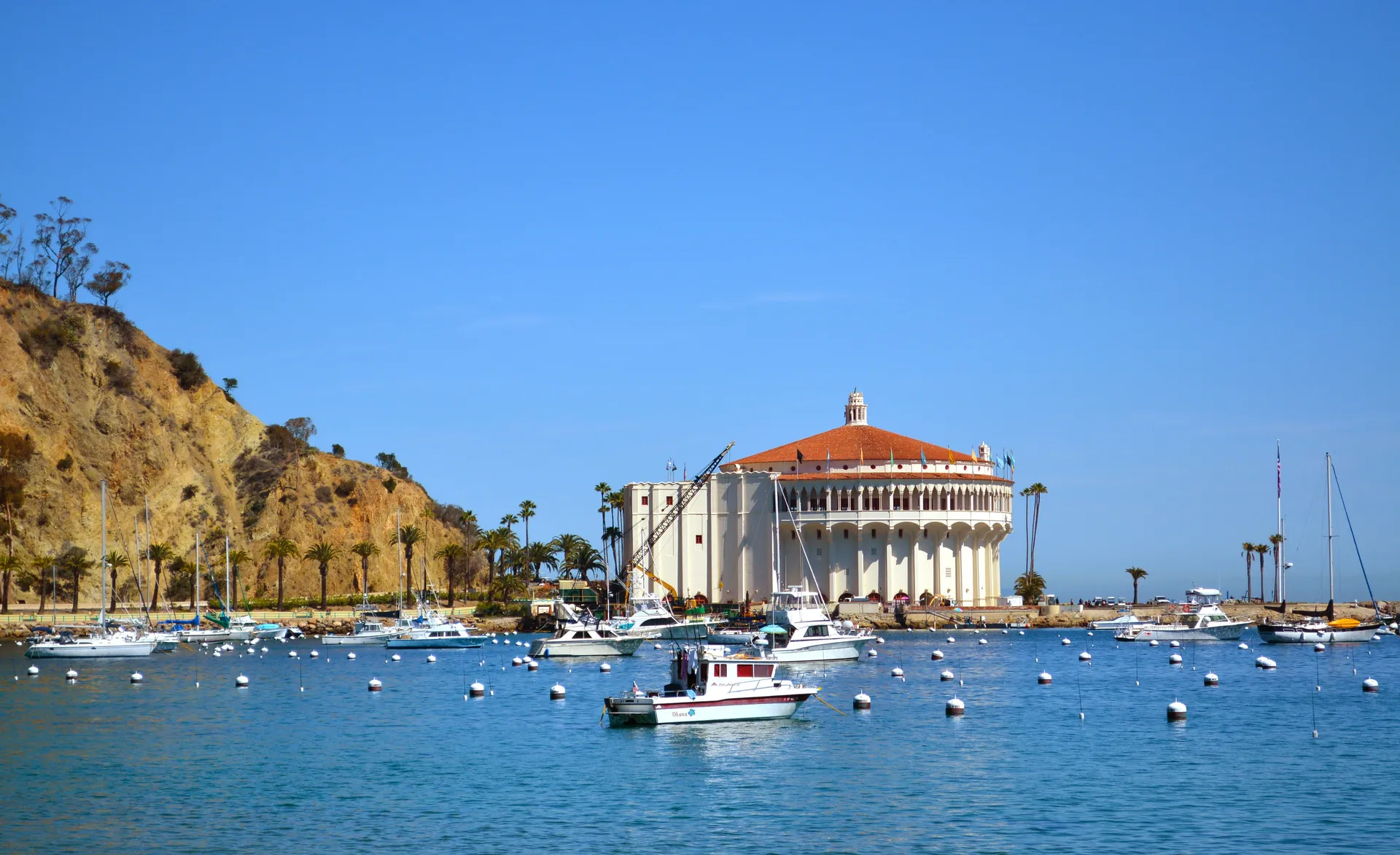
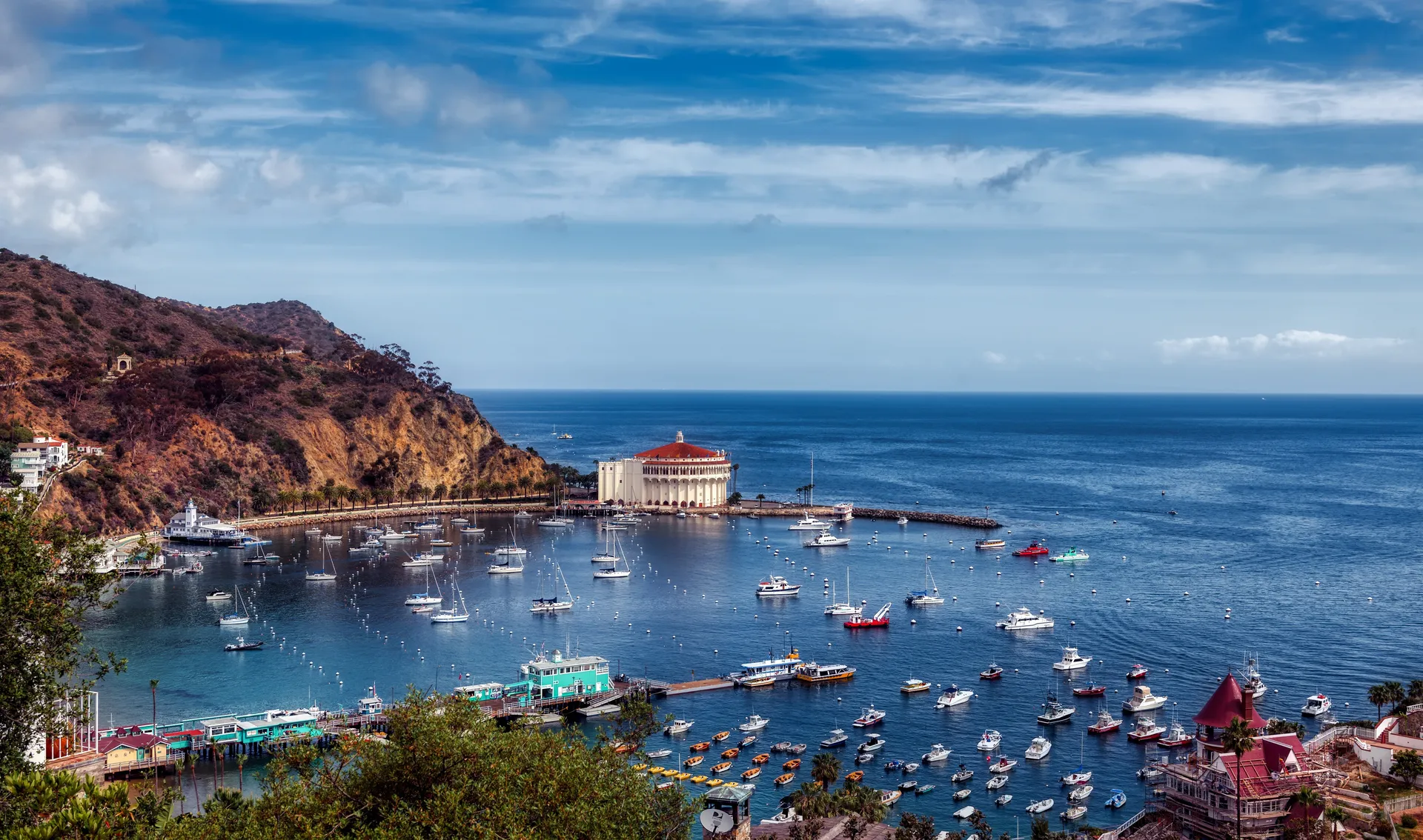
The Catalina Casino, Avalon's most iconic building, dominates the harbor entrance with its circular Moorish-influenced design—though it has never been a gambling establishment. Built by Wrigley in 1929, the casino houses a magnificent 1,184-seat movie theater and the world's largest circular ballroom, its interior decorated with Art Deco murals by John Gabriel Beckman that depict an underwater fantasy world. The Casino's ballroom witnessed the birth of Big Band-era broadcasting, with nationally syndicated radio programs transmitting the sounds of Benny Goodman and Kay Kyser to millions of listeners on the mainland.
Avalon's harbor front maintains the unhurried charm of a Mediterranean fishing village transplanted to California. The crescent bay, dotted with moored pleasure boats, is flanked by restaurants, dive shops, and galleries housed in buildings that range from Spanish Colonial Revival to streamline moderne. The town's pedestrian-friendly scale—most residents get around by golf cart, and visitors explore on foot—creates an atmosphere of casual luxury that feels increasingly rare in Southern California. The Descanso Beach Club, a private beach with a palm-shaded bar and waterfront dining, captures the island's lifestyle philosophy: sophisticated enough to satisfy LA-standard expectations, relaxed enough to make you forget the mainland exists.
Beyond Avalon, the island's interior is a protected wilderness managed by the Catalina Island Conservancy, which controls 88 percent of the island's 194 square kilometers. Bison, introduced for a movie production in the 1920s and never removed, roam the grassland hills in herds that create an unlikely—and surprisingly photogenic—wildlife encounter. The island fox, a diminutive subspecies found nowhere else on Earth, has been brought back from critical endangerment through an intensive conservation program and can now be spotted along hiking trails. The Trans-Catalina Trail, a 61-kilometer backcountry route crossing the island from end to end, offers some of the finest coastal hiking in California.
Cruise ships typically anchor in Avalon Bay and tender passengers to the pier, where the town is immediately accessible on foot. The Casino and harbor area can be explored in a few hours, but a full day allows time for snorkeling in the marine reserve at Lovers Cove, a glass-bottom boat tour over the kelp forests, or a Jeep excursion into the island's interior. The Southern California climate makes Catalina a year-round destination, though May through October offers the warmest water temperatures and clearest skies. Even in winter, temperatures rarely drop below 13°C, and the island's offshore position means it often basks in sunshine while the mainland is socked in with coastal fog.