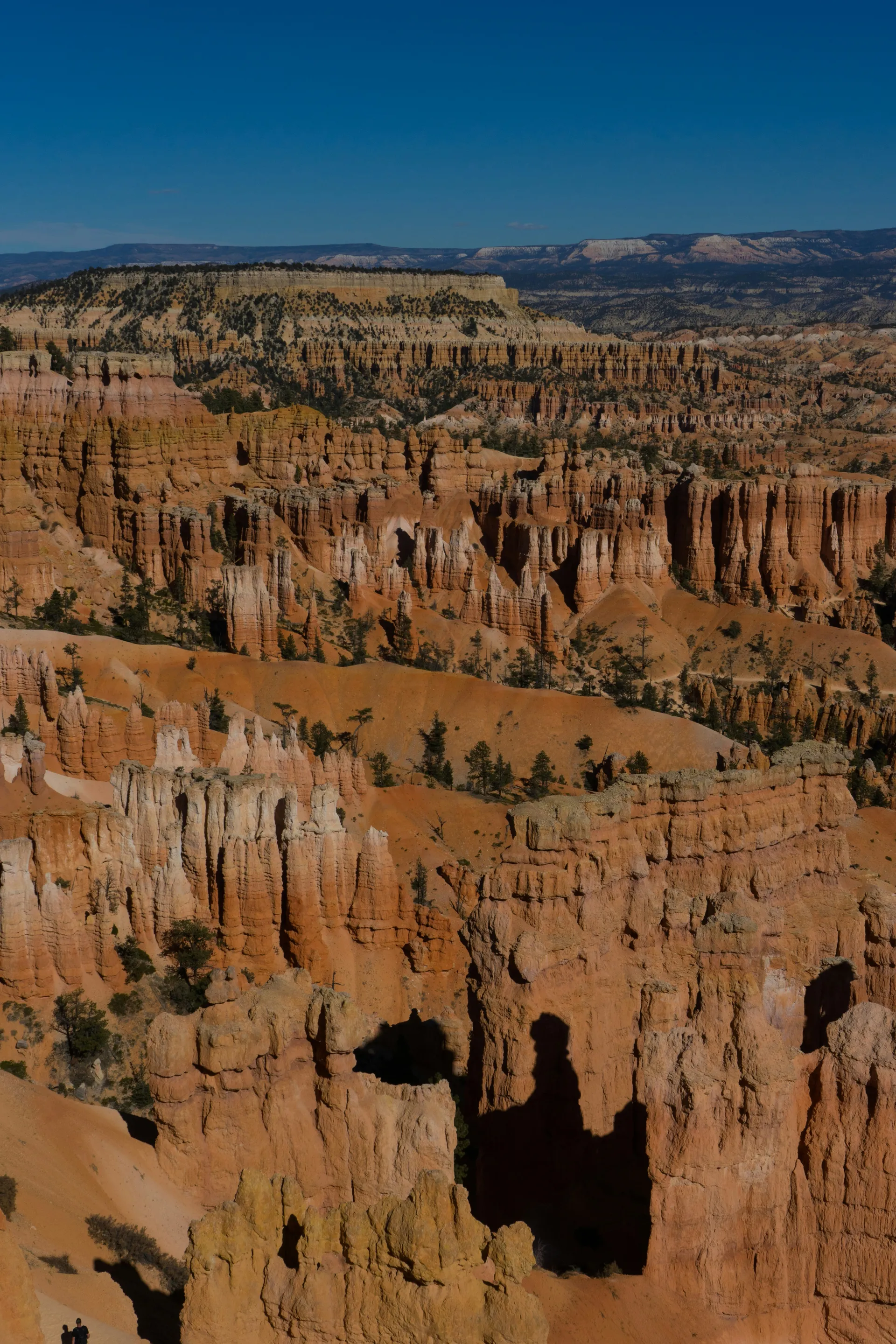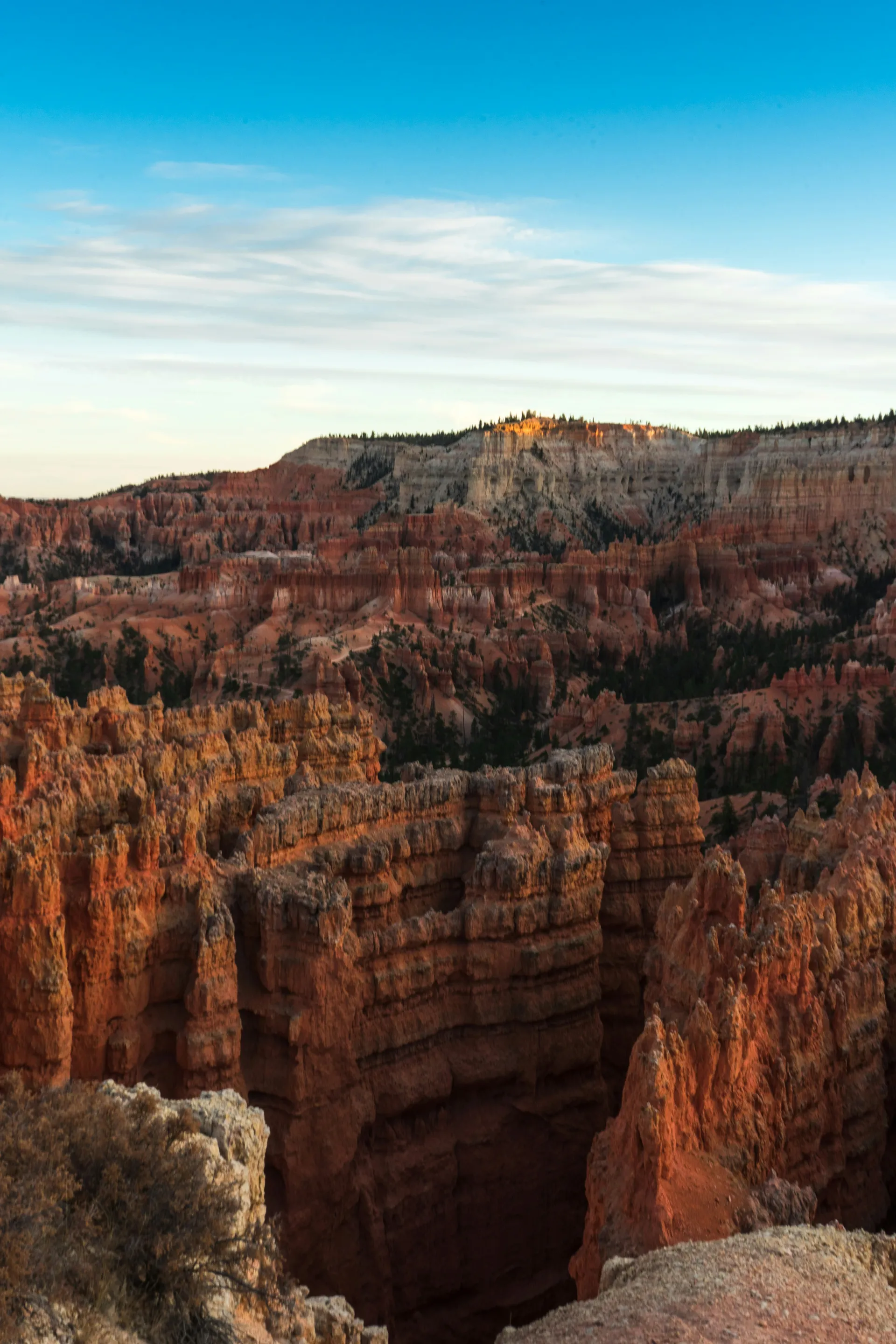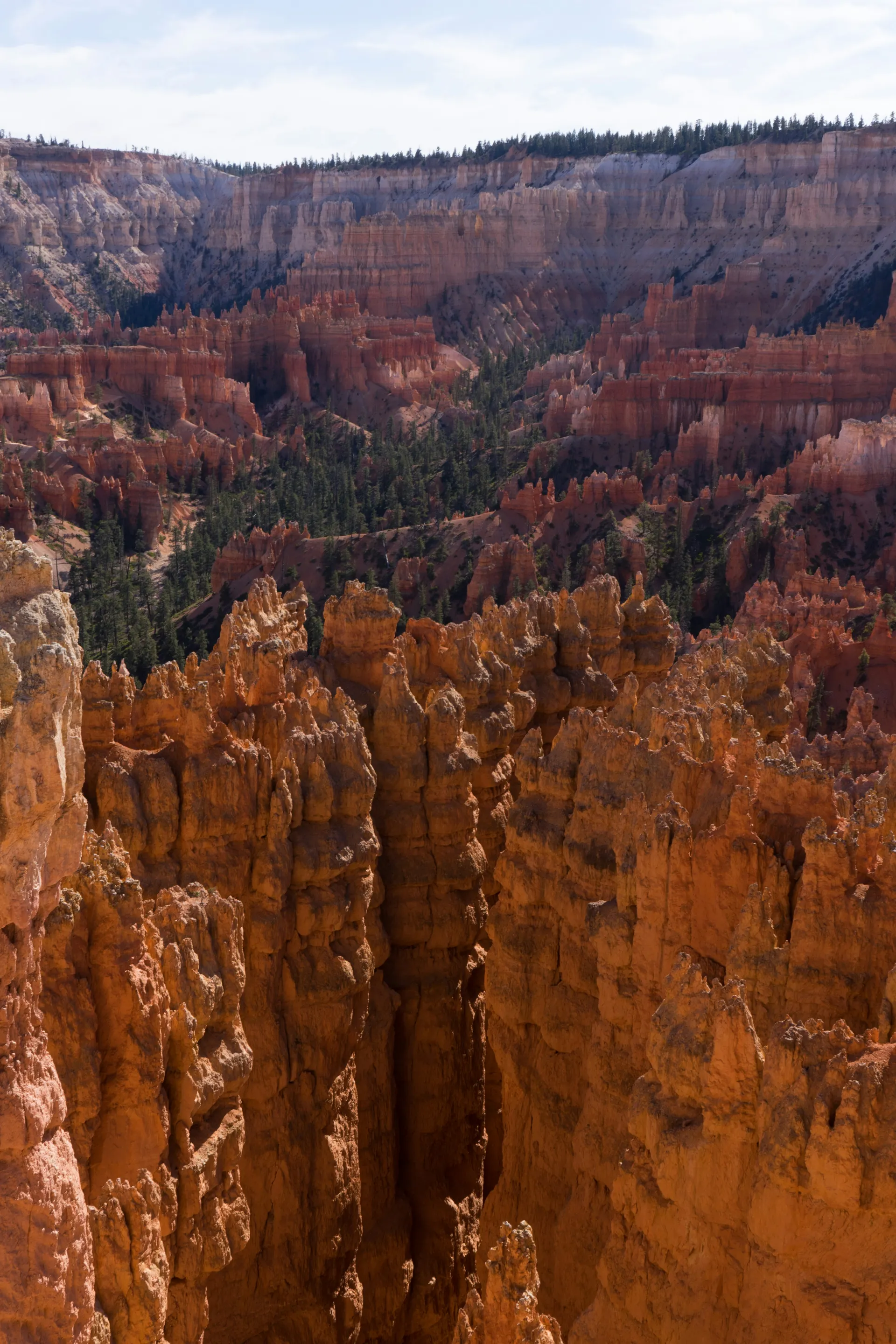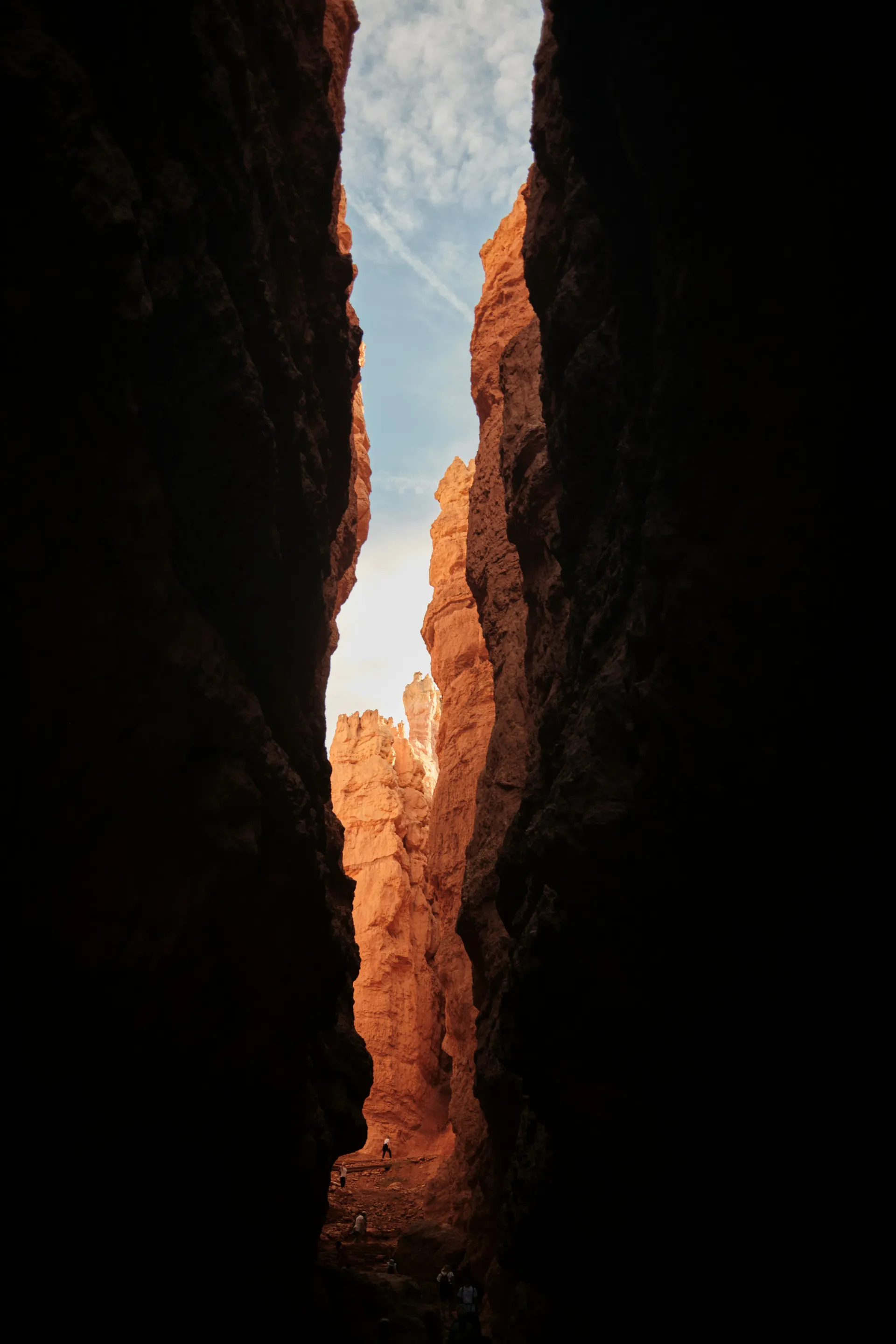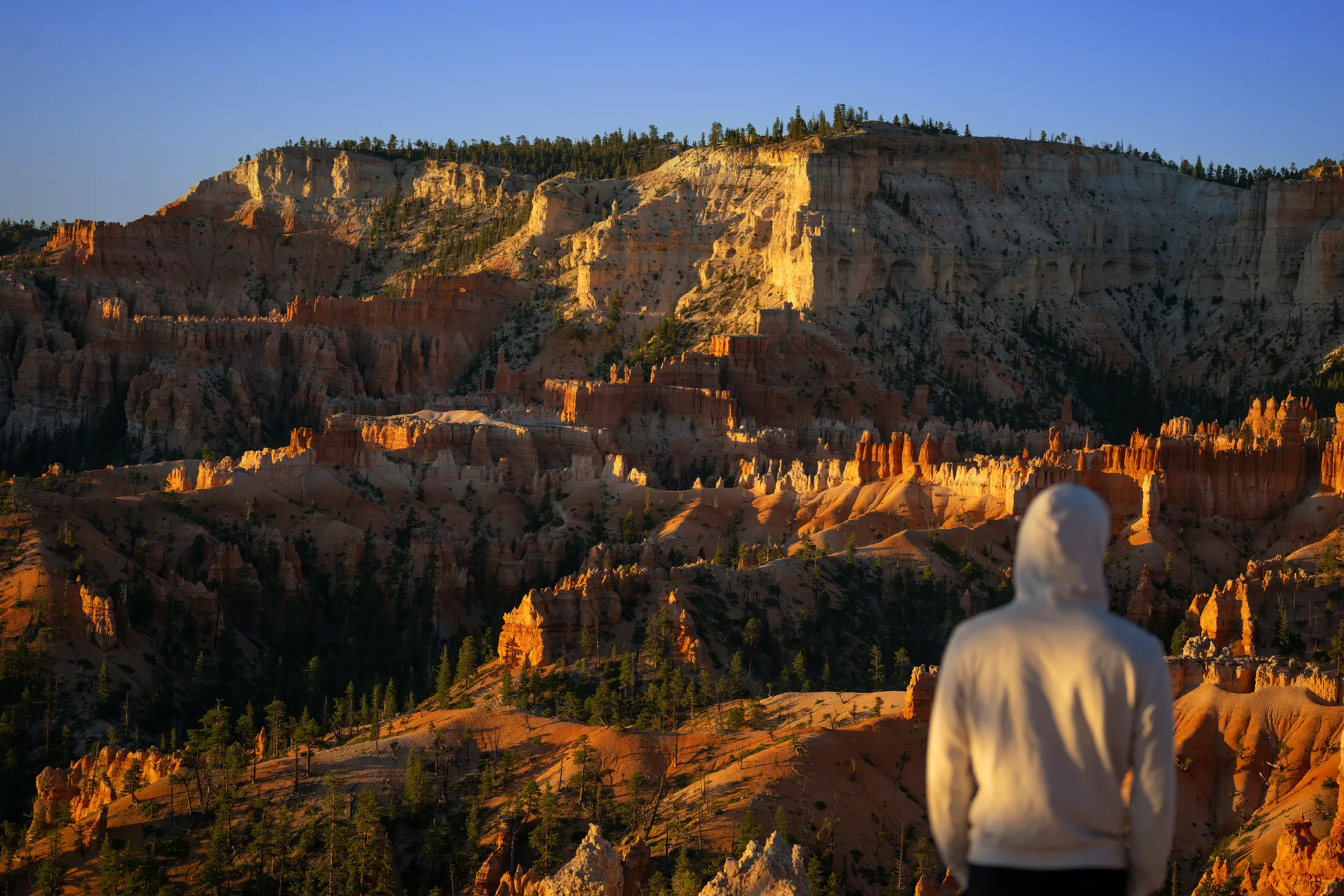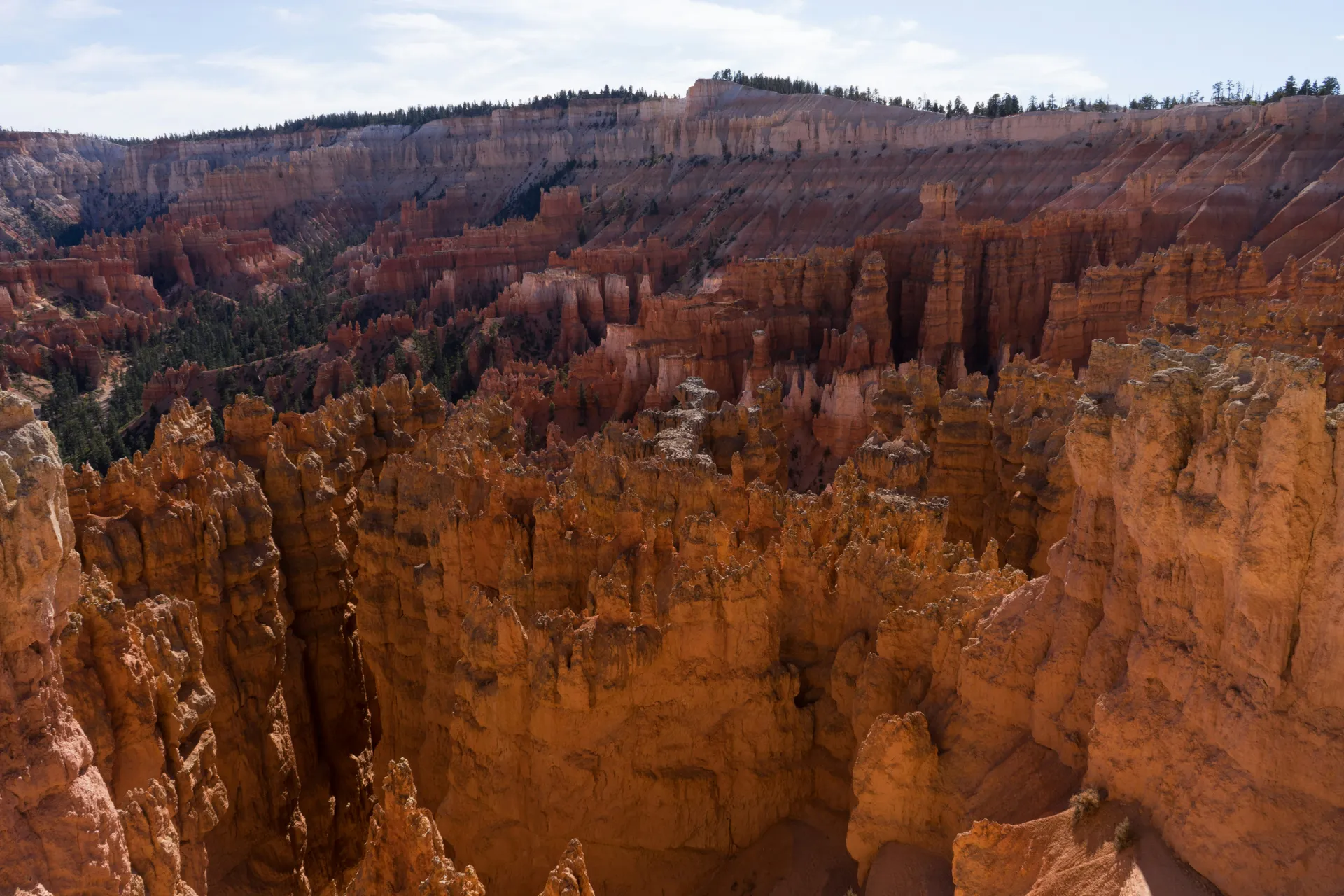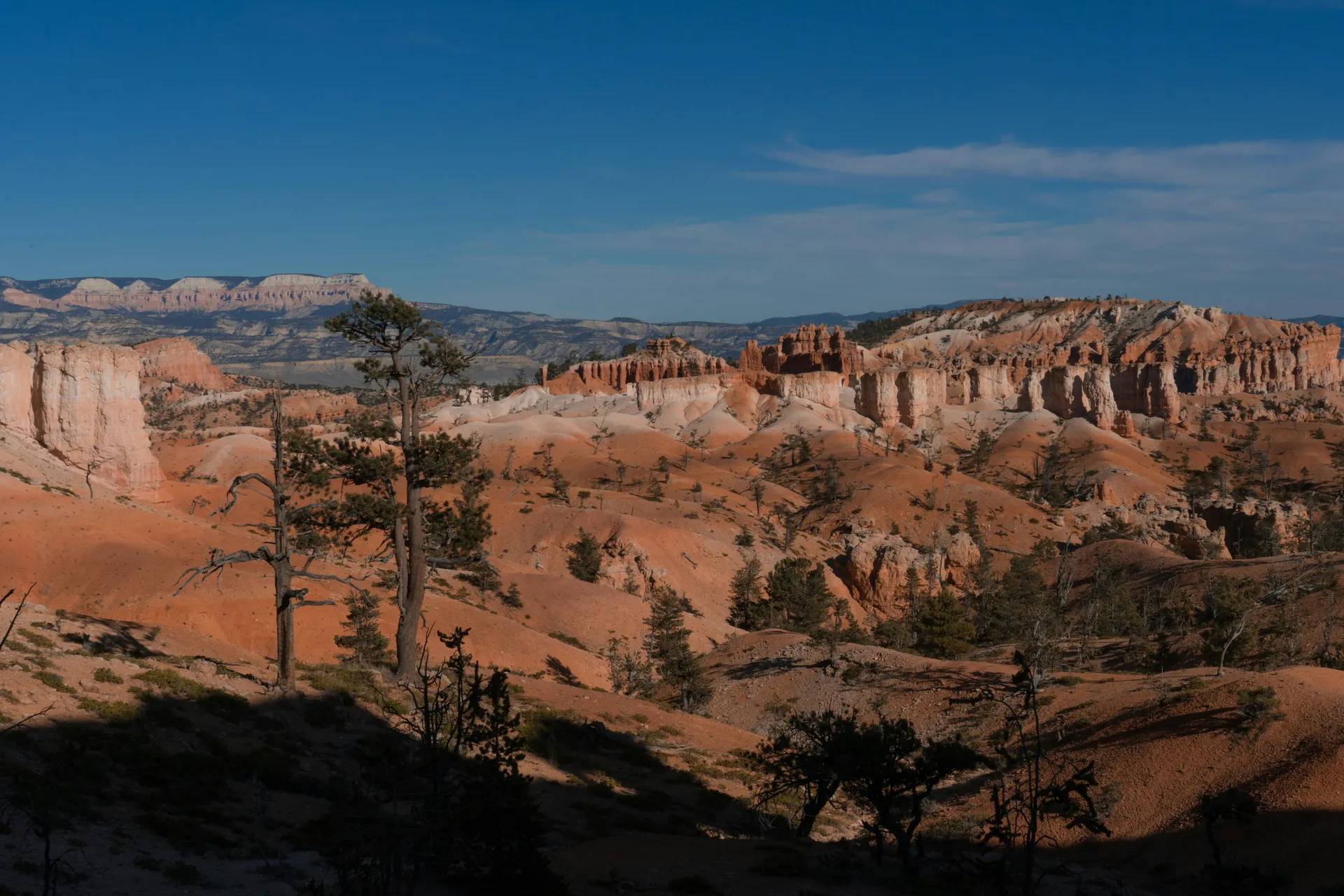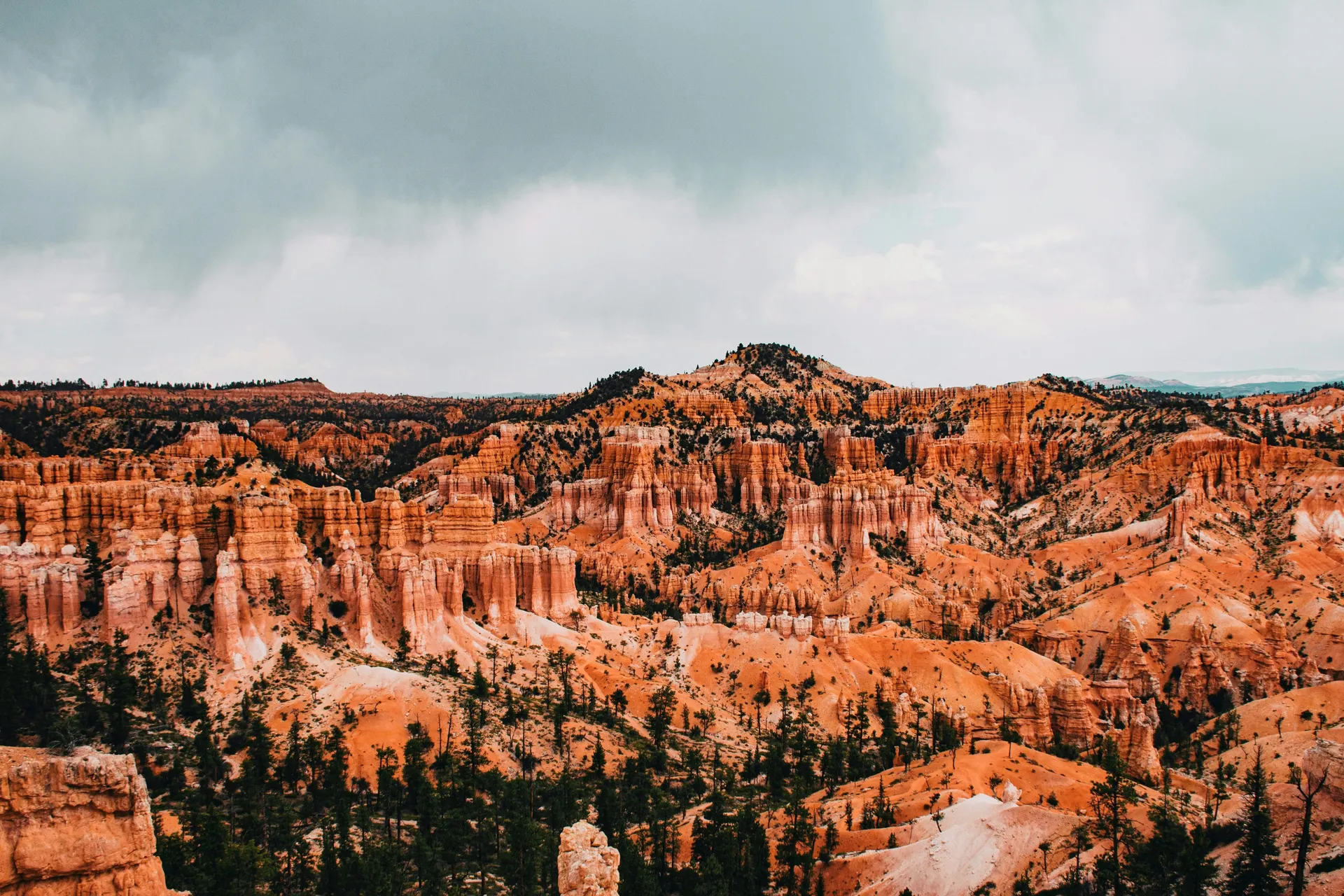
Bryce Canyon is not a canyon at all but a series of natural amphitheaters carved into the eastern edge of the Paunsaugunt Plateau—a geological distinction that does nothing to diminish its visual impact. The park's signature formations, called hoodoos, are slender towers of sedimentary rock sculpted by ten million years of frost, rain, and gravity into shapes so fantastical they seem to belong to another planet. The Paiute people called this place "red rocks standing like men in a bowl-shaped recess," and no modern description has improved upon their poetry.
At elevations ranging from 8,000 to over 9,000 feet, Bryce Canyon exists in a climate zone markedly different from Utah's lower desert parks. Ponderosa pines and Douglas firs frame the rim, their dark green a vivid contrast to the hoodoos' palette of crimson, orange, pink, and white. The air is thin and crisp, carrying the scent of pine resin. In winter, snow blankets the formations and creates a scene of surpassing beauty—the red and white contrast is so intense it looks digitally enhanced. The park's dark skies are among the clearest in North America; on moonless nights, over 7,500 stars are visible to the naked eye, compared to fewer than 500 in most cities.
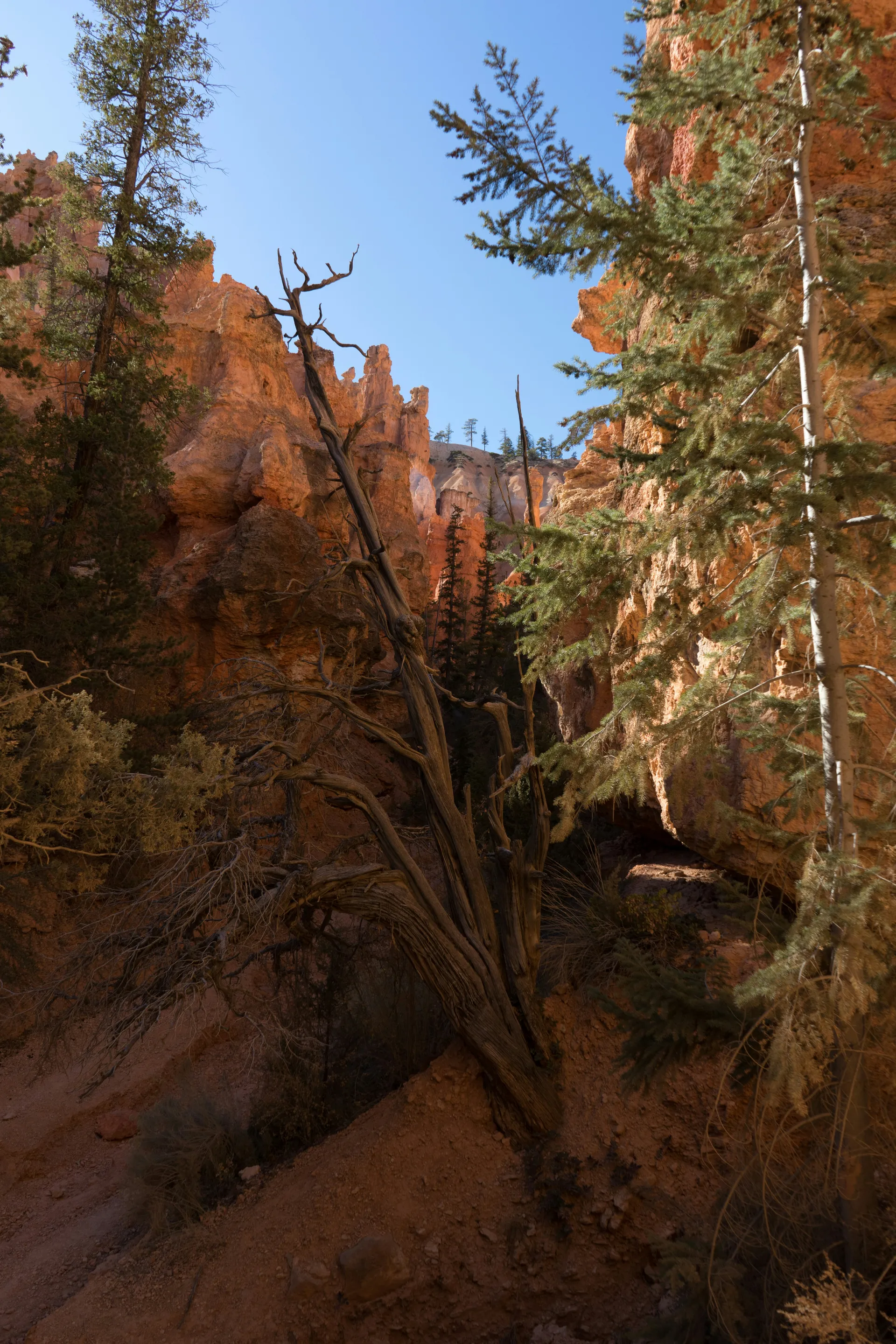
The park's relatively compact size makes it accessible yet deeply rewarding. The Rim Trail, which follows the amphitheater's edge for eleven miles, offers continuously changing perspectives on the hoodoo formations. For a more immersive experience, descend into the amphitheater on the Navajo Loop Trail, which drops through narrow slot canyons and emerges among the hoodoos themselves—an experience that transforms distant spectacle into intimate wonder. Wall Street, a section of the trail that passes between towering rock walls barely wide enough for two people, is among the most memorable short hikes in the American West. Rangers lead full-moon hikes and astronomy programs that take full advantage of the park's exceptional night skies.
The surrounding area extends the adventure in every direction. Red Canyon, just ten miles west on Highway 12, offers spectacular mountain biking through tunnels carved in red rock. Kodachrome Basin State Park, twenty miles south, features stone chimneys and petrified geysers in a more intimate setting. The Grand Staircase-Escalante National Monument, accessible via the scenic Highway 12—often ranked among America's most beautiful drives—encompasses slot canyons, petrified forests, and vast stretches of roadless wilderness. Zion National Park lies just eighty miles southwest, making a Bryce-Zion combination one of the classic American road trips.
Bryce Canyon is typically included in overland itineraries through southern Utah's "Mighty Five" national parks, often combined with Zion, Capitol Reef, Arches, and Canyonlands. The park is a year-round destination, though each season offers a different experience: summer (June–August) brings warm days and wildflowers; spring and autumn deliver mild temperatures and smaller crowds; winter transforms the park into a snow-frosted wonderland ideal for snowshoeing and photography. Sunrise and sunset are essential experiences—Sunrise Point and Inspiration Point are the premier viewpoints.