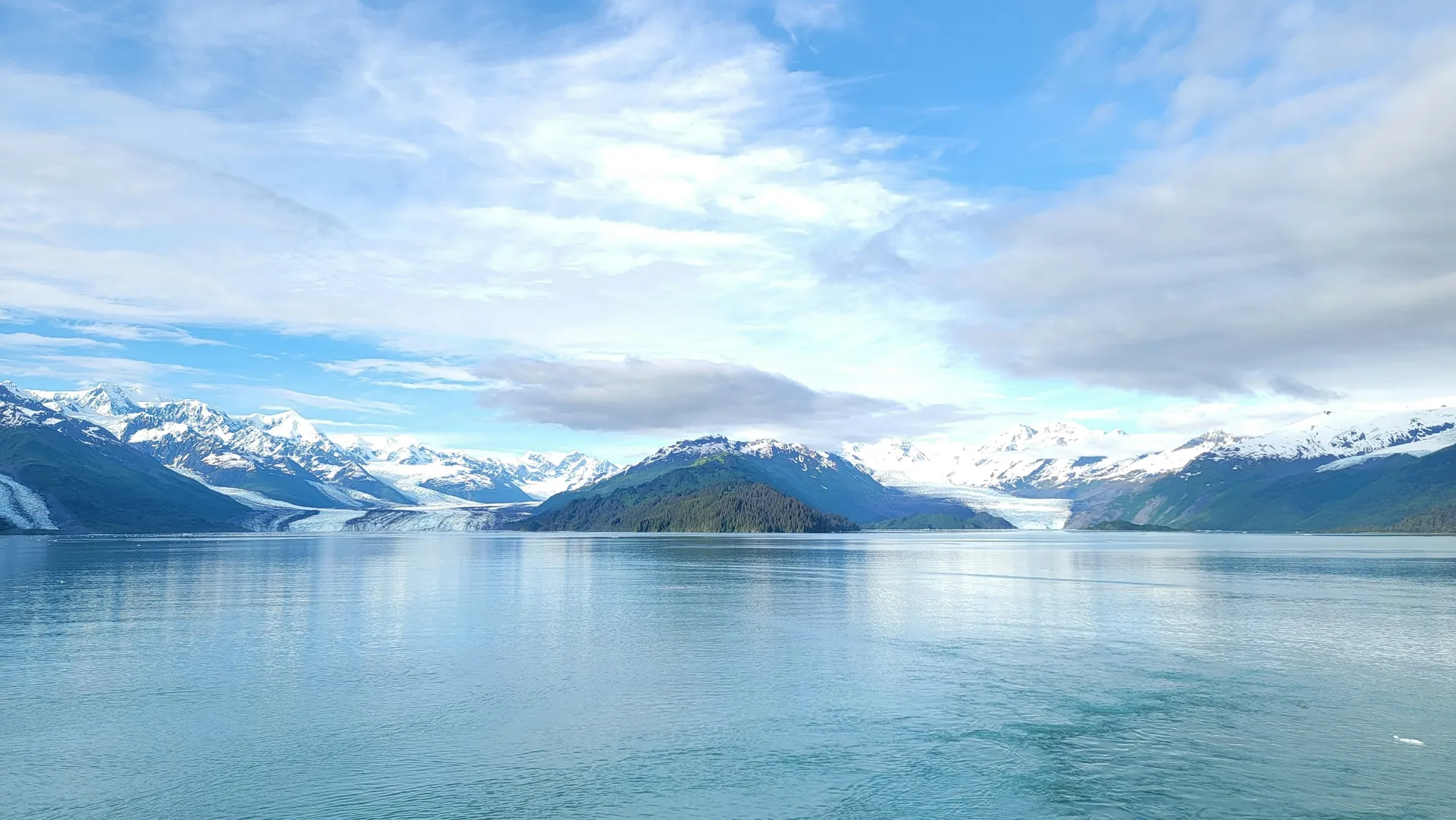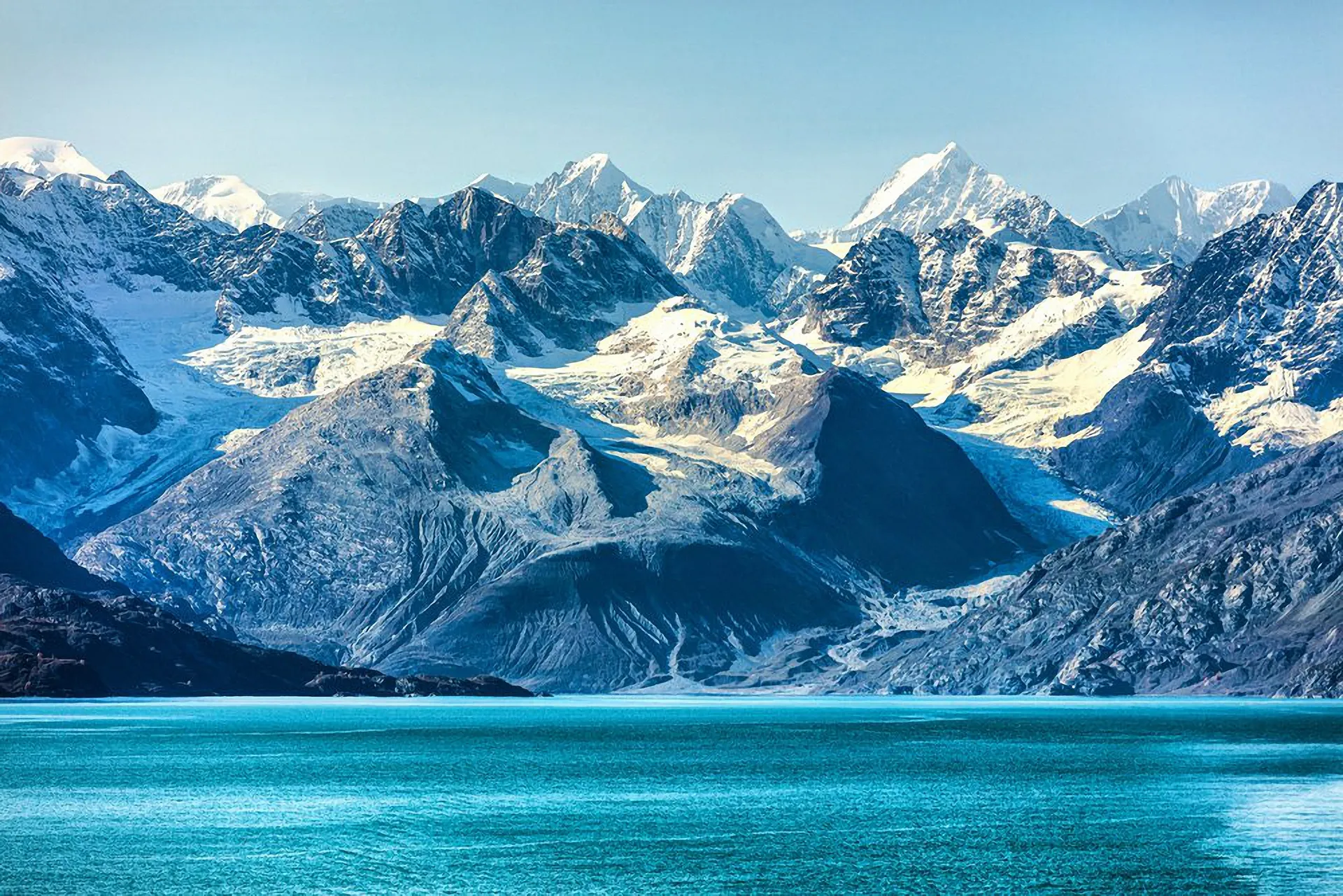
College Fjord is a gallery of ice. This twenty-five-mile arm of Prince William Sound in south-central Alaska contains the highest concentration of tidewater glaciers in the world—twenty-six named glaciers visible from the fjord's waters, five of which are tidewater glaciers that flow directly into the sea. The fjord was named during the 1899 Harriman Alaska Expedition, when the party—which included naturalist John Muir and photographer Edward Curtis—bestowed the names of East Coast colleges upon the glaciers: Harvard, Yale, Smith, Bryn Mawr, Wellesley, and others. Harvard Glacier, at the head of the fjord, is the largest tidewater glacier in Prince William Sound and one of the few in Alaska that is still advancing.
The experience of entering College Fjord is one of progressive immersion in a world of ice. As the ship navigates the narrow fjord, glaciers appear in increasing density on both sides—some massive rivers of ice tumbling from high peaks, others smaller hanging glaciers perched on cliff faces. The water transitions from deep blue-green to a milky turquoise as glacial silt increases near the glacier faces. Chunks of ice, from dinner-plate-sized pieces to substantial bergy bits, dot the surface, and the quiet crackle of dissolving ice—a sound glaciologists call "bergy seltzer"—fills the air. At the head of the fjord, Harvard Glacier presents a face approximately two miles wide and over 300 feet high, its blue-white surface constantly shifting with groans, pops, and the occasional thunderous calving of icebergs.
Wildlife in College Fjord is abundant and varied. Harbor seals rest on ice floes near the glacier faces, often with pups pressed close to their mothers' sides—the ice provides protection from orcas and other marine predators. Sea otters float on their backs in kelp beds near the fjord entrance, cracking shellfish on stones balanced on their chests. Dall's porpoises sometimes ride the bow wave of passing ships, their black-and-white markings flashing through the spray. Bald eagles perch in the spruce trees lining the shores, and mountain goats are occasionally spotted on the impossibly steep slopes above. Humpback whales and orcas frequent the waters of Prince William Sound, and encounters near the fjord entrance are not uncommon.
The geology of College Fjord provides a living lesson in glaciology. The glaciers on the northwestern side (the "women's colleges") are retreating, leaving behind bare rock, pioneer vegetation, and glacial moraines that reveal the land as it appeared under the ice. The glaciers on the southeastern side (the "men's colleges"), including Harvard, are advancing or holding steady—a rare phenomenon in an era of widespread glacial retreat. This contrast, visible from a single vantage point, makes College Fjord a natural laboratory for understanding climate change and glacial dynamics. The Chugach Mountains that cradle the fjord rise to over 13,000 feet, their upper slopes permanently locked in ice and snow.
College Fjord is a highlight of virtually every Gulf of Alaska cruise itinerary, typically visited as a scenic cruising day between Seward and the Inside Passage ports. The cruising season runs from May through September, with June and July offering the longest daylight hours and the best conditions for glacier viewing. August and September bring increased rainfall but also the most dramatic calving activity as summer melt undermines the glacier faces. The fjord is not a port of call—there are no docks or settlements—but rather a slow-cruising experience where the ship becomes a floating observatory for one of Alaska's most concentrated displays of glacial grandeur.