Long before Western cartographers traced the sinuous waterways of Southeast Alaska, the Tlingit people navigated these glacial corridors for millennia, reading the ice and tide with an intimacy that no chart could capture. The fjord now known as Endicott Arm earned its name during the 1889 expedition of Lieutenant Commander Henry B. Mansfield, who christened it in honour of William Crowninshield Endicott, Secretary of War under President Grover Cleveland. When Congress passed the Alaska National Interest Lands Conservation Act in 1980, this pristine waterway was folded into the Tracy Arm-Fords Terror Wilderness — 653,179 acres of granite, ice, and silence preserved in perpetuity.
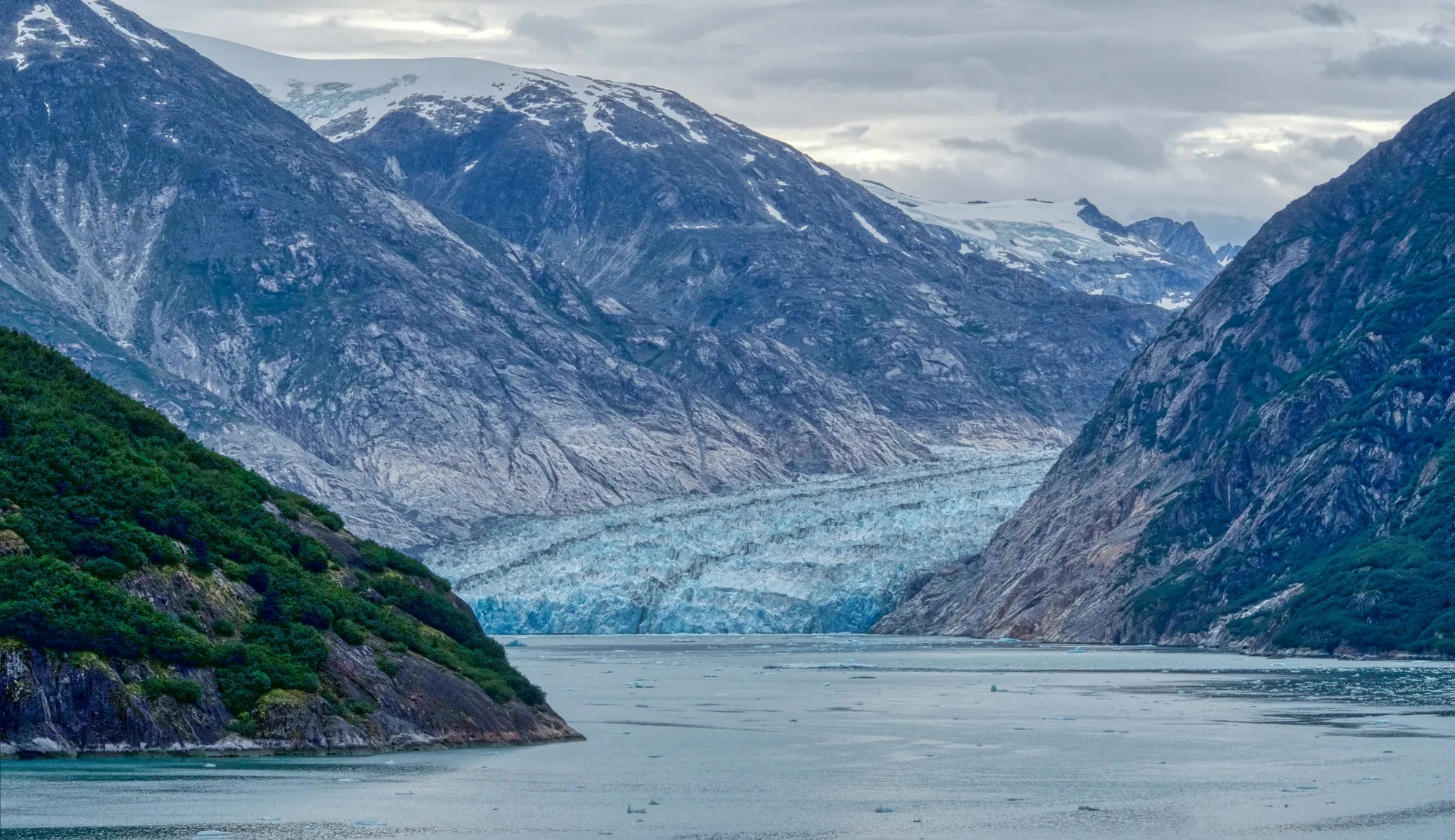
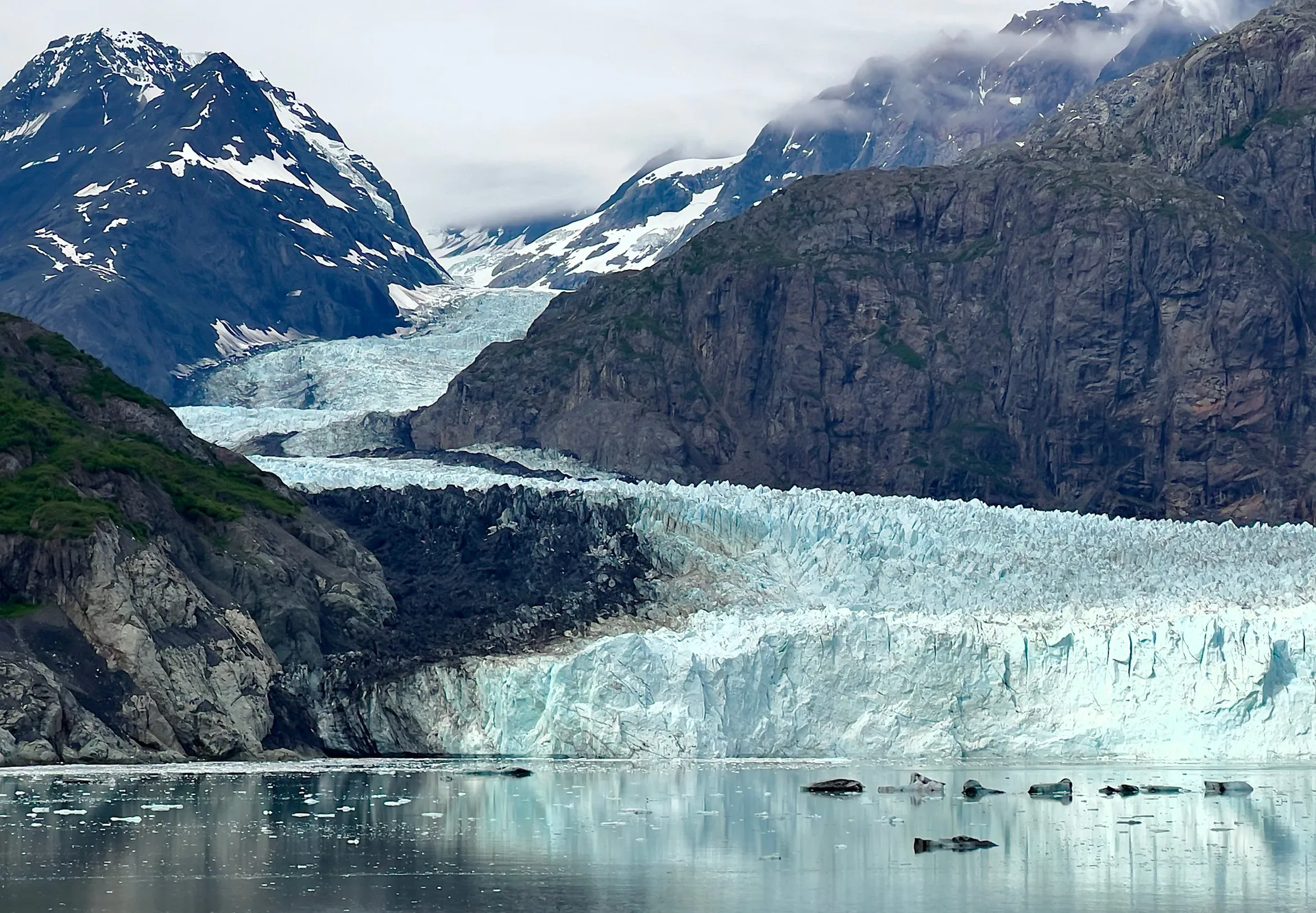
To enter Endicott Arm is to feel the world narrow and deepen simultaneously. The fjord stretches more than thirty miles into the Coast Mountains, its sheer granite walls rising thousands of feet from water so cold it glows an impossible mineral blue. Nearly one-fifth of the surrounding landscape lies beneath permanent ice, and the air carries a crystalline stillness broken only by the percussive crack of calving glaciers and the exhalations of humpback whales surfacing between cathedral-like icebergs. At the fjord's terminus, Dawes Glacier descends from the Stikine Icefield in a frozen cascade of cerulean seracs, its face stretching six hundred feet across — a wall of ancient compressed snow that periodically releases house-sized fragments into the tidewater with a sound like distant thunder. Harbour seals haul out on drifting ice pans in astonishing numbers, their dark eyes watching passing vessels with the serene indifference of creatures who have never learned to fear.
The culinary experience of an Endicott Arm voyage is inseparable from the waters themselves. Many cruise lines mark the glacial passage with on-deck celebrations featuring Alaskan king crab legs, cracked and served with drawn butter while icebergs drift past at arm's length. The region's cold-smoked sockeye salmon — silky, copper-hued, cured in the tradition of Southeast Alaska's smokehouses — appears at shipboard tastings alongside Alaskan spot prawns so sweet they border on confectionery. For those whose itinerary includes time in nearby Juneau, the city's Tracy's King Crab Shack serves Dungeness and king crab straight from the dock, while the heritage recipe of akutaq — a Yup'ik preparation of whipped fat, berries, and sometimes fish — offers a taste of Indigenous Alaska that predates all European contact.
Beyond the ice-carved drama of the fjord, the broader American landscape unfolds in striking counterpoint. The rust-red amphitheatres of Coral Pink Sand Dunes National Park in southern Utah present a geological antithesis to Alaska's blue-white palette — Navajo sandstone sculpted by wind into formations that glow amber at sunset. Salt Lake City offers the cultural sophistication of the Utah Museum of Fine Arts and the otherworldly buoyancy of the Great Salt Lake, while the eastern Sierra town of Bishop, California, serves as a gateway to the ancient bristlecone pines of the White Mountains, the oldest living organisms on Earth. Even Wilmington, with its storied riverfront heritage, reminds travellers that America's coastal narratives are written in vastly different vocabularies from north to south.
Endicott Arm features prominently on Alaska itineraries operated by the industry's most distinguished lines. Celebrity Cruises threads the fjord aboard its Solstice-class vessels, their floor-to-ceiling glass lounges transforming the passage into a cinematic experience, while Princess Cruises — with its half-century legacy in Alaska — pairs the glacial transit with onboard naturalist commentary of uncommon depth. Norwegian Cruise Line positions its observation lounges as front-row seats to the calving spectacle, and Royal Caribbean's Quantum-class ships bring their signature blend of scale and spectacle to the wilderness. Disney Cruise Line, meanwhile, crafts the passage into a family narrative complete with wildlife bingo and ranger-led programmes that leave young passengers wide-eyed at the sheer improbability of blue ice.
What endures after Endicott Arm is not a single image but a sensory architecture — the way cold air tasted of minerals, the way silence had weight, the way a glacier's groan reverberated through the hull and into the chest. This is not a destination one visits. It is a threshold one crosses, returning slightly altered, carrying ice-light behind the eyes.