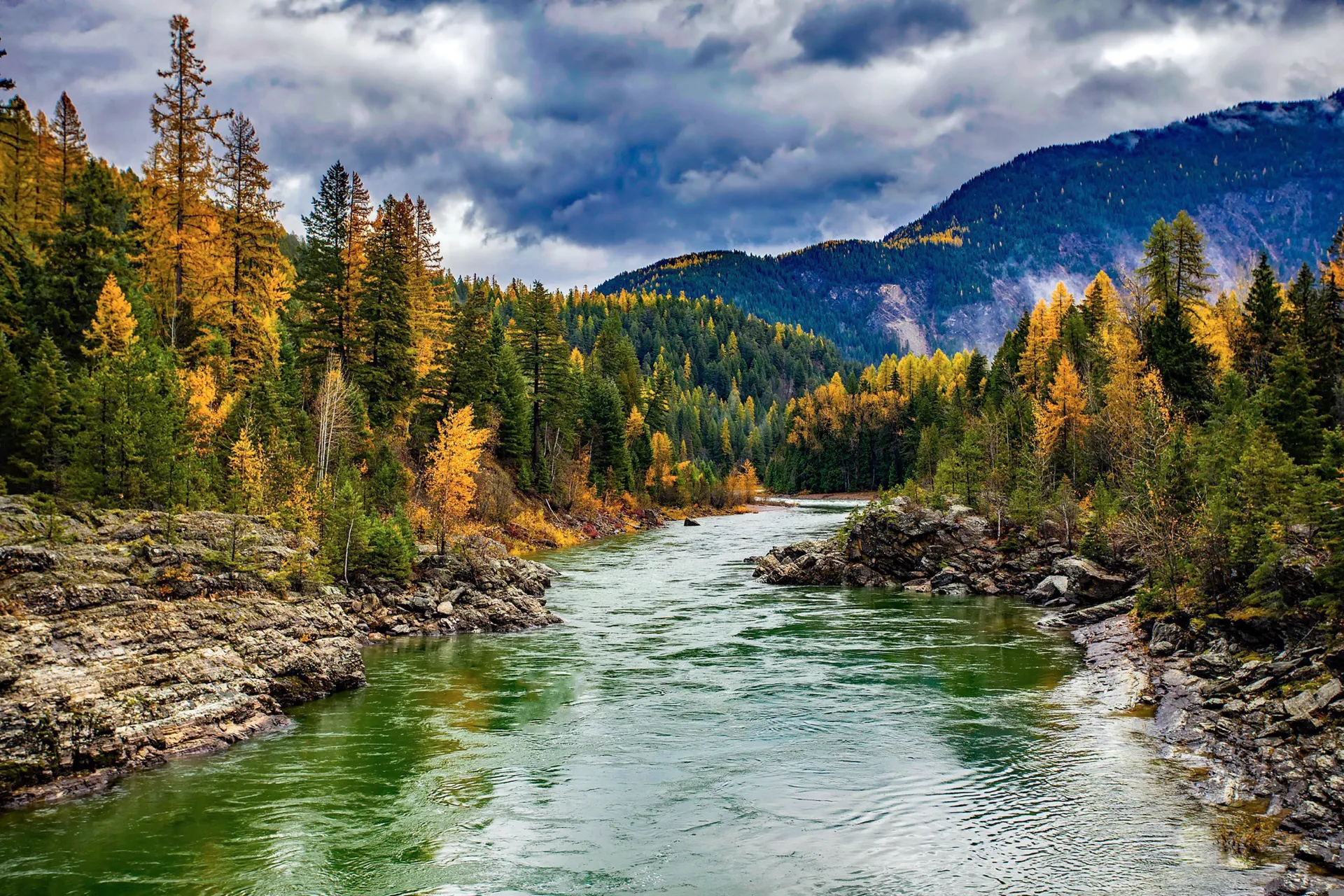
Glacier National Park is the crown of the continent—a million acres of Rocky Mountain wilderness in northwestern Montana where glacially carved valleys, turquoise alpine lakes, and knife-edge ridges create landscapes of an intensity that borders on the overwhelming. The park straddles the Continental Divide, and its geography reflects that position: Pacific moisture feeds dense cedar-hemlock forests on the western slopes, while the eastern flanks drop abruptly to the Great Plains in a transition so dramatic that you can stand in a world of snow-capped peaks and see the prairie grasslands stretching to the eastern horizon. Together with Canada's Waterton Lakes National Park, Glacier forms the Waterton-Glacier International Peace Park—the world's first—a UNESCO World Heritage Site recognized for its exceptional natural beauty and ecological significance.
The Going-to-the-Sun Road is one of the great engineering achievements in American history and the park's most famous feature. This fifty-mile highway, completed in 1932 after eleven years of construction, crosses the Continental Divide at Logan Pass (6,646 feet) through a landscape of cirques, hanging valleys, and waterfalls that cascade from cliffs hundreds of feet above the road. The drive is a masterpiece of scenic road design—every curve reveals a new composition of mountain, lake, and sky. At Logan Pass, the Hidden Lake Overlook trail provides a short, steep hike to a viewpoint above Hidden Lake, where mountain goats graze on alpine meadows and the full sweep of the park's interior unfolds before you.
The park contains over two hundred named lakes, each with its own character. Lake McDonald, the largest, stretches ten miles beneath forested mountains on the park's western side, its cobble beaches famous for multicolored stones smoothed by glacial action. St. Mary Lake, on the east side, sits in a valley flanked by steep mountains and is often photographed with Wild Goose Island—a tiny, tree-topped islet—as its centerpiece. Grinnell Lake, reached by a six-mile hike from the Many Glacier area, rewards the effort with water of an almost impossible turquoise hue, colored by glacial flour—rock ground to powder by the movement of ice. The Many Glacier area, in the park's northeast, is often called the "Swiss Alps of North America" for its concentration of glaciers, lakes, and peaks visible from a single valley.
Wildlife in Glacier is abundant and diverse. Grizzly bears are present throughout the park—an estimated 300 inhabit Glacier and the surrounding ecosystem—and sightings, while not guaranteed, are common enough that bear safety is a constant theme. Mountain goats, the park's unofficial mascot, are frequently observed at Logan Pass and along high-altitude trails, their white coats contrasting against grey rock. Bighorn sheep, moose, elk, wolves, and mountain lions inhabit the park's varied ecosystems. The park's bird life includes harlequin ducks in the rushing streams, Clark's nutcrackers in the whitebark pine forests, and golden eagles soaring above the ridgelines.
Glacier is accessed from the towns of Whitefish and Kalispell on the west side and Browning (on the Blackfeet Reservation) on the east. The Going-to-the-Sun Road is typically open from late June to mid-October, weather permitting, and vehicle reservations are required during peak season (June–September). The best time to visit is July and August, when trails are snow-free and wildflowers blanket the alpine meadows. September offers fall color, fewer crowds, and excellent wildlife viewing. The park's namesake glaciers, which numbered 150 in 1850, have shrunk to fewer than 25—a visible, visceral reminder of climate change that adds urgency to any visit.

