Hilo is the quieter, wilder half of the Big Island of Hawaii—a lush, rain-drenched town on the island's windward coast that trades Kona's resort polish for an authenticity rooted in sugar plantation history, tropical rainforest, and the primal spectacle of Kilauea, one of the world's most active volcanoes. While most Hawaiian tourism gravitates toward the sunnier western shores, Hilo has remained stubbornly, beautifully itself: a town of vintage storefronts, banyan-lined streets, and farmers' markets that overflow with orchids, tropical fruit, and macadamia nuts grown in the volcanic soil that makes this region one of the most fertile on Earth. The rainfall that keeps casual tourists at bay is precisely what makes Hilo extraordinary—it feeds the waterfalls, fills the botanical gardens, and sustains the biodiversity that gives the Big Island its ancient Hawaiian name: the island of life.
Downtown Hilo preserves a collection of early twentieth-century buildings that survived the devastating tsunamis of 1946 and 1960—disasters that killed hundreds and reshaped both the town's geography and its psyche. The Pacific Tsunami Museum, housed in a beautifully restored 1930s bank building, tells these stories with unflinching honesty. Along Kamehameha Avenue, the waterfront commercial strip, vintage shops, art galleries, and local eateries occupy plantation-era buildings with wooden verandas and corrugated iron roofs. The Hilo Farmers Market, held Wednesdays and Saturdays, is one of Hawaii's finest—a vibrant, multiethnic gathering where Japanese, Filipino, Portuguese, and Hawaiian vendors sell everything from purple sweet potatoes to freshly cracked coconuts, reflecting the immigrant communities that built Hilo's sugar industry.
Hawaiian cuisine reaches some of its most authentic expressions in Hilo, where the fusion of Polynesian, Japanese, Filipino, Portuguese, and American traditions has produced a food culture unlike anywhere else on Earth. Loco moco—a hamburger patty on rice, topped with a fried egg and brown gravy—was invented in Hilo in 1949 and remains the town's signature comfort food, debated at rival institutions with the same passion Detroiters bring to Coney dogs. Poke, the raw fish salad that has conquered global menus, is still best here: cubed ahi tuna dressed with soy, sesame oil, seaweed, and kukui nut, scooped from the display case at Suisan Fish Market. Malasadas (Portuguese doughnuts), saimin (Hawaiian ramen), and plate lunches—the democratic, multicultural meals served at every corner—complete a food landscape that is joyfully unpretentious and deeply satisfying.
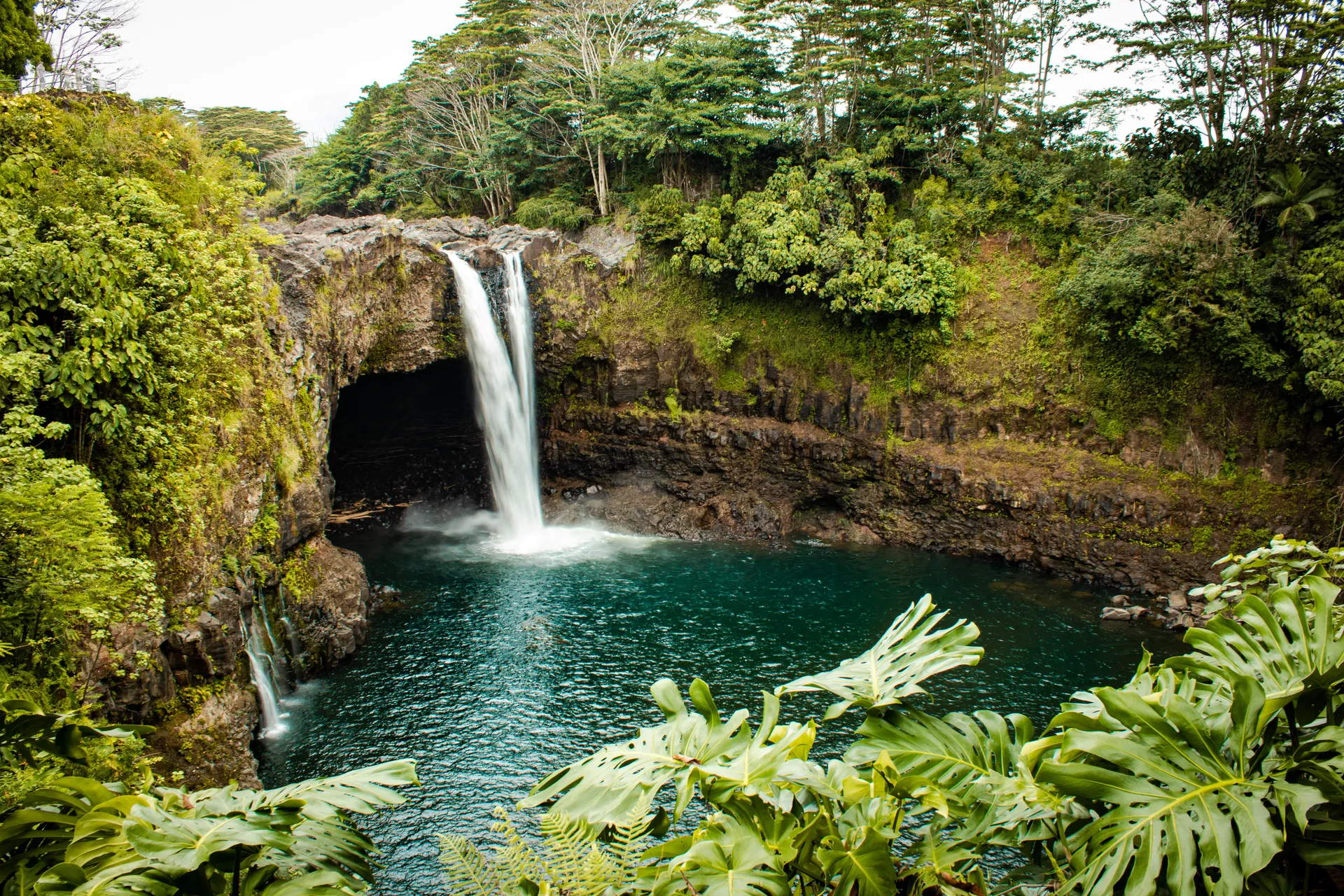
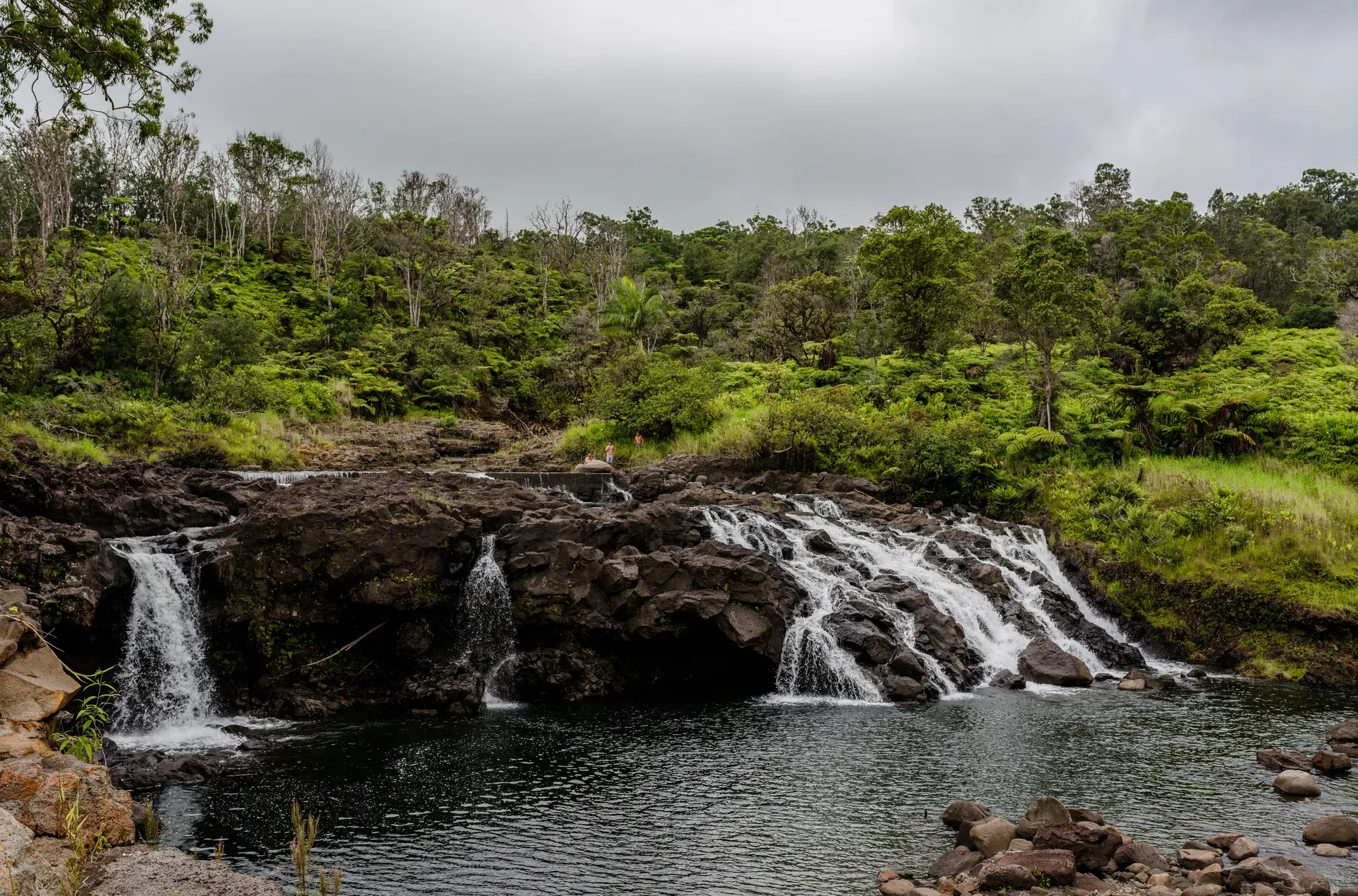
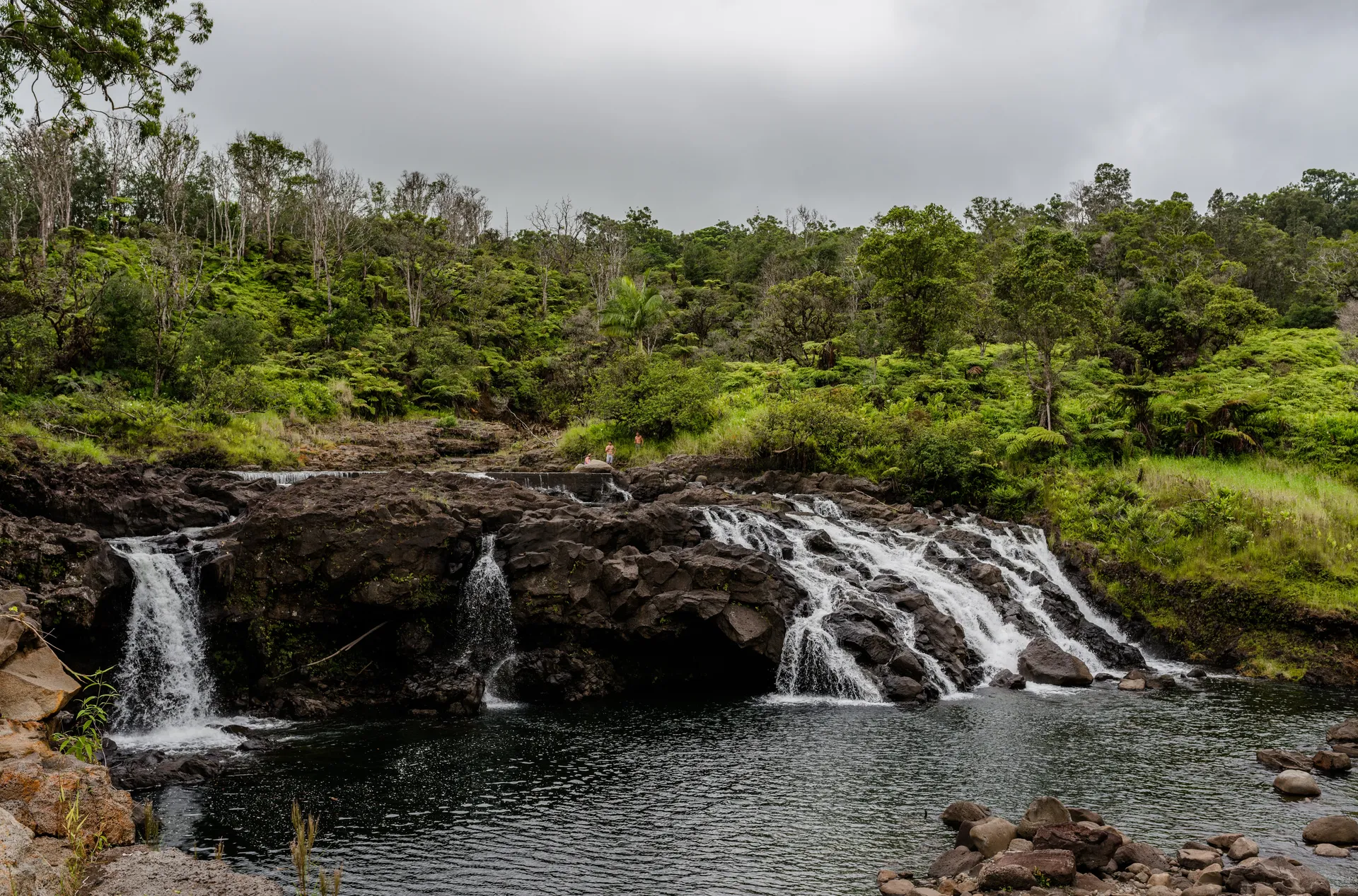
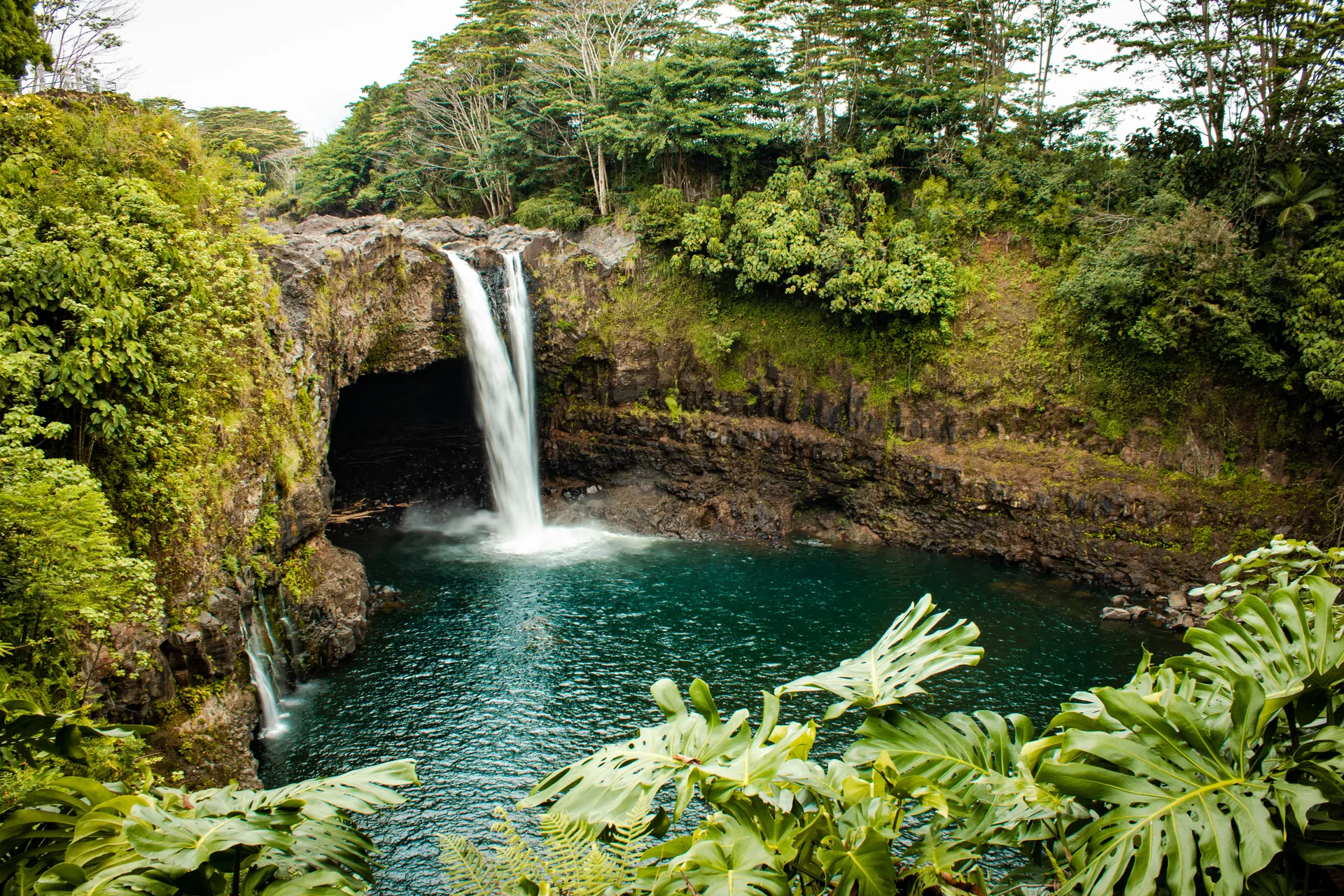
Hawaii Volcanoes National Park, Hilo's marquee attraction, lies 45 minutes south along a scenic highway that traverses lava flows of varying vintages. Kilauea has been erupting intermittently since 1983, and the park offers visitors the chance to walk across still-steaming lava fields, peer into the Halema'uma'u crater, and explore lava tubes formed by rivers of molten rock. The Chain of Craters Road descends through a surreal landscape of frozen lava flows to the coastal cliffs. Closer to town, Rainbow Falls—a broad cascade that earns its name from the morning rainbows that form in its mist—and Akaka Falls, an 130-meter free-fall waterfall surrounded by tropical vegetation, are essential stops. The Hawaii Tropical Botanical Garden, set in a valley on the coast north of town, is one of the most spectacular botanical collections in the Pacific.
Carnival Cruise Line, Hapag-Lloyd Cruises, MSC Cruises, and Princess Cruises call at Hilo, with ships docking at the pier in Hilo Bay within walking distance of downtown. The port's central location makes independent exploration of town straightforward, while excursions to the national park require transport. Hilo receives significant rainfall year-round, with the driest months typically September through October. Morning visits often enjoy clearer skies before afternoon showers develop. Temperatures hover between 24–29°C year-round, and the water is warm enough for swimming in any season. Hilo is not the Hawaii of the postcards—it is something better: the Hawaii that Hawaiians actually live in, a town where the volcano's creative destruction and the land's extraordinary fertility are not tourist attractions but the daily conditions of existence.