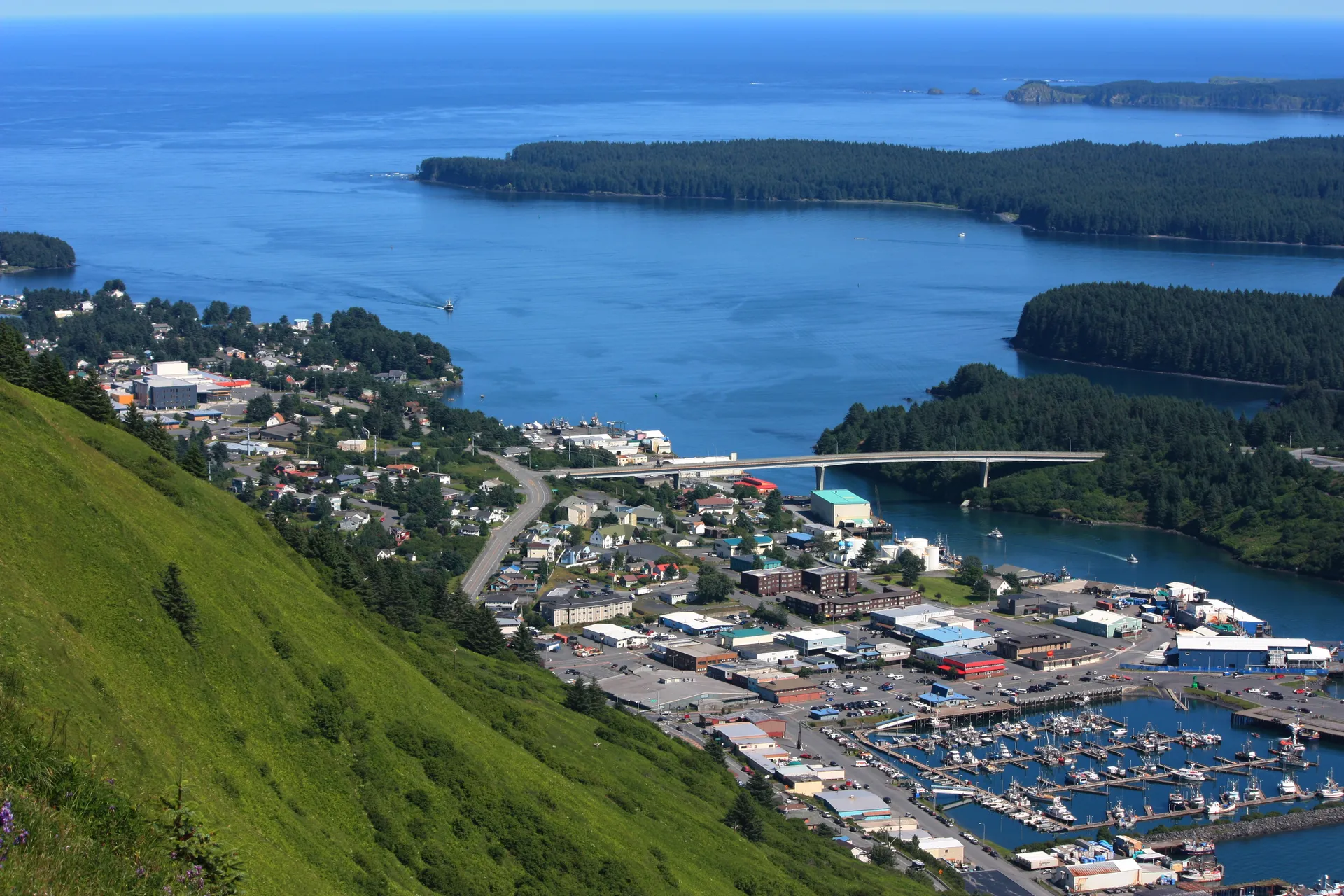
Kodiak sits on the northeastern tip of Kodiak Island, the second-largest island in the United States and home to the densest population of brown bears on Earth. The town of 6,000 is Alaska's oldest permanent European settlement—Russian fur traders established a colony here in 1792, making it the capital of Russian America until Sitka assumed that role in 1808. That Russian heritage persists in the blue onion domes of the Holy Resurrection Cathedral, one of the oldest Russian Orthodox parishes in North America, and in the Baranov Museum, housed in the oldest building in Alaska—a Russian-era warehouse built of spruce logs and native stone. But Kodiak's identity is defined less by its colonial past than by its present relationship with the sea: this is the largest fishing port in Alaska and one of the largest in the United States, its harbor a forest of masts and rigging where crab boats, salmon seiners, and halibut longliners jostle for dock space.
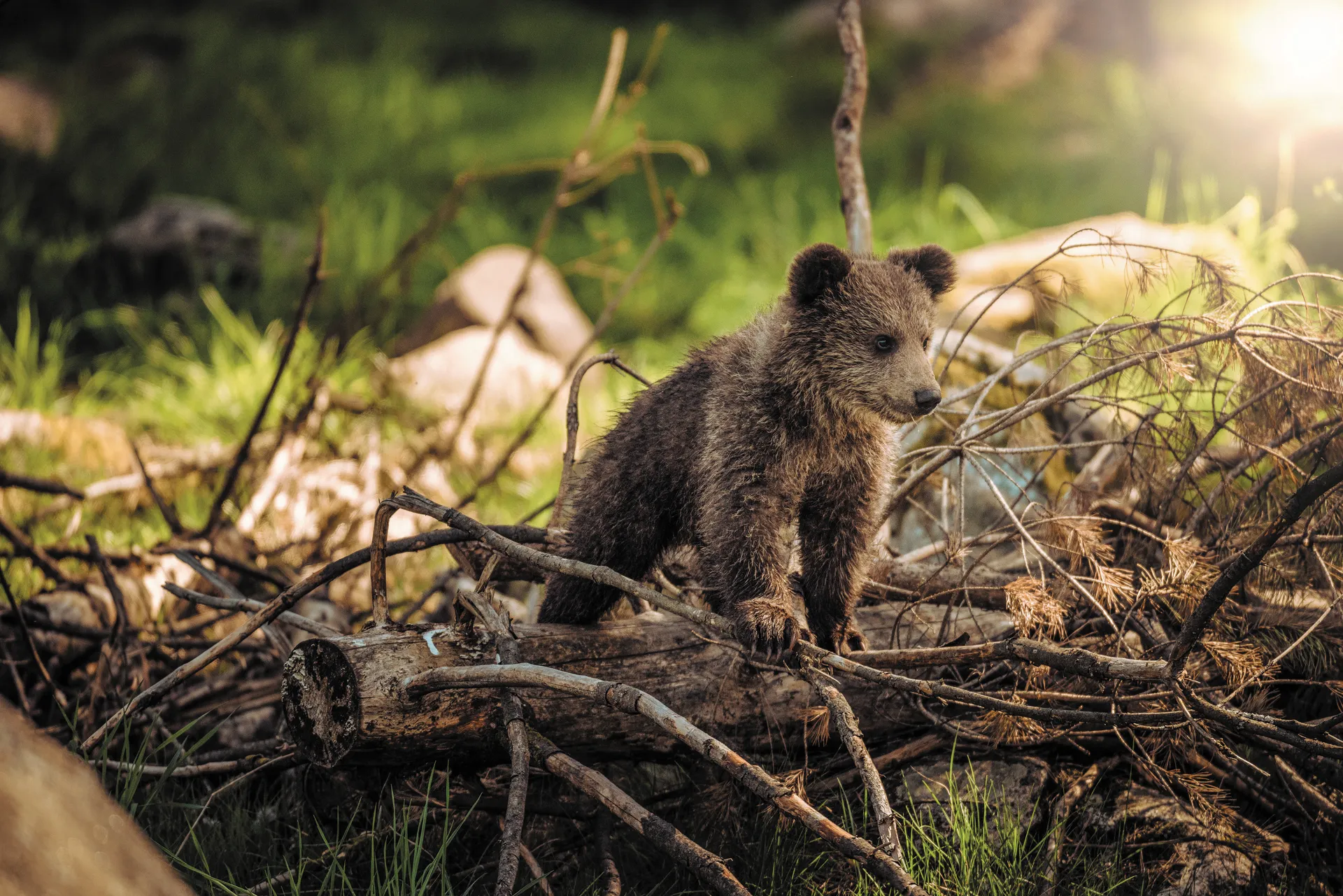
The town of Kodiak occupies a compact, walkable area between the harbor and the surrounding mountains. The Kodiak National Wildlife Refuge Visitor Center, operated by the U.S. Fish and Wildlife Service, provides essential context for understanding the island's ecology—particularly the Kodiak brown bear, a subspecies that has evolved in isolation on the archipelago for over 12,000 years and can reach weights exceeding 680 kilograms, making it one of the largest land predators alive. The Alutiiq Museum and Archaeological Repository preserves the culture of the indigenous Sugpiaq (Alutiiq) people, who have inhabited the archipelago for over 7,500 years and maintain a vibrant community presence in modern Kodiak. The harbor itself is a living museum of commercial fishing, with the docks and processing plants operating around the clock during peak seasons.
Kodiak's culinary identity is inseparable from the sea. King crab, the island's most famous export, is available in season at local restaurants—often served simply steamed with drawn butter, allowing the sweet, briny flesh to speak for itself. Halibut, caught in the surrounding waters, arrives on plates in steaks so thick they require careful cooking to remain moist. Salmon—all five Pacific species run in Kodiak's rivers—appears smoked, grilled, canned, and dried. The town's fishing heritage has attracted a surprisingly diverse community, and the restaurant scene reflects this with Filipino, Mexican, and Thai options alongside traditional American seafood houses. During the annual Crab Festival each May, the entire town celebrates with crab-eating contests, survival suit races, and a parade that embodies the proudly eccentric spirit of Alaska's fishing communities.
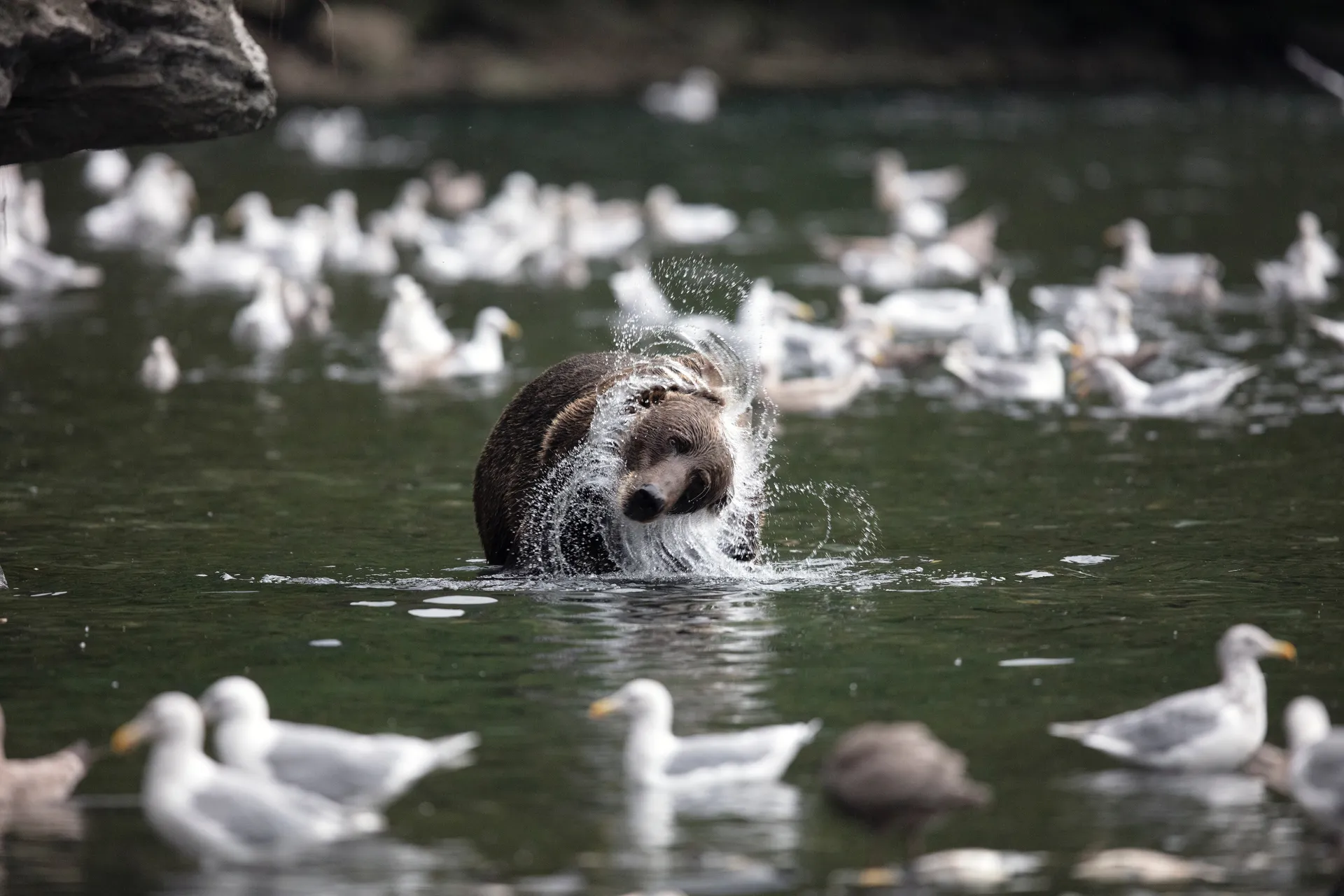
The Kodiak National Wildlife Refuge, covering two-thirds of the island, is the primary draw for wildlife-oriented visitors. Approximately 3,500 Kodiak brown bears roam the refuge—about one bear for every 1.5 square miles—and bear-viewing excursions by floatplane to remote salmon streams offer some of the most intimate large-predator encounters possible anywhere on the planet. The bears are most active during salmon runs from July through September, when they congregate at waterfalls and river mouths to feed on spawning fish in scenes of raw, primal abundance. Beyond bears, the island's coastline supports sea otters, harbor seals, Steller sea lions, and massive concentrations of seabirds—tufted puffins, bald eagles, and the largest colony of black-legged kittiwakes in North America nest on the sea cliffs. Gray and humpback whales pass through the surrounding waters on seasonal migrations.
Azamara, HX Expeditions, Holland America Line, and Viking include Kodiak on their Alaska itineraries. Ships dock at the city pier in Kodiak's harbor, with the town center immediately accessible on foot. The cruising season runs from May through September, with July and August offering the warmest temperatures (12–18°C), the most active bear viewing, and the longest days. Even in summer, Kodiak's maritime climate brings frequent fog, rain, and wind—waterproof layers are essential. Kodiak is not a polished tourist destination; it is a working fishing town set in one of the last great wildernesses of North America, where the relationship between humans, bears, and the sea remains as elemental and unmediated as it was when the first Alutiiq kayakers paddled these shores thousands of years ago.