Milwaukee: America's Brewing Capital on Lake Michigan
Milwaukee has been synonymous with beer for over a century and a half — a legacy forged by the German immigrants who arrived in the mid-nineteenth century and built breweries that would become household names: Schlitz, Pabst, Miller, and Blatz. At its peak, Milwaukee was producing more beer per capita than any city in America, and the brewing industry shaped everything from the city's architecture (the Pabst Mansion, the Schlitz complex) to its social culture (the beer gardens, the Friday fish fry, the gemütlich warmth that permeates its neighbourhoods). Today, the major breweries have been absorbed by multinational corporations, but Milwaukee's brewing DNA has found new expression in a craft beer scene of exceptional quality and ambition.
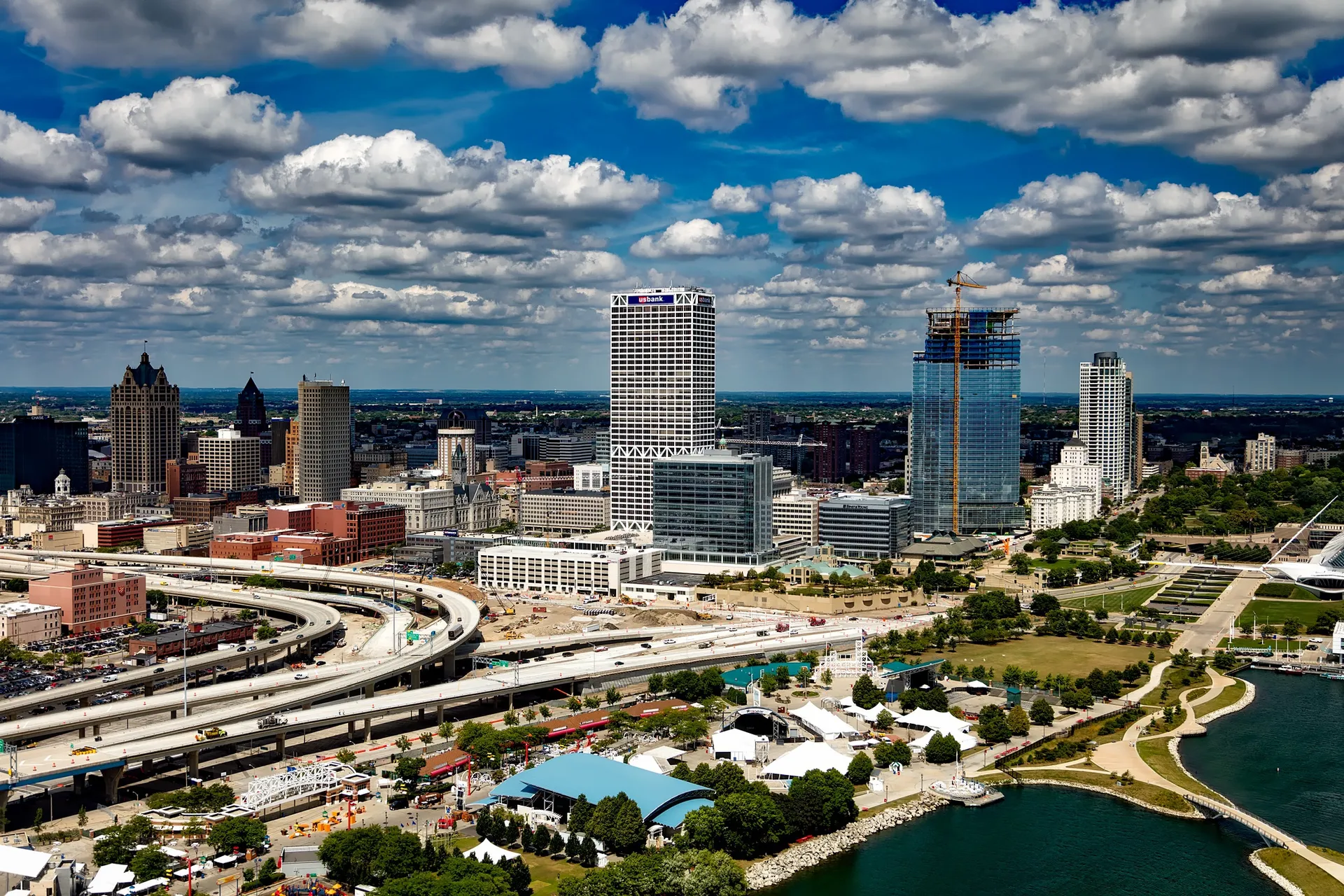
The character of Milwaukee is that of a Great Lakes city coming into its own. The lakefront — stretching from the Milwaukee Art Museum's striking Calatrava-designed addition to the historic Third Ward and the revitalised harbour — has been transformed from industrial waterfront into one of the most appealing urban waterfronts in the Midwest. The Milwaukee Art Museum, with its Burke Brise Soleil — a kinetic sunscreen that opens and closes like the wings of a bird — has become an architectural icon, and the collection within ranges from Old Masters to significant holdings of American folk art and Georgia O'Keeffe's work. The Historic Third Ward, once a warehouse district, now houses galleries, boutiques, the Milwaukee Public Market (a European-style food hall), and a dining scene that has earned serious national recognition.
Milwaukee's food culture extends far beyond beer. The city's German heritage lives on in the Friday fish fry — a social institution where bars and restaurants across the city serve beer-battered cod or perch with coleslaw, rye bread, and french fries. The frozen custard tradition — denser, richer, and more intensely flavoured than ice cream — is represented by the legendary Kopp's and Leon's, whose concrete-block stands have been serving custard since the 1950s. The Milwaukee Public Market and the surrounding Third Ward restaurants have added a contemporary layer: artisan cheese from Wisconsin's dairy farms, locally smoked charcuterie, and farm-to-table restaurants that showcase the agricultural bounty of America's dairyland.
Beyond the food and beer, Milwaukee offers cultural substance that surprises first-time visitors. The Harley-Davidson Museum, on the banks of the Menomonee River, traces the century-plus history of America's most iconic motorcycle brand through an extraordinary collection of vintage machines, memorabilia, and interactive exhibits. Summerfest, held annually on the lakefront in late June and early July, is the world's largest music festival by attendance, with eleven stages hosting over eight hundred acts over eleven days. The Milwaukee Riverwalk, threading through the downtown along the Milwaukee River, connects neighbourhoods, restaurants, and bars in a pedestrian-friendly corridor that is the city's social spine.
Viking includes Milwaukee on its Great Lakes itineraries, using the port facilities on the lakefront within walking distance of the Third Ward and the Art Museum. The city's compact, walkable downtown and its genuine, unpretentious character make it one of the most rewarding ports on any Great Lakes cruise. For travellers who associate the Great Lakes with industrial decline, Milwaukee offers a powerful corrective — a city that has reinvented itself around culture, cuisine, and craft brewing while maintaining the warmth and work ethic that define the American Midwest. June through September offers the warmest weather and the liveliest festival calendar, with Summerfest in late June/early July being the annual highlight.

